

Key Takeaways
Understanding what drives your money choices creates clarity in financial planning.
Conflicts about spending often stem from different priorities rather than actual money problems.
Matching daily habits to core beliefs makes saving feel natural instead of forced.
Goals need meaning behind them to work effectively over time
Defining Financial Values and Their Importance
Financial values are the beliefs that guide how people handle money.
They shape spending habits, saving goals, and investment choices. Think of them as a personal rulebook for every financial decision.
These values come from family upbringing, culture, and life experiences. Someone raised in a frugal household might value security.
Another person might prioritize experiences over material things.
Here’s what they do:
- Guide daily money decisions
- Create consistency in financial management
- Help prioritize what matters most
- Reduce stress during big choices
When someone knows what they truly value, saving feels more natural, and spending becomes intentional.
Common Types of Financial Values
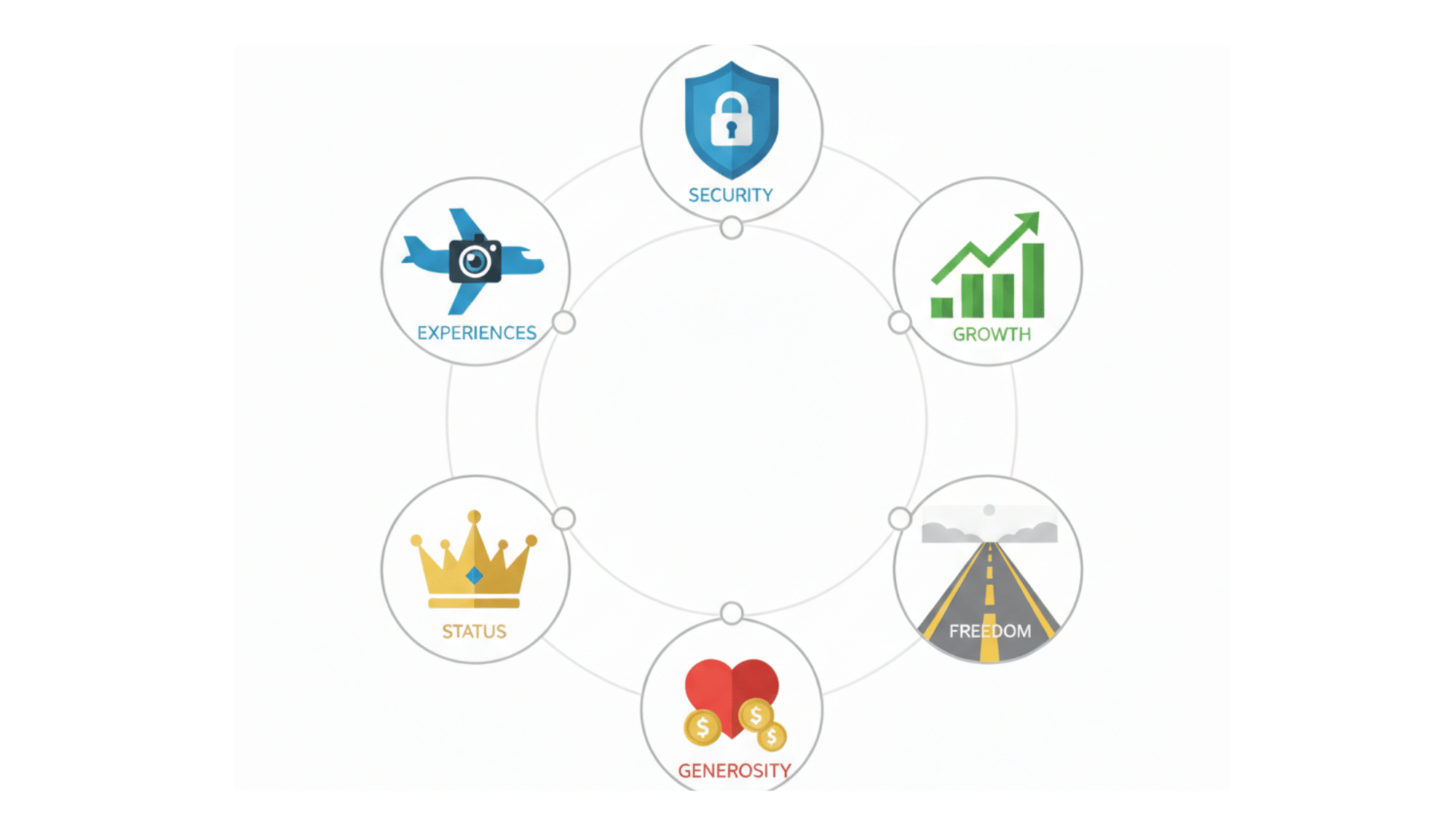
Different people hold different beliefs about money. Here are the most common types and what they reveal.
| Financial Value | What It Means |
|---|---|
| Security | People with this value prioritize safety and stability. They build emergency funds and avoid debt. Risk feels uncomfortable to them. |
| Growth | These individuals focus on building wealth over time. They invest in stocks, real estate, or businesses. Short-term losses don’t scare them much. |
| Freedom | This value centers on independence and flexibility. People want control over their time and choices. They might save aggressively to retire early. |
| Generosity | These people find joy in helping others financially. They donate to causes, support family, or tip well. Giving brings them satisfaction. |
| Status | This value connects money to social standing. People buy luxury items or live in certain neighborhoods. Image matters to them. |
| Experiences | These individuals spend on memories rather than things. They book trips, attend concerts, or try new activities. Possessions feel less important. |
How to Identify Your Personal Financial Values
Finding personal values takes honest reflection. These steps help reveal what truly drives money decisions.
Step 1: Review Past Spending Patterns
Look at bank statements from the last few months. Where does money go most often?
This reveals true priorities.
Someone who spends heavily on dining out values social connection or convenience more than home cooking.
Step 2: Think About Money Memories
Recall childhood experiences with money. Did parents stress about bills, or did they spend freely?
These early memories shape current beliefs. Learning the source helps identify which values are truly personal and which are inherited.
Step 3: Ask the Big Questions
What would you do with extra money? Pay off debt, invest, travel, or donate?
The answer points directly to core values.
Quick responses often reveal the most honest answers.
Step 4: Notice Emotional Reactions
Pay attention to feelings around money decisions. Does spending cause guilt or joy? Does saving feel secure or restrictive?
Emotions signal alignment or conflict with personal values.
Step 5: Test Against Real Choices
Compare recent big purchases to stated goals. Do actions match words?
Gaps between intention and behavior highlight unclear or conflicting values that need attention.
Aligning Financial Values With Life Goals
Knowing values means nothing without action. The real work starts when people match their money habits to what they actually care about.
Start by listing life goals. Want to buy a home? Travel the world? Retire early? Each goal connects to specific values. A home represents security.
Alignment requires matching spending to the top three values. Cut expenses that don’t support goals
Review progress every few months to stay on track.
Misalignment causes stress. Someone who values experiences but never takes time off feels stuck. Another who values security but overspends on luxuries feels anxious.
When values and actions match, financial decisions become clearer, and stress drops significantly.
Financial Values in Relationships and Family Decisions

Money arguments are one of the most common sources of tension in relationships. But the conflict isn’t really about money itself.
It’s about different financial values colliding.
One partner may value security and want a strong emergency fund. The other values experiences and wants to enjoy life now.
Neither is wrong. They just have different priorities.
Where conflicts commonly begin:
- Security versus risk-taking
- Saving versus spending
- Personal freedom versus joint decisions
- Present enjoyment versus long-term planning
Families face similar challenges. Parents might value education and invest in private schools. Kids may not see the importance yet.
One spouse values generosity while the other focuses on building wealth.
The solution isn’t forcing one person’s values to win. It’s creating space for both through open conversation and mutual respect.
Financial Values vs Financial Goals
Values and goals work together but serve different purposes in financial planning.
| Financial Values | Financial Goals |
|---|---|
| Core beliefs about money | Specific targets to achieve |
| Stay consistent over time | Change as life progresses |
| Guide overall approach | Provide concrete milestones |
| Example: Security matters most | Example: Save $10,000 emergency fund |
| Example: Value experiences | Example: Take two trips per year |
| Shape the “why” behind decisions | Define the “what” and “when.” |
Values guide direction. A person who values security focuses on saving, while one who values growth pursues investments.
Goals without values feel hollow, and values without goals go nowhere. Together, they turn intention into real progress.
Practical Tips to Live According to Your Financial Values
- Track spending for one month to see where money actually goes.
- Create a budget that reflects the top three values instead of generic categories.
- Automate savings for goals that match core beliefs about money.
- Say no to purchases that don’t align with what matters most.
- Review financial decisions quarterly to check alignment with values.
- Discuss money values with family members to avoid future conflicts.
- Adjust spending habits when guilt or stress signals value misalignment.
Finding Financial Balance
Money stops feeling like a burden when it connects to what really matters. Learning why financial values are important changes everything.
Decisions become clearer, spending gains purpose, and goals feel worth pursuing.
Finances shift from constant stress into a practical tool for building the life someone actually wants.
Start identifying your financial values today and watch decisions become easier.
Frequently Asked Questions
1. Can Financial Values Change as Someone Gets Older?
Yes. Life stages naturally shift priorities. Young adults might value experiences, while parents prioritize security and stability for their families.
2. What if Partners Have Completely Opposite Financial Values?
Find a middle ground through compromise. Allocate income percentages to each person’s top value. Regular money conversations help maintain balance and trust.
3. How do Cultural Backgrounds Affect Financial Values?
Culture heavily influences money beliefs and spending habits. Recognizing these influences helps separate inherited beliefs from authentic personal values that feel right.