
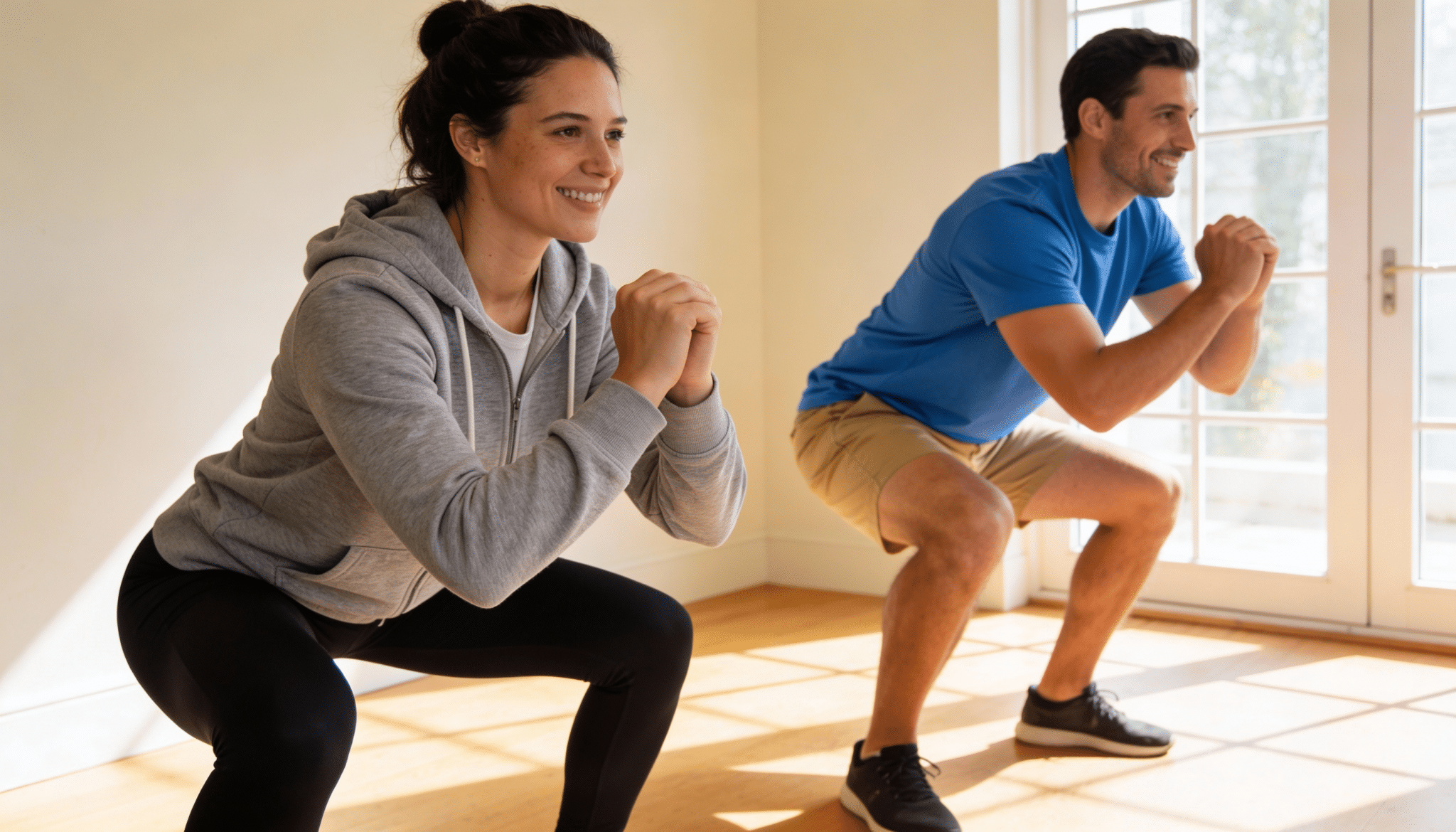
Key Takeaways
Daily exercise doesn’t require gym memberships or fancy equipment to be effective.
Just 15-20 minutes of movement each day can improve your health and energy levels.
Different routines work better for beginners, women, men, and kids based on their needs.
Consistency matters more than intensity when building a sustainable exercise habit.
Simple exercises at home can strengthen your entire body and boost your mood.
Why Doing Exercises Every Day is Important
Your body craves movement. It’s built for it. When you exercise daily, you’re not just building muscle.
You’re improving your heart health, sharpening your mind, and lifting your mood. Even a short workout releases endorphins that help you feel better throughout the day.
Regular movement keeps your joints flexible and your bones strong.
It helps you sleep more deeply at night and wake up with more energy. It reduces your risk of serious health issues like diabetes and heart disease.
In my experience, the days I skip movement are the days I feel the most sluggish by afternoon.
Just 15-20 minutes of consistent activity can change how you feel.
Things to Know Before Starting Daily Exercises
Before you jump into your new routine, let’s cover some basics. These will help you stay safe and get better results.
Most injuries I see beginners deal with come from doing too much, too soon. Week one should feel almost too easy.
- Start slow and build up gradually: Don’t push too hard on day one. Your body needs time to adjust. Begin with easier versions of exercises and increase intensity as you get stronger.
- Warm up before every session: Cold muscles tear easily. Spend 3-5 minutes doing light movements, such as arm circles or marching in place. This gets your blood flowing and prepares your body.
- Listen to your body’s signals: Pain is different from discomfort. Sharp pain means stop immediately. Mild muscle fatigue is normal. Learn to tell the difference and respect what your body tells you.
- Stay hydrated throughout the day: Water keeps your muscles working properly. Drink before, during, and after exercise. Dehydration causes cramps and makes you tired faster than you should be.
- Wear comfortable, supportive clothing: You don’t need expensive gear. Just clothes that let you move freely. Good shoes matter most. They protect your feet and joints from unnecessary stress.
The Seven Exercises to do Every Day
These seven movements cover everything your body needs. Pick exercises that work multiple muscle groups.
Daily Exercise Routine for Beginners
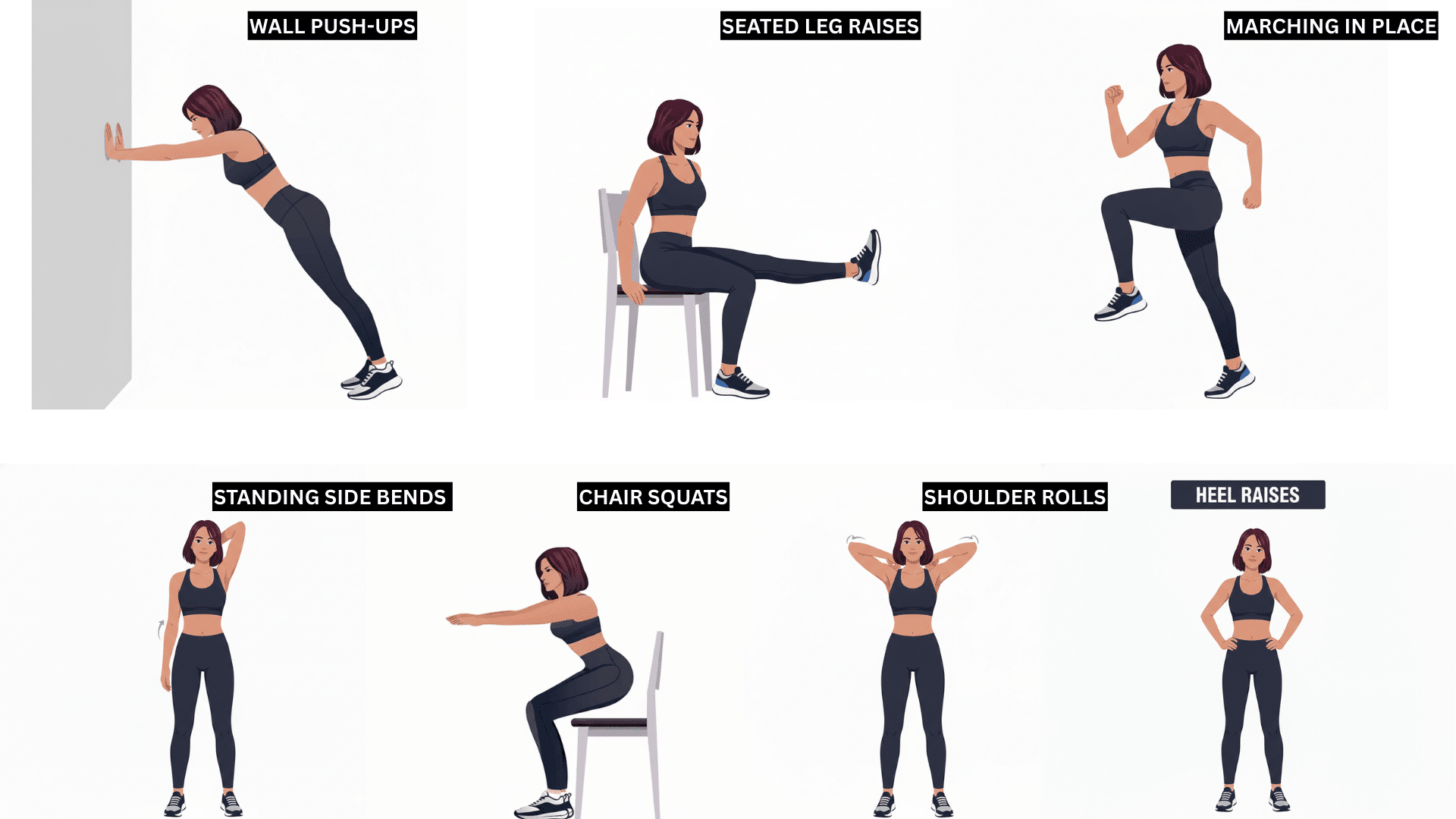
These exercises are perfect for beginners. They’re simple, safe, and effective.
1. Wall Push-Ups
Stand facing a wall, arms extended. Place your palms flat against it. Bend your elbows and lean in, then push back.
This builds upper-body strength without straining your joints. Do 10-12 reps to start. A gentler version of regular push-ups that still builds chest and arm strength safely.
Keep your elbows at about a 45-degree angle from your body. Flaring them wide puts unnecessary stress on your shoulder joints.
2. Chair Squats
Stand in front of a chair. Lower yourself slowly until you almost touch the seat, then stand back up.
This strengthens your legs and improves balance. Try for 8-10 reps.
The chair acts as a safety guide while you learn proper squat form and build leg strength
If your knees drift inward when standing up, slow down. That inward cave indicates your glutes need more time to activate.
3. Marching in Place
Lift your knees high, one at a time. Swing your arms naturally.
This gets your heart pumping and warms up your whole body. March for 2 minutes straight. Simple cardio you can do anywhere, with no equipment or complicated movements.
4. Seated Leg Raises
Sit on a chair with your back straight. Lift one leg until it’s parallel to the floor. Hold for 3 seconds, then lower.
This works your core and thighs. Do 10 reps per leg. Builds leg and core strength while sitting, making it perfect for those with balance concerns.
5. Shoulder Rolls
Roll your shoulders backward in big circles. Then roll them forward. This releases tension and improves posture. Do 10 circles in each direction. Loosens up tight shoulders from stress or sitting at a desk all day long.
6. Standing Side Bends
Stand with feet hip-width apart. Slide one hand down your leg while bending sideways.
Come back up and repeat on the other side. This stretches your sides and strengthens your core. Do 8 bends.
Keeps your spine flexible and works muscles you don’t normally use during daily activities
7. Heel Raises
Stand tall and lift up onto your toes. Hold for 2 seconds, then lower down.
This strengthens your calves and ankles. Aim for 15 repeats. Improves ankle stability and reduces the risk of falls by strengthening the muscles that support your balance.
Why These Seven Movements?
I picked these seven because they cover the main movement patterns your body uses every day, carrying your own weight. You don’t need a gym for any of them.
Daily Exercise Routine for Women
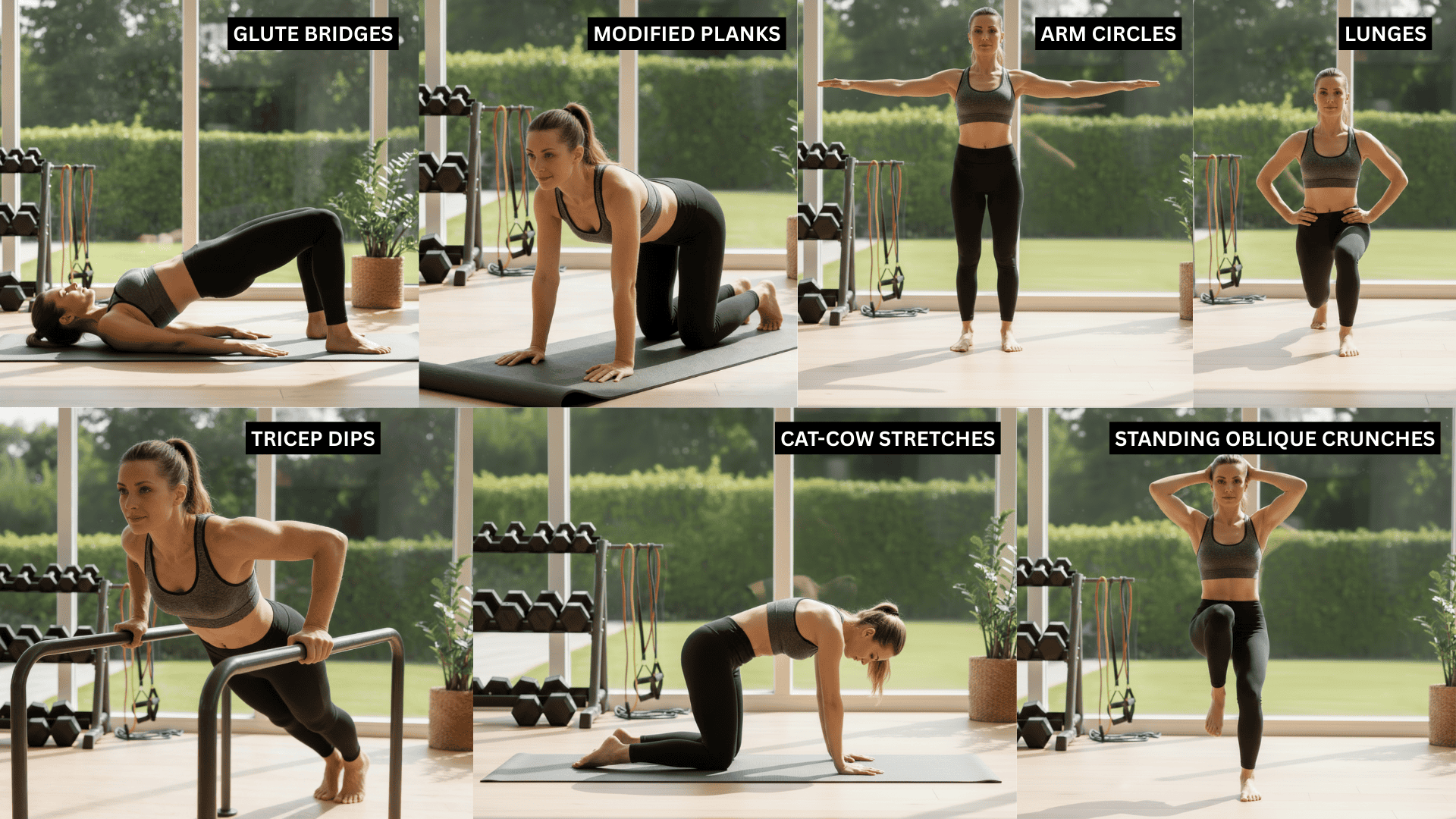
Here’s a routine designed to build strength, tone muscles, and boost energy levels throughout your day.
Glute Bridges
This exercise strengthens your glutes and helps prevent lower back pain from prolonged sitting.
Modified Planks
Perfect for building core stability while being gentle on your joints and wrists.
Arm Circles
Loosens tight shoulders and increases blood flow to your arms and upper body.
Lunges
Shape your thighs and glutes while improving your balance and coordination.
Tricep Dips
Targets the stubborn area on the back of your arms that many women want to tone.
Cat-Cow Stretches
Relieves back tension and increases spine flexibility after long hours of sitting.
Standing Oblique Crunches
Work for the side muscles and help create a more defined waistline.
Daily Exercise Routine for Men
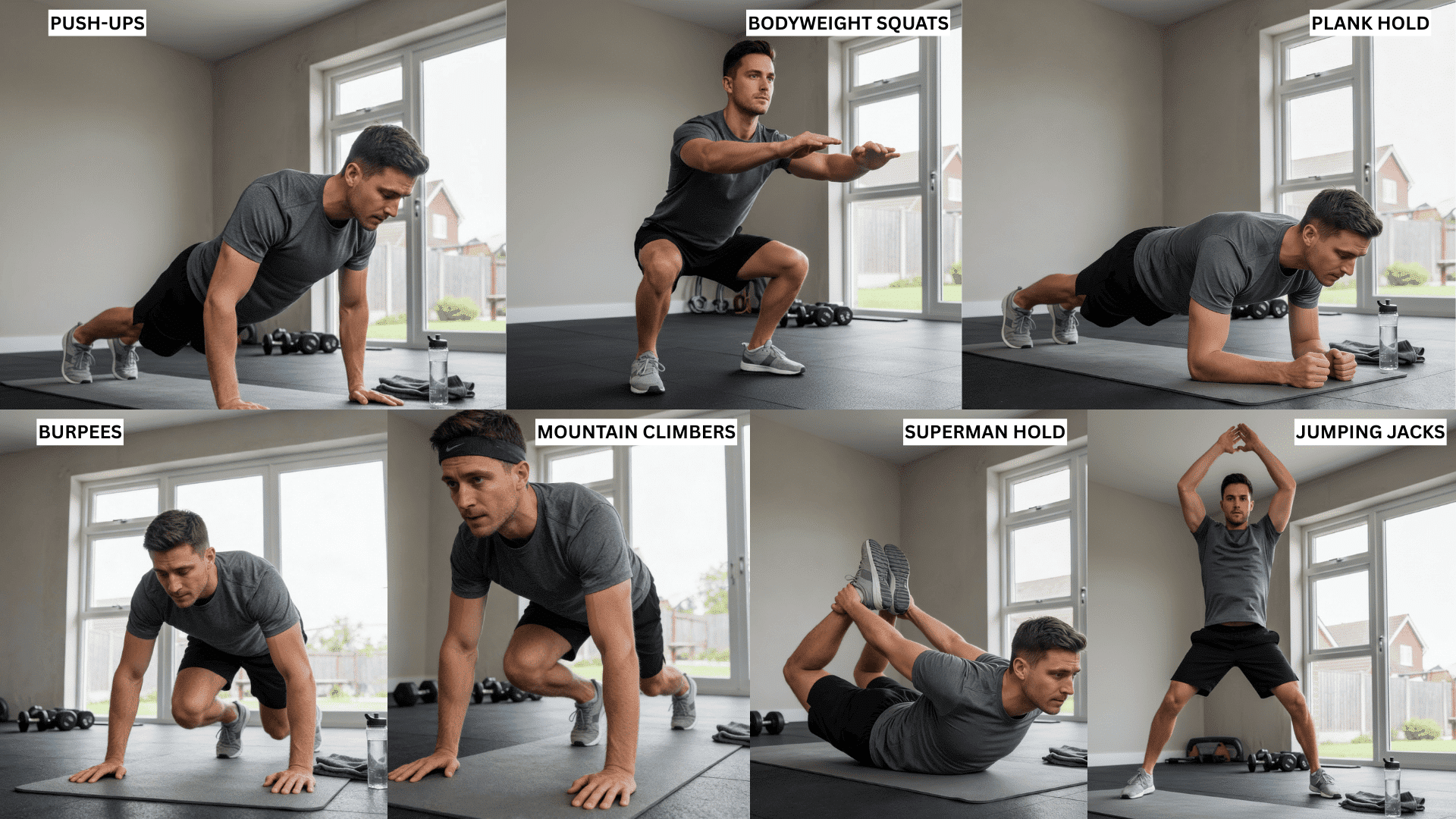
This routine builds strength and fitness, targeting different muscle groups with each exercise.
Push-Ups
The classic upper body builder. Start in a plank position, hands shoulder-width apart.
Lower your chest to the floor, then push back up. Keeps your chest, shoulders, and arms strong. Begin with 10-15 reps. If it’s too hard, drop to your knees.
Bodyweight Squats
Stand with feet shoulder-width apart. Sit back like you’re sitting in a chair.
Go as low as comfortable, then drive through your heels to stand. This builds powerful legs and a strong core.
Plank Hold
Get into push-up position, but rest on your forearms. Keep your body straight as a board.
Don’t let your hips sag. This exercise works your entire core. Hold for 30-60 seconds.
A 30-second plank held with good form beats a 90-second one where your hips are sagging. Quality matters more here than time.
Burpees
Stand tall, drop into a squat, kick your feet back into a plank, do a push-up, jump your feet forward, then jump up.
This gets your heart racing and burns calories fast. Start with 5-8 reps.
Mountain Climbers
Start in a plank position. Drive one knee toward your chest, then quickly switch legs.
It’s like running in place horizontally. Works your core and gets your heart pumping. Do 20 total (10 per leg).
Superman Hold
Lie face down. Lift your arms, chest, and legs off the ground simultaneously. Hold this position. Strengthens your lower back and improves posture.
Hold for 15-20 seconds.
Jumping Jacks
Stand with feet together. Jump while spreading your legs and raising your arms overhead. Jump back to start.
A simple cardio move that warms you up and helps you burn energy. Do 25-30 reps
Daily Exercise Routine for Kids
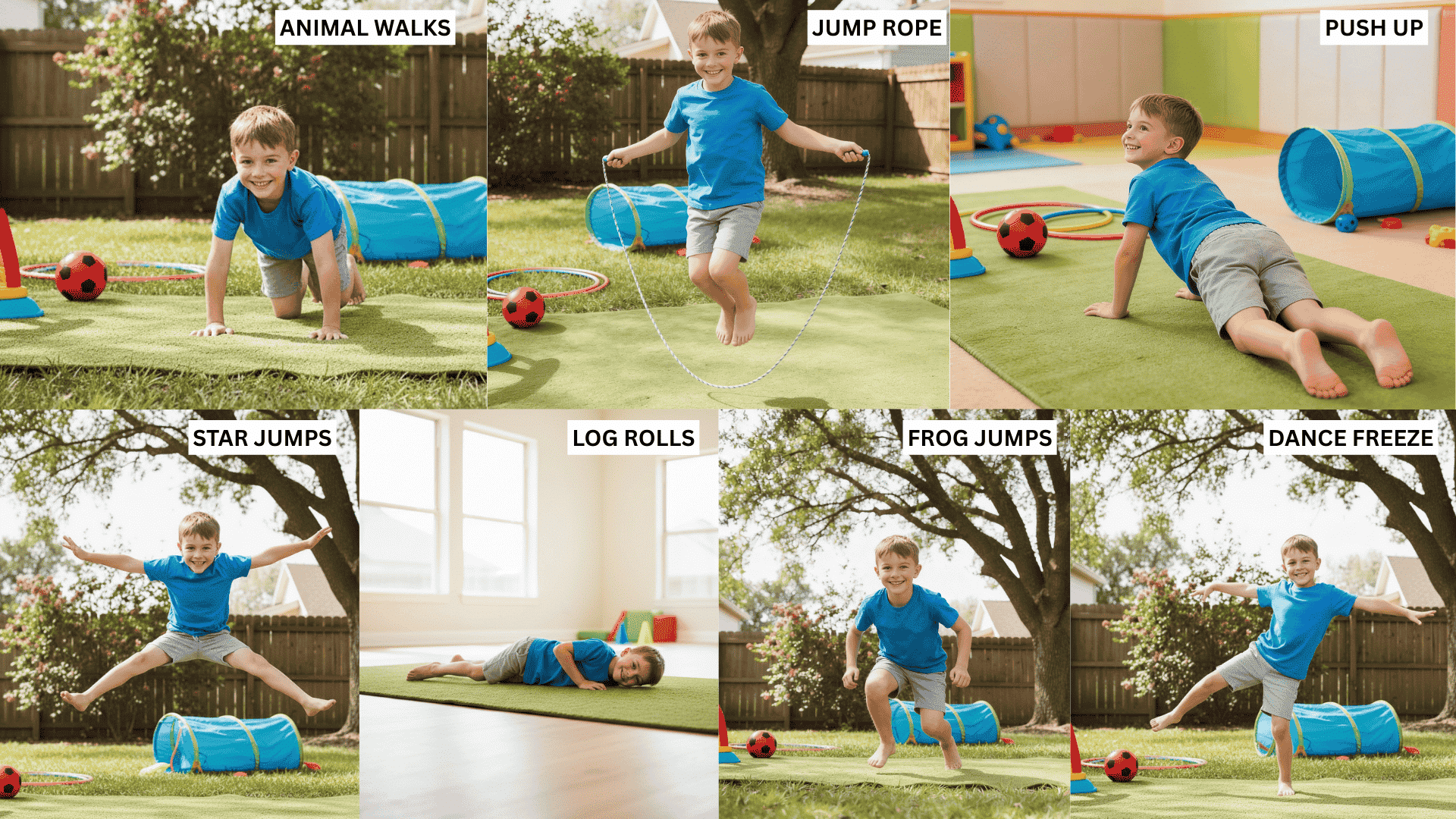
Kids need fun exercises that keep them moving. These feel more like play than work.
Animal Walks (Bear Crawls)
Get down on your hands and feet. Walk around like a bear.
Kids love pretending to be animals, and this naturally builds their arm and leg strength.
Jump Rope
Grab a rope. Jump up and down with rhythm. The jumping motion is great cardio for growing bodies.
Push Up
Get down on your hands and knees. Keep your knees on the ground and push your body up and down.
This builds strong arms and chest muscles while being easier than grown-up push-ups
Star Jumps
Jump up and spread arms and legs wide like a star. Land softly. Kids have so much energy, and this helps them burn it while building coordination.
Log Rolls
Lie down straight and roll across the floor.
Keep your arms by your sides or stretched overhead. This improves body awareness and is just plain fun.
Frog Jumps
Squat down low. Jump forward like a frog. Land in a squat again.
Children naturally love hopping around, so this one never feels like exercise to them.
Dance Freeze
Play music and dance wildly. When the music stops, freeze in place.
This builds balance and coordination and lets kids express themselves while moving.
Daily Exercise Schedule
Here’s how to fit these exercises into your day. Pick the timing that works best for you.
| Time of Day | Exercise | Duration | Why This Time Works |
|---|---|---|---|
| Morning (6-8 AM) | Full 7-exercise set | 15-20 minutes | Wake up, boost energy for the day ahead. |
| Mid-Morning (10-11 AM) | 3-4 light exercises | 5-10 minutes | Breaks up work time and refreshes your mind. |
| Lunch Break (12-1 PM) | Quick cardio moves | 10 minutes | Gets blood flowing after sitting. |
| Afternoon (3-4 PM) | Stretches and core | 5-8 minutes | Fights in the afternoon. Reduces back pain. |
| Evening (6-7 PM) | Strength exercises | 15 minutes | You have more time and energy after work. |
| Before Bed (9-10 PM) | Gentle stretches only | 5 minutes | Relaxes muscles and helps you sleep better. |
Daily exercise doesn’t mean pushing hard every single day. Some days, a 5-minute stretch counts. Your body repairs itself during rest, not during the workout.
How to Stay Consistent with Daily Exercises
- Set a specific time each day and treat it like an important appointment you can’t miss.
- Track your progress in a notebook or app so you can see how far you’ve come.
- Lay out your workout clothes the night before to avoid any morning excuses.
- Start with just 5 minutes if you’re struggling, because something is always better than nothing.
- Mix up your exercises occasionally to keep things interesting and prevent boredom.
- Link your workout to an existing habit like brushing your teeth or making coffee.
- Keep your workout space ready and clear so you can start immediately without setup time.
- Remember why you started and visualize how good you’ll feel after finishing your routine.
When to Stop and See a Doctor?
Some signs mean you should stop exercising right away.
Sharp joint pain, chest tightness, or dizziness are not normal. Neither is sudden shortness of breath or pain that shoots down your arm. These need medical attention fast.
Also, if an old injury starts flaring up, give it a break. Don’t try to push past it.
A quick check-up before starting a new routine is wise, especially if you haven’t been active recently.
Wrapping it up
Daily exercise doesn’t need intense effort or hours; the only secret is consistent daily movement.
I’ve seen people completely change how they feel in three weeks, not from intense training, but from just showing up every day with something simple.
Showing up for yourself with small routines boosts mood and energy more than occasional intense workouts.
Focus on patience and steady commitment instead of perfect form or quick results. Tough days are normal, so persist despite low motivation. Choose a simple, sustainable routine suited to your age and lifestyle.
Making movement a non-negotiable daily habit secures your future health step by step.
Frequently Asked Questions (FAQ’s)
1. What are Easy Exercises for Bad Knees?
Wall sits, chair squats, and seated leg raises work well for bad knees.
2. What is the One Mistake that Makes Knees Work?
Skipping warm-ups puts cold stress directly on your knee joints every time.
3. How to Strengthen Knees in Old Age?
Gentle heel raises and slow chair squats build knee strength safely over time.
4. What Food Rebuilds Knee Cartilage?
Bone broth, fatty fish, and leafy greens support cartilage repair from within.
5. What are the Best Vitamins for The Body?
Vitamins D, C, and K support bone and joint health and overall body function.