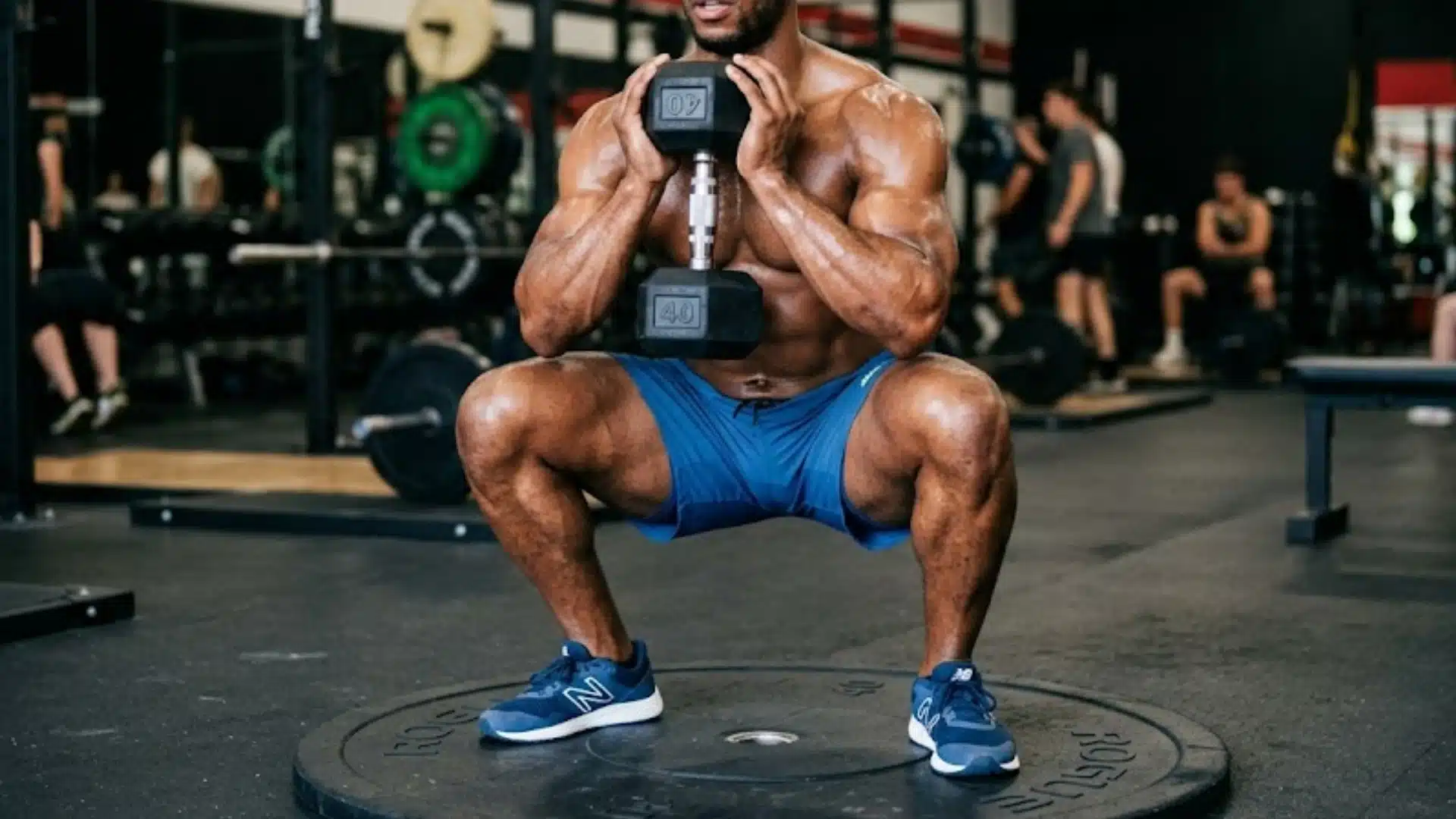
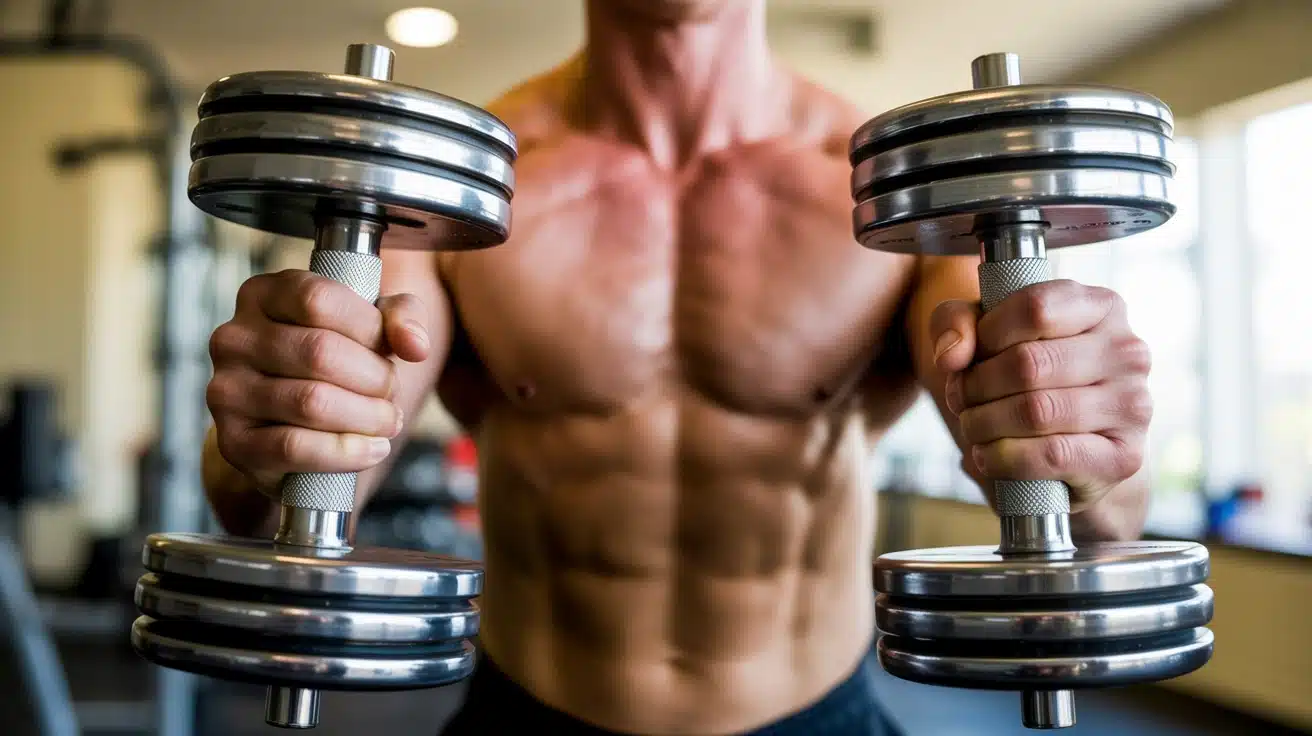
Key Takeaways
Standing chest exercises engage your core and stabilizer muscles more than bench exercises
Proper form matters more than heavy weights for standing dumbbell work
These exercises work anywhere with just a pair of dumbbells
Correct breathing and elbow positioning prevent shoulder injuries
How do These Exercises Build Strength?
Standing dumbbell chest exercises build strength differently from bench presses. When you’re standing, your core has to work harder to keep you stable.
I noticed this change when I switched from bench presses to standing work.
This creates what’s called total body tension.
This means strength is involved: the chest muscles still do the pushing and squeezing, but the abs, lower back, and legs are firing too.
Here’s what happens:
- The pectoralis major contracts to move the weights
- Stabilizer muscles prevent you from tipping forward or back
- Grip strength improves from holding dumbbells in space
- Shoulders learn to work in multiple planes of motion
Benefits of Standing Dumbbell Chest Exercises
The following are a few benefits of dumbbell exercises that I have experienced:
Core activation
Standing positions demand constant core engagement for stability.
I’ve noticed my midsection tightening during every pressing movement, leading to unexpected ab development.
Improved balance and coordination
Your body learns to stabilize under load while performing complex movements.
People often wobbled during the first few sets, but balance improves noticeably with time and consistent practice.
Joint-Friendly Option
Dumbbells allow natural wrist, elbow, and shoulder movement in a standing position, reducing joint stress compared to fixed-path barbell presses.
Natural movement patterns
Standing exercises teach your body to push and press the way it moves in daily life situations.
I started noticing the difference when moving heavy objects became significantly easier.
Key Standing Dumbbell Chest Exercises
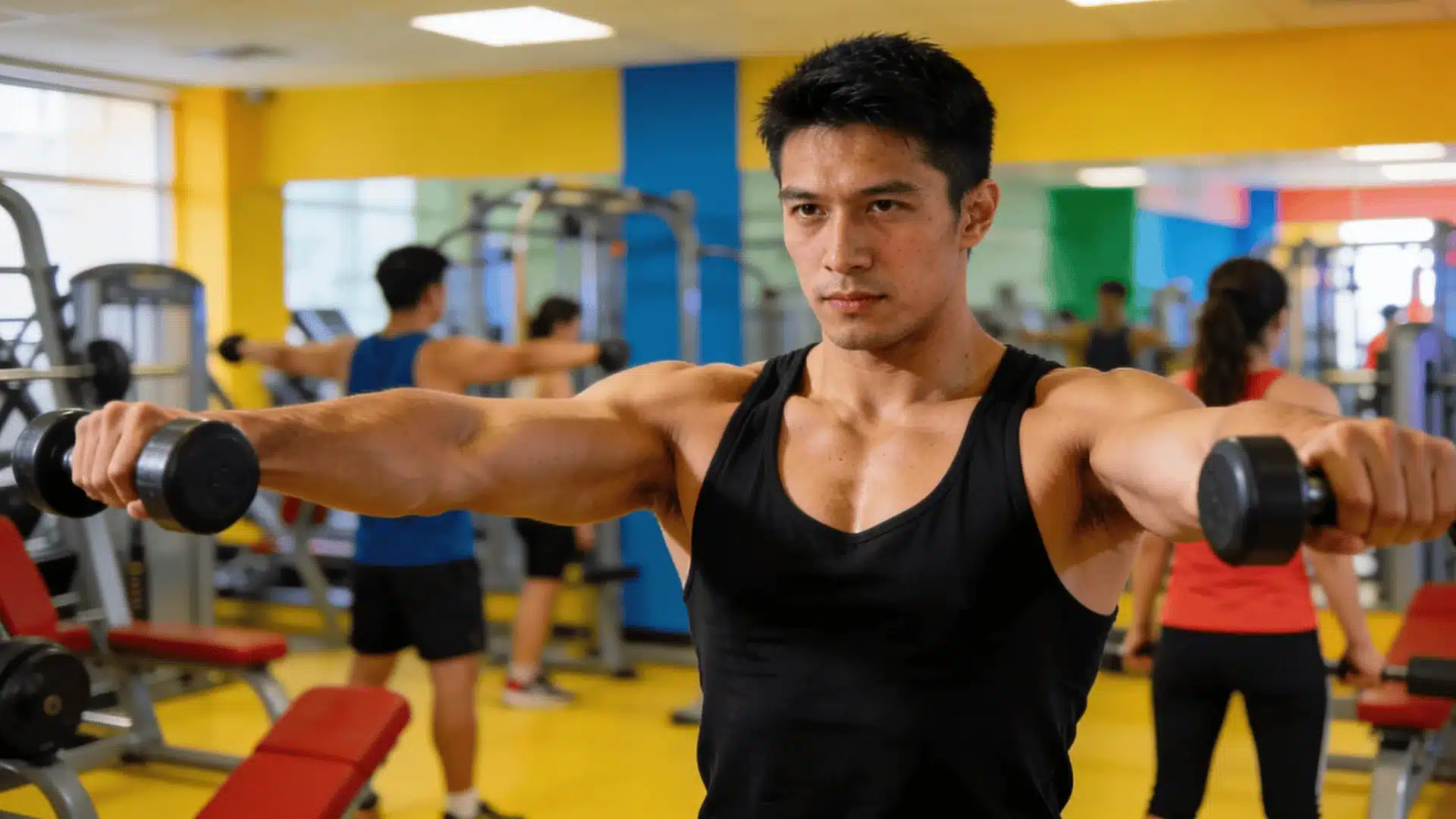
These seven exercises cover different angles and movement patterns. Each one trains the chest in a specific way.
1. Standing Dumbbell Chest Press
This is the main strength builder. It works like a bench press but requires more core stability.
Technique Involved:
- Stand with your feet shoulder-width apart
- Hold dumbbells at your shoulder height, palms facing forward
- Press straight up until your arms are extended
- Lower back down with control
- Keep your core braced throughout
Sets and Reps: 3-4 sets of 8-12 reps
Key Areas Targeted: Middle and upper chest, front shoulders, triceps, core
Pro tip: Don’t lean back as you press. Your torso should stay vertical. I used to lean back because it felt comfortable until my trainer corrected me. The fix made a huge difference.
2. Standing Dumbbell Chest Squeeze Press
This variation keeps constant tension on the chest. The squeezing action hits the inner pecs hard.
Technique Involved:
- Hold dumbbells together in front of your chest
- Press them together firmly throughout the movement
- Press forward until your arms extend
- Bring them back while maintaining the squeeze
- Keep pressing the weights together the entire time
Sets and Reps: 3 sets of 10-15 reps
Key Areas Targeted: Inner chest, front shoulders, triceps.
3. Standing Dumbbell Svend Chest Press
This standing dumbbell chest exercise is named after strongman Svend Karlsen. It involves a unique pressing position to create an intense chest contraction.
Technique Involved:
- Hold one dumbbell horizontally between both palms
- Press your hands together to sandwich the weight
- Start at chest level
- Press straight out until your arms extend
- Pull back in with control
Sets and Reps: 2-3 sets of 12-15 reps
Key Areas Targeted: Inner and middle chest, shoulders
Pro tip: Use a lighter weight as the pressure needed to hold it creates more tension than expected.
4. Standing Low to High Fly
This fly variation targets the upper chest. The angle is similar to the incline bench fly.
Technique Involved:
- Start with dumbbells at your hip level, palms facing up
- Keep a slight bend in your elbows
- Raise dumbbells up and together in an arc
- Bring them to chest height
- Lower back down the same path
- Maintain the elbow bend throughout
Sets and Reps: 3 sets of 12-15 reps
Key areas targeted: Upper chest, front shoulders
Pro tip: Control the lowering phase for maximising muscle growth. I count to three on every lowering motion.
5. Standing High to Low Fly
The opposite movement from the previous exercise.
This is one of the most important exercises because it targets the middle and lower chest, which are often neglected.
Technique Involved:
- Start with dumbbells at shoulder height, palms facing forward
- Keep your elbows slightly bent
- Lower dumbbells down and out in an arc
- Bring them to your hip level
- Raise back up with control
- Keep the same elbow angle
Sets and Reps: 3 sets of 12-15 reps
Key Areas Targeted: Lower and middle chest, front shoulders
Pro tip: A slow, controlled movement ensures proper movements. Slowing down helped me gain control over my pace during excercise.
6. Standing Cross-Body Dumbbell Raise
This standing dumbbell chest exercise works the chest through a diagonal pattern. It also challenges your core rotation control.
How to do it:
- Hold one dumbbell in your right hand at your left hip
- Keep the arm relatively straight
- Raise the dumbbell diagonally across your body
- End at right shoulder height
- Lower back to the starting position
- Complete all reps, then switch sides
Sets and reps: 3 sets of 10-12 reps per side
Key areas targeted: Upper chest, front shoulders, core obliques
Pro tip: Keep the hips square. Only arms should move across your body.
7. Standing Dumbbell Half Circle Raise
This finishing movement takes the chest through a full range of motion. It combines elements of both flies and raises.
How to do it:
- Start with dumbbells at thigh level
- Keep a slight elbow bend
- Raise dumbbells out to the sides and up
- Bring them together at chest height
- Reverse the movement back down
- Trace a half circle with each rep
Sets and reps: 2-3 sets of 12-15 reps
Key areas targeted: Entire chest, shoulders, upper back
Pro tip: I think of this exeercise as drawing a rainbow shape with the dumbbells.
Mistakes to Avoid During These Exercises
Even with good form, certain mistakes can occur during standing dumbbell chest exercises. Catching these early prevents potential injury.
Using Momentum Instead of Muscle
Each rep should be deliberate. If you need momentum to move the weight, go lighter.
I was swinging 30-pound dumbbells, but dropping to 20 pounds completely fixed my form.
Signs you’re using too much momentum:
- The body rocks back and forth
- The dumbbells swing freely
- Loss of balance between reps
Holding Your Breath
People often hold their breath during the hard part. This spikes blood pressure and reduces stability.
Breathe out as you press or raise. Breathe in as you lower.
Flaring Elbows Too Wide on Presses
Wide elbows put excess stress on shoulder joints. Keep your elbows at a 45-degree angle from your torso.
My gym partner suffered a shoulder injury because of this mistake. It shall neither be tucked in tightly nor pulled straight out to the sides.
Training Too Heavy, Too Often
Standing dumbbell chest exercises require lighter loads than bench presses.
Training too heavily on these movements causes a breakdown in form. Rushing through the weights increases the risk of injury.
What is the Serratus Anterior and Why You Should Not Ignore it?
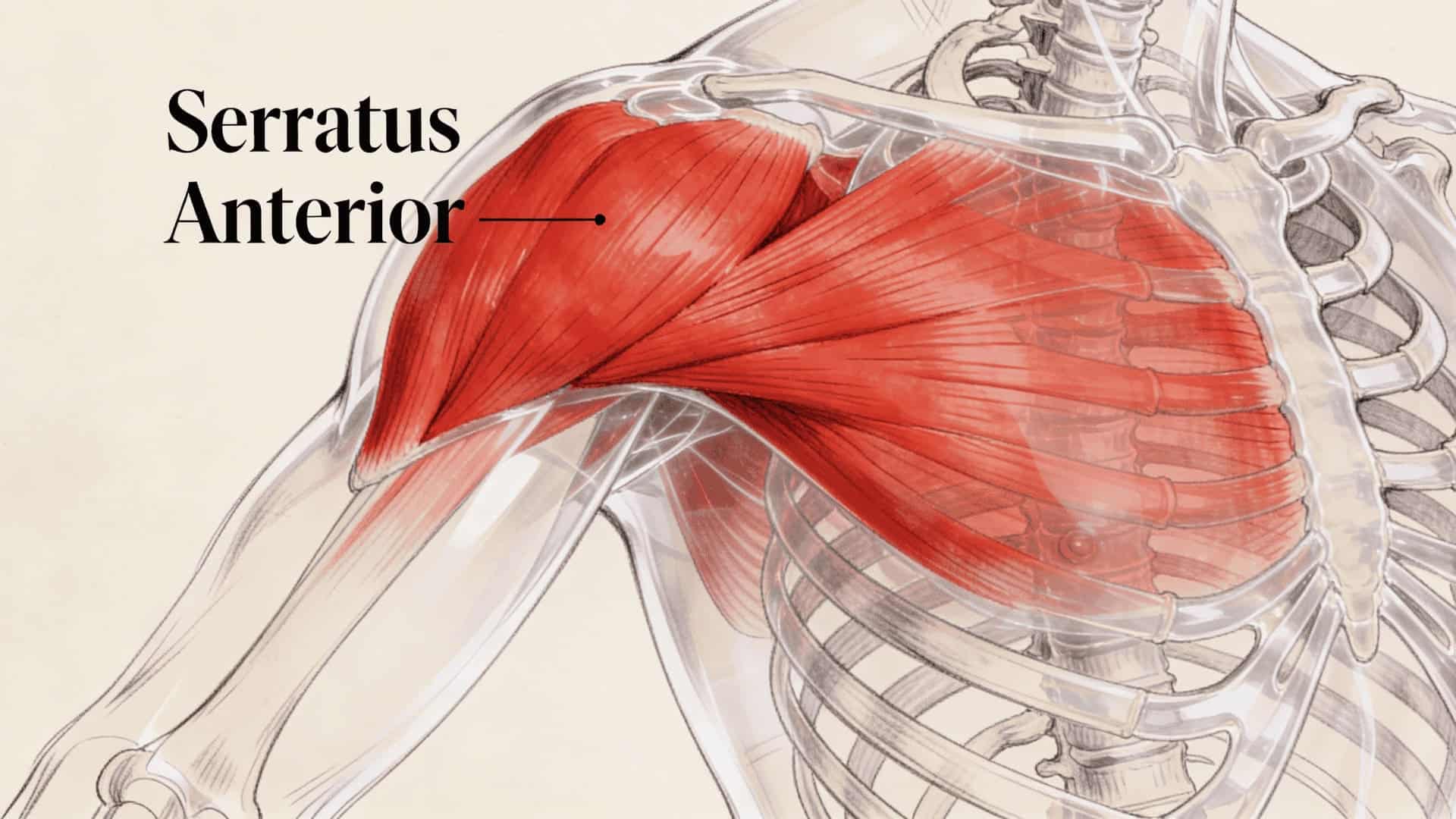
The serratus anterior is a fan-shaped muscle that wraps around your ribcage, connecting your shoulder blades to your ribs.
It’s responsible for moving your shoulder blade forward and upward during pushing movements.
Most people ignore this muscle because it’s not visible like the biceps or the abs.
But a weak serratus anterior leads to shoulder instability, poor posture, and increased injury risk during chest exercises.
This small muscle plays a massive role in shoulder health and pressing strength. Neglecting it limits your chest development and sets you up for injury.
Strong serratus muscles mean stable shoulders. It’s the foundation for effective standing dumbbell chest training.
Add-Ons That Boost Results
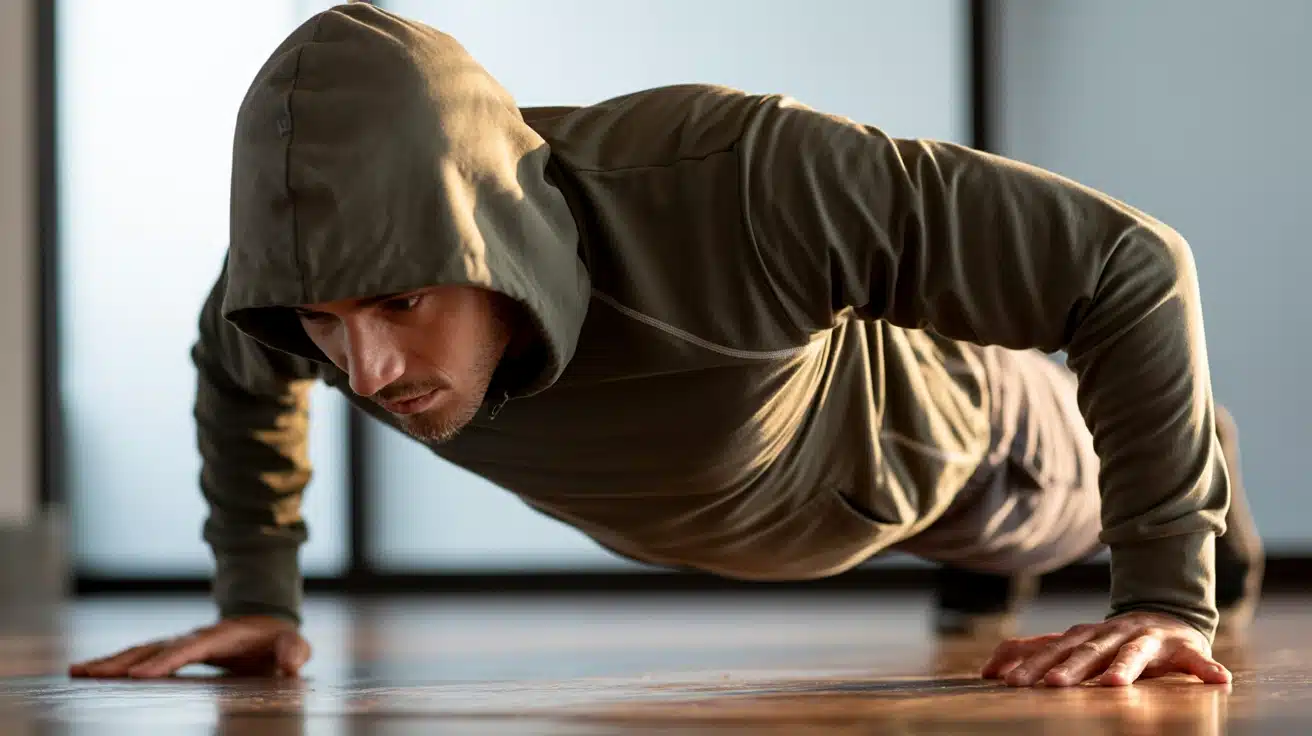
These extra miles take the standing dumbbell chest exercises from good to great. They prepare your body and properly train your muscles.
Warm-Up Primer
I never skip warming up; the shoulders and chest need preparation.
Skipping it can strain the rotator cuff. It takes only 5-10 minutes to warm up and save yourself from injury.
An effective warm-up sequence includes:
- Scap circles: 10 circles in each direction.
- Wall slides: 10-12 reps.
- Push-ups: 2-3 sets of 10-12 reps.
Chest Finisher
End the workout with one of the chest finisher exercises.
They exhaust the chest muscles completely, which helps in growth in future sessions.
Squeeze press holds:
- Hold dumbbells at chest level in a squeeze press position
- Maintain maximum squeeze for 30-45 seconds
- Rest 30 seconds
- Repeat 2-3 times
Partials:
- Do the top half of any press or fly
- Use the last 50% of the range of motion
- Perform 15-20 reps
- Burns intensely
Slow negatives:
- Take 5 seconds to lower each rep
- Normal speed pressing up
- 6-8 reps is plenty
- Creates serious muscle damage for growth
Pairing Suggestions for Push Day
Standing chest dumbbell exercises fit well into push day routines, but you need to avoid overdoing front shoulders, a mistake I’ve learned to watch out for.
After the standing chest exercises are done, choose:
- Lateral raises for side delts
- Tricep extensions or dips
- Face pulls for rear delts
This approach builds balanced shoulders and prevents injury caused by overuse of the muscle.
Putting It All Together
Standing dumbbell chest exercises give you real strength. They work your chest while training your core and balance.
Pick three exercises from this list. Do them twice a week. I rotate between the chest press, squeeze press, and low-to-high fly.
My chest responds well to this combination.
You don’t need fancy equipment. Just dumbbells and focus.
Frequently Answered Questions (FAQ’s)
1. How to Hit all Three Parts of the Chest?
Use incline presses for the upper chest, flat presses for the middle chest, and decline presses for the lower chest.
2. What are the Signs of Overtraining in Your Chest?
Persistent soreness, decreased strength, fatigue, poor sleep, and prolonged recovery times indicate chest overtraining.
3. What are the Common Mistakes in the Standing Chest Press?
Excessive arching back, using too much weight, poor posture, and locking elbows completely out.