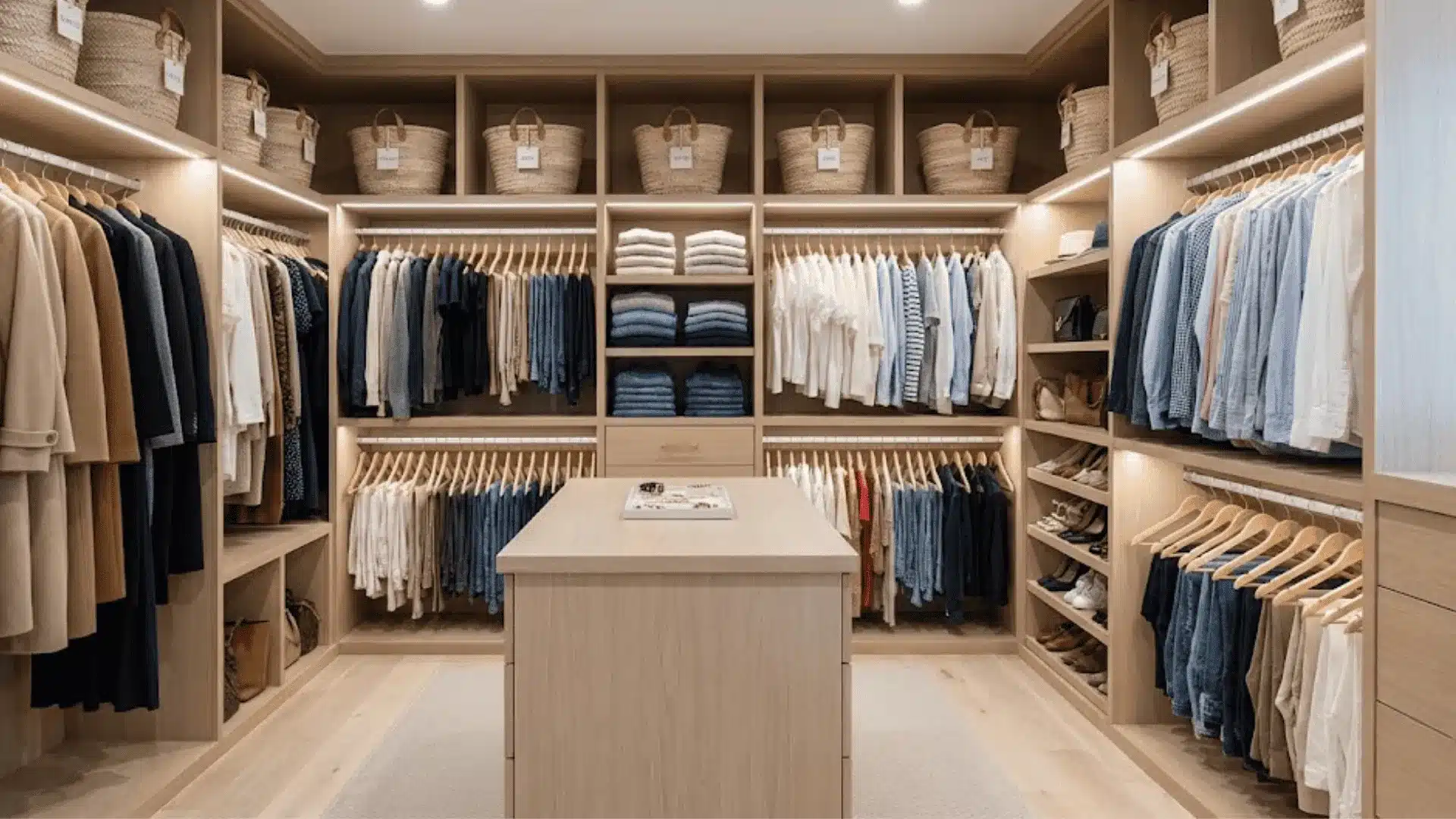
Key Takeaways
Closet organization depends on creative ideas and daily habits
Step-by-Step guide improves visibility and accessibility
Small maintenance prevents clutter in the closet
Common Problems with an Unorganized Closet
Usually, the closet slowly turns into clutter when it is not maintained properly.
It could be due to several reasons, such as a busy work schedule, an improper system, or an unwillingness to organize a closet.
Some common issues listed are:
- Overcrowded hanging rods.
- Piled up clothes in the closet.
- Accessories are lost among the clothes.
- Mixing of different seasoned clothes.
- No free space for new items.
Step-By-Step: How to Organize a Closet
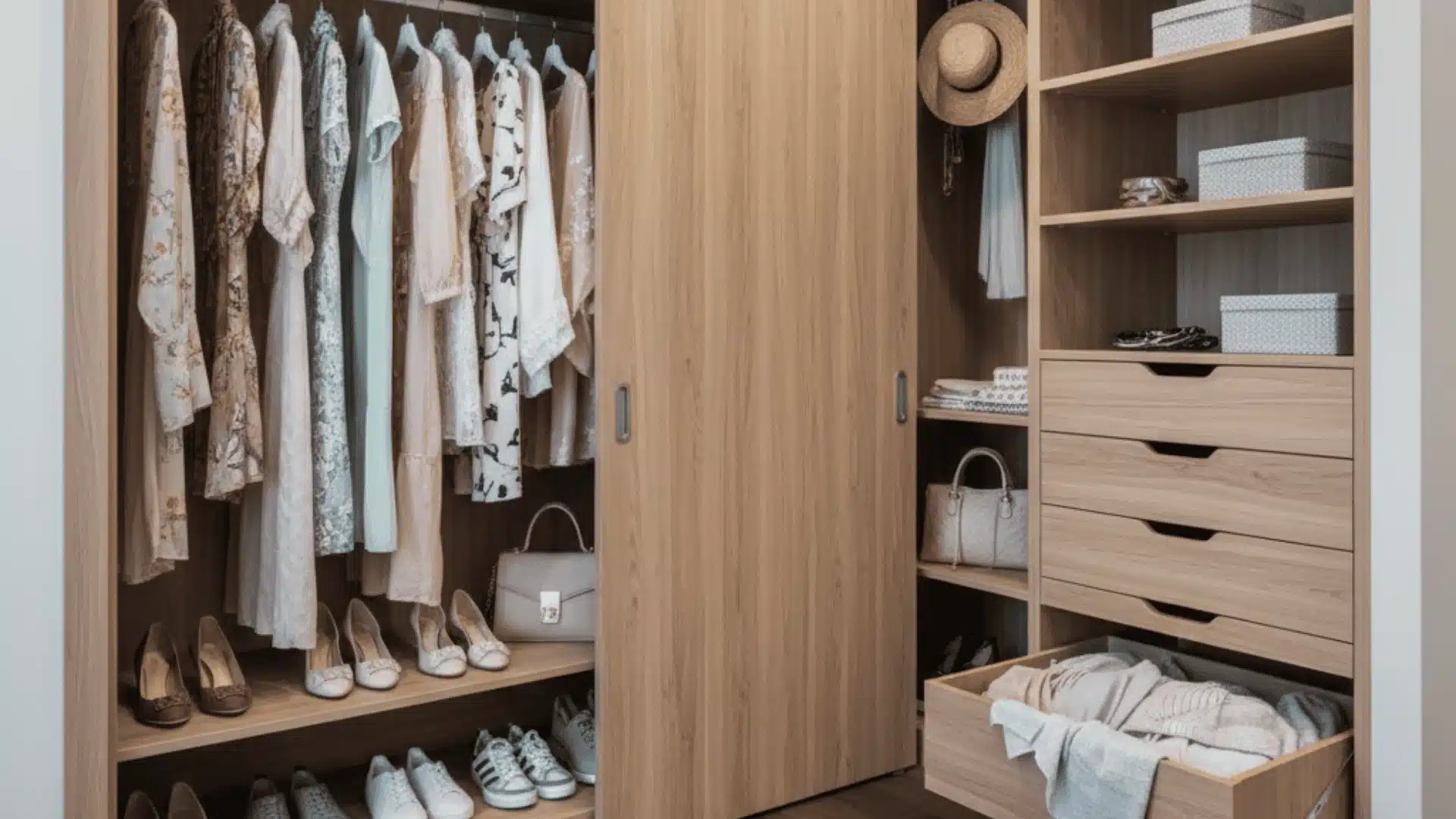
It involves simple steps to organize a closet perfectly. Here are those steps:
1. Start with Emptying the Closet
First, take everything out of your closet. This allows a clear start and helps you distinguish between used, unused, and forgotten clothing items.
An empty space helps you see the actual space to work with. It also makes cleaning easier.
2. Sort by Relevance
Clothes should be divided into categories such as:
- Regularly worn
- Occasionally Worn
- No longer needed
This step helps in clear decision-making. I made three piles during my closet cleanup. The ‘no longer needed’ pile was twice as big as I expected.
3. Clean the Space
Before placing the items back, ensure the shelves, rods, and hangers are properly wiped.
A clean base prevents dust from ruining the clothes.
4. Group Similar Clothing Items Together
The next important step in organizing a closet is grouping similar items into one section. It improves visibility and makes the clothes easier to access.
The different zones look like:
- Casual T-Shirts stacked together.
- Bottom wear is in a different section.
- Work-based clothes are firmly stored.
- Sportswear is placed separately.
- Small and quick space for accessories.
It aims to enable quick maintenance by dividing the system into different zones.
5. Hang the Required Items
The clothes that are used frequently or are susceptible to creasing should be hung properly. For eg: Formal wear.
This prevents clothes from overcrowding and makes the closet look organized and well-used.
6. Use Vertical Spacing
Vertical spacing increases the capacity without cluttering clothes.
By using hanging organizers, shelf risers, and stackable boxes, you can make the most of the closet’s height. The door hooks also help create an extra storage option.
7. Apply the Reset Rule
It is a very efficient habit to keep a closet organized for a long time. It helps maintain the order of clothing items.
It states that for every new item added to the closet, one old item should be removed.
I follow this rule intentionally. When I bought a new shirt last week, I immediately donated an old one. This keeps the balance of the closet intact.
Creative Ideas to Organize a Closet
Creative ideas can improve the use of space and its appearance. A well-organized closet is easier to maintain because it aligns with our everyday habits and is convenient to use.
Let’s look at some of the effective ideas.
Rotate Clothes Seasonally
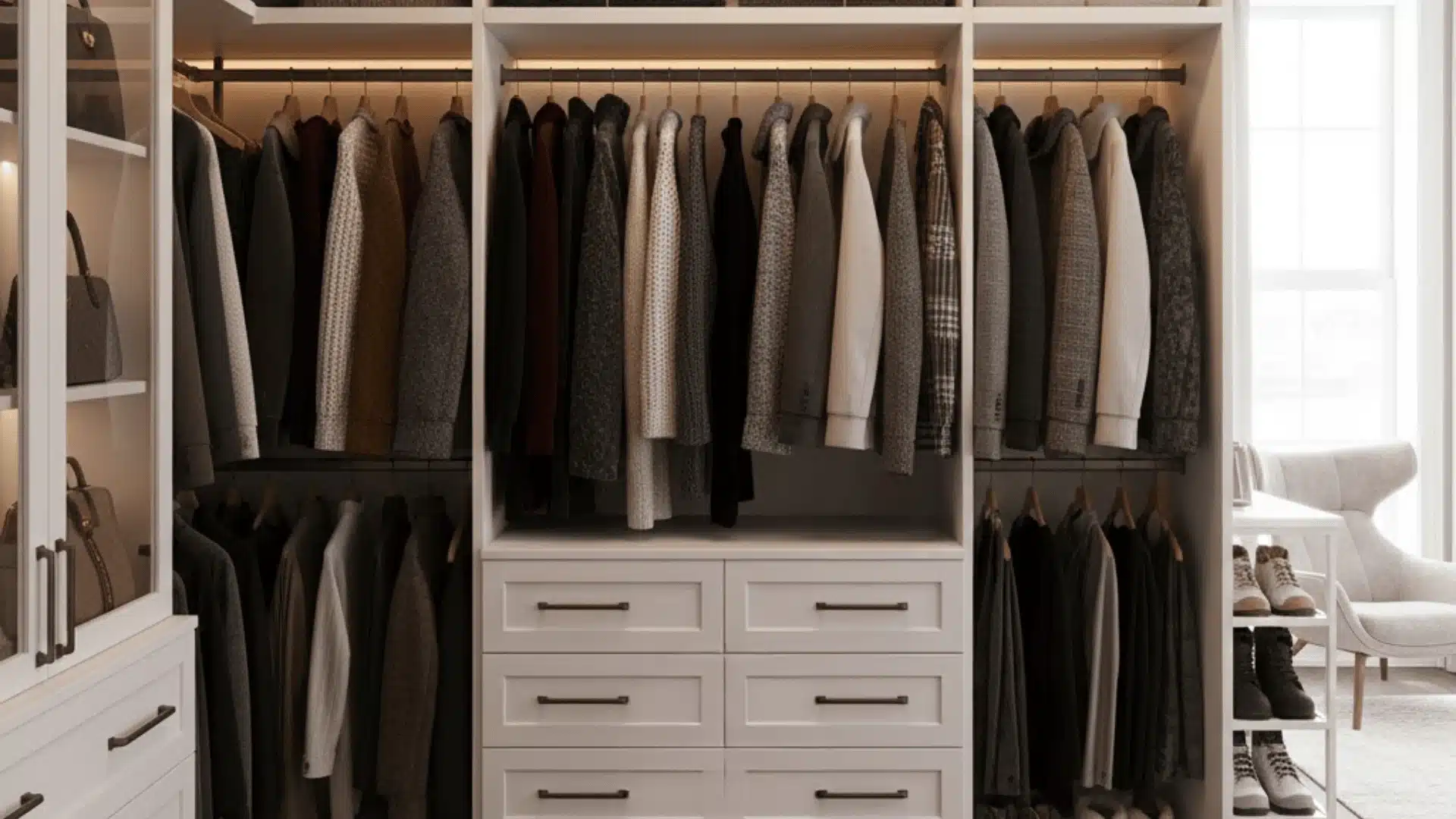
Seasonal rotation of clothes is one of the simplest ways to reduce closet clutter.
Clothes not needed for the next few months could be stored on higher shelves or in storage boxes. This keeps daily outfits easily accessible.
By reducing the visibility of unnecessary clothes, the closet instantly looks more open and easier to manage.
Double the Hanging Space
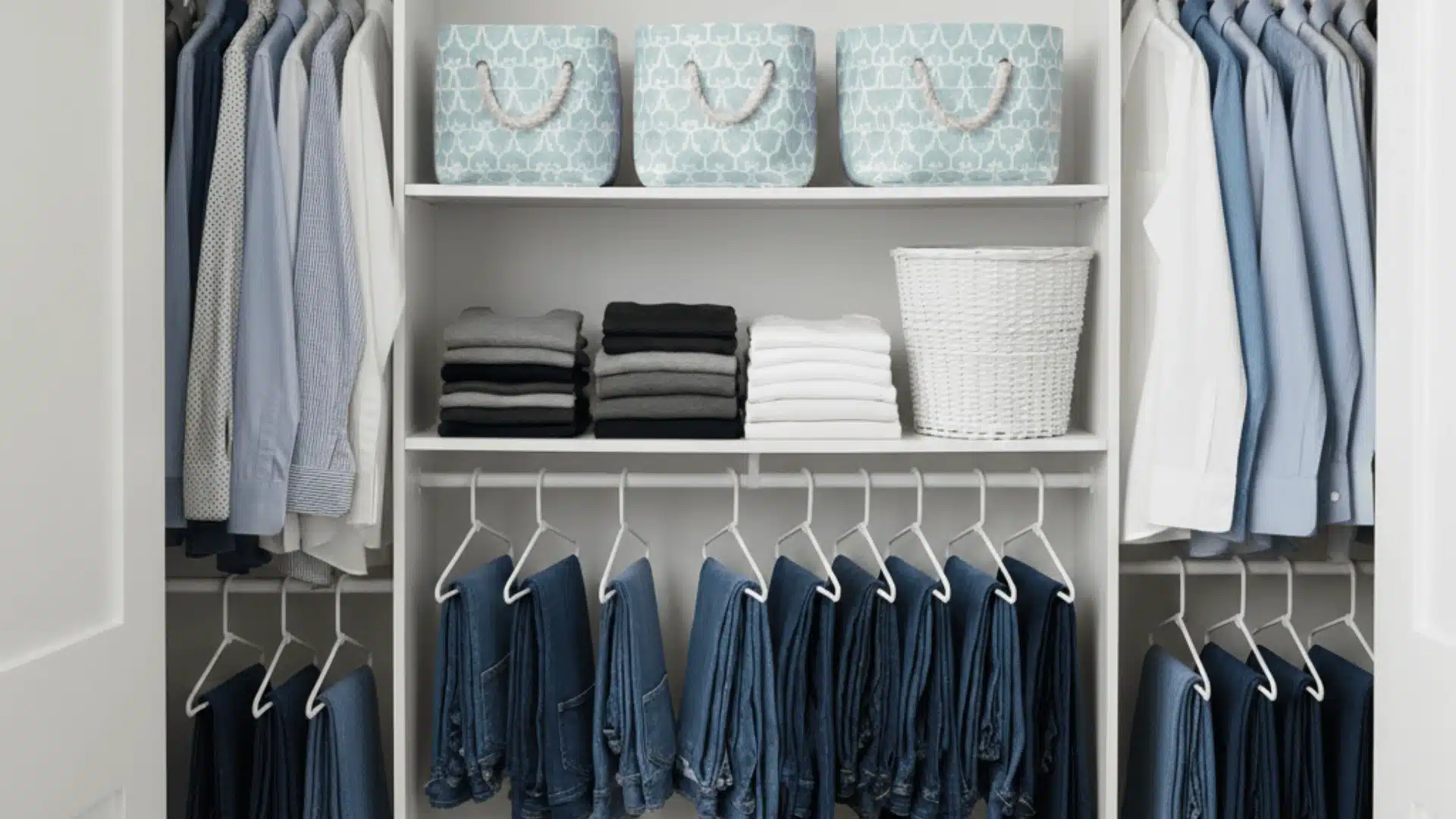
Use the vertical space to maximize the storage facility. You can add a second rod below the main hanging rod to use the space efficiently.
This method works best for shorter garments, such as:
- Shirts and Tops
- Trousers and Skirts
- Children’s clothing (if you need)
By doubling the hanging space, you can place the clothes in the closet in a comparatively shorter time than it takes to fold them.
File-Fold Technique
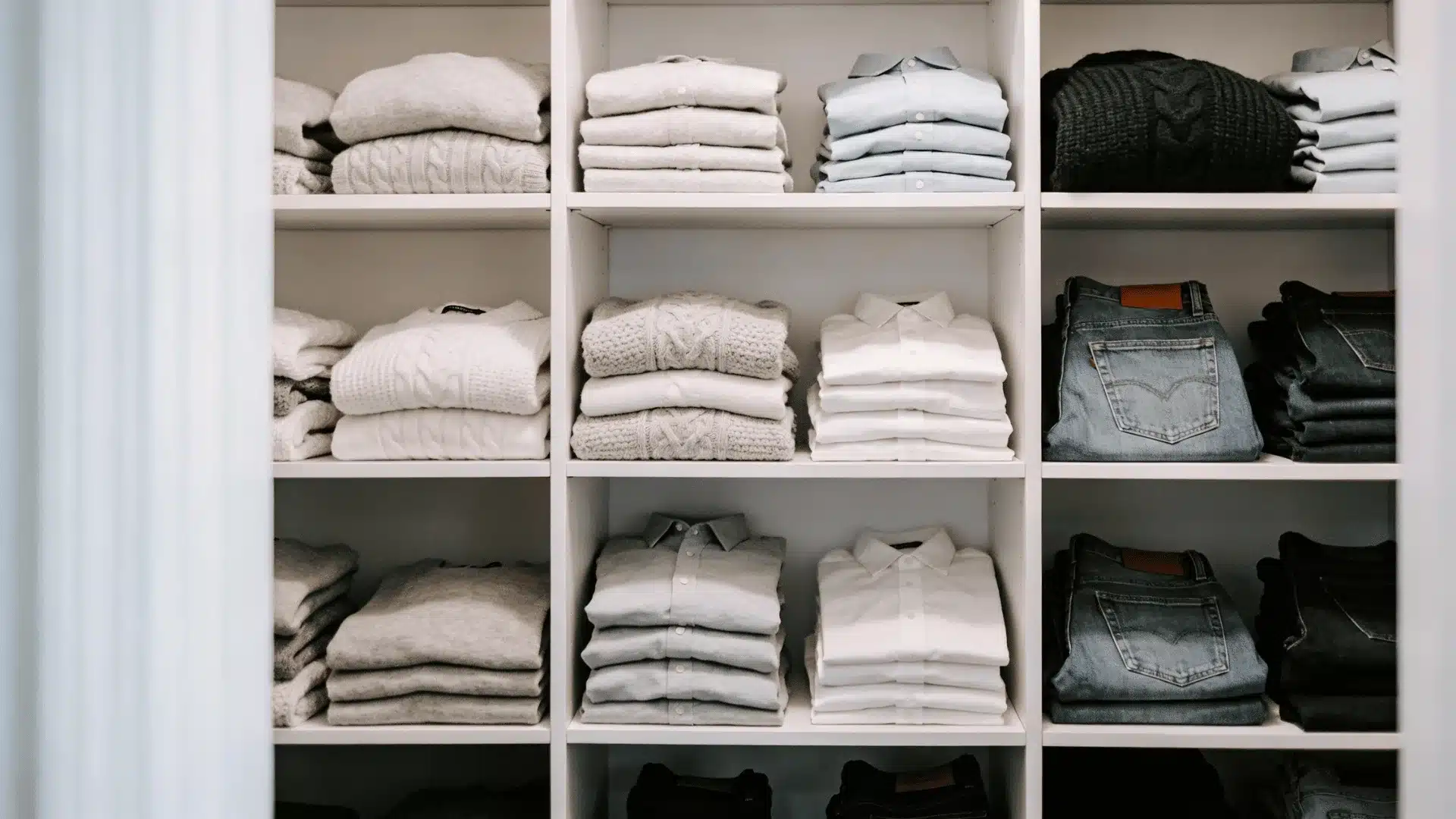
The traditional stacking method often requires repeated folding, which can lead to a mess.
By the File-Fold technique, you can solve the clutter by placing clothes vertically instead of horizontally.
With the help of this method, clothes can be removed without disturbing the setting of the closet. I switched to file-folding my t-shirts after watching a video. It also keeps the drawer and the shelves neat.
This technique could be used for t-shirts, jeans, nightwear, etc.
Backdoors as Storage Zone
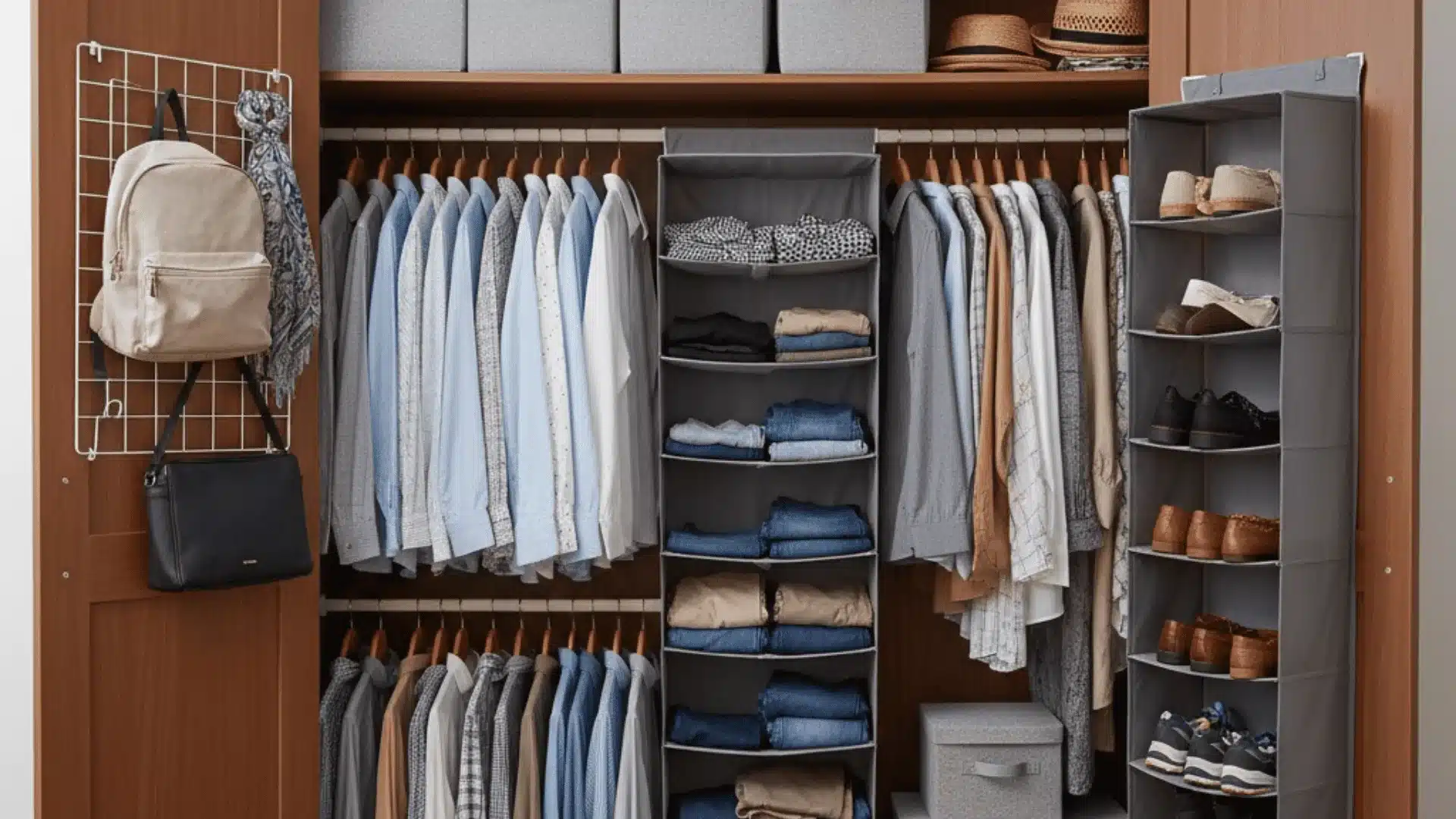
The back of the closet door could be transformed into a functional storage zone by installing hooks or slim pockets.
It is ideal for storing scarves and stoles for a quick grab. Men can place their belts and ties on those hooks.
Using the door as storage adds capacity without disrupting shelves or hanging space.
Quick Space for Accessories
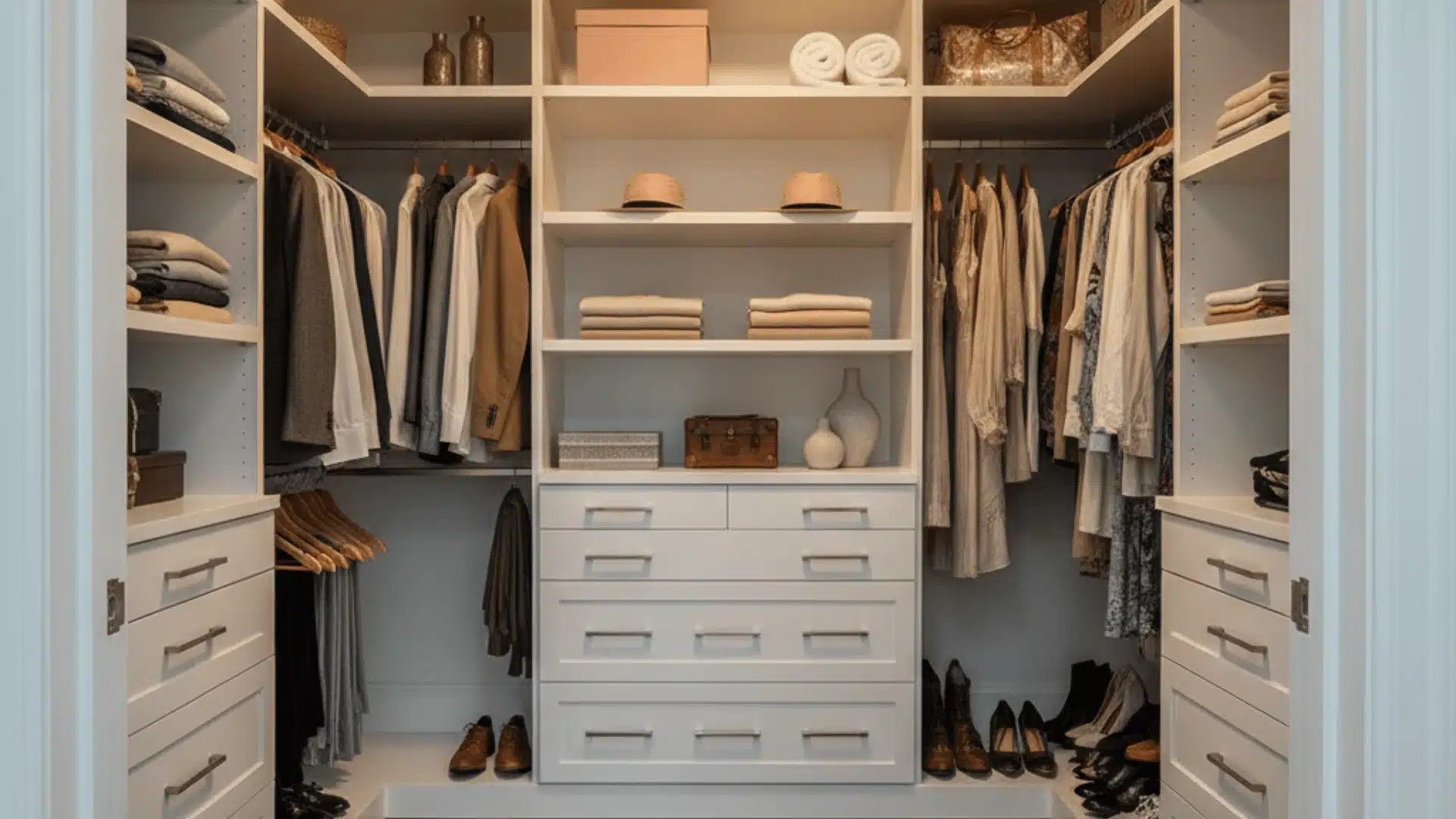
Accessories have the tendency to get easily misplaced in a closet. Creating a dedicated space for them helps avoid this problem. It makes accessories easier to locate and prevents any damage to them.
Baskets, trays, or small drawers can be used to store accessories.
Turn Storage Tool into Stylish Element
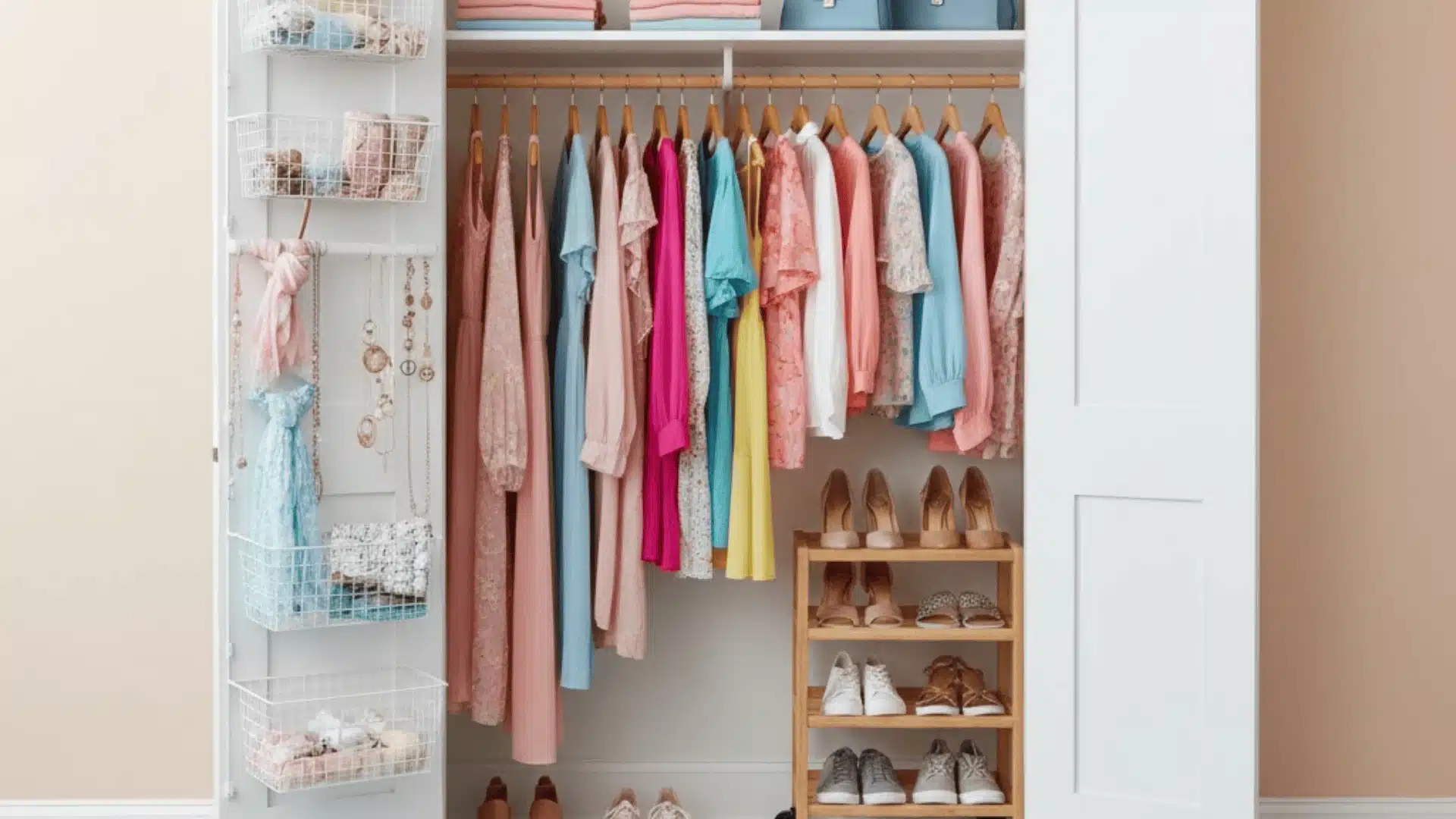
Its necessary to choose storage tools that complement the overall look of the closet to add visual balance. When storage looks attractive, you are more motivated to keep the closet organized.
For example:
- Matching baskets or boxes
- Fabric storage bins
- Wooden hangers
Use Color Code
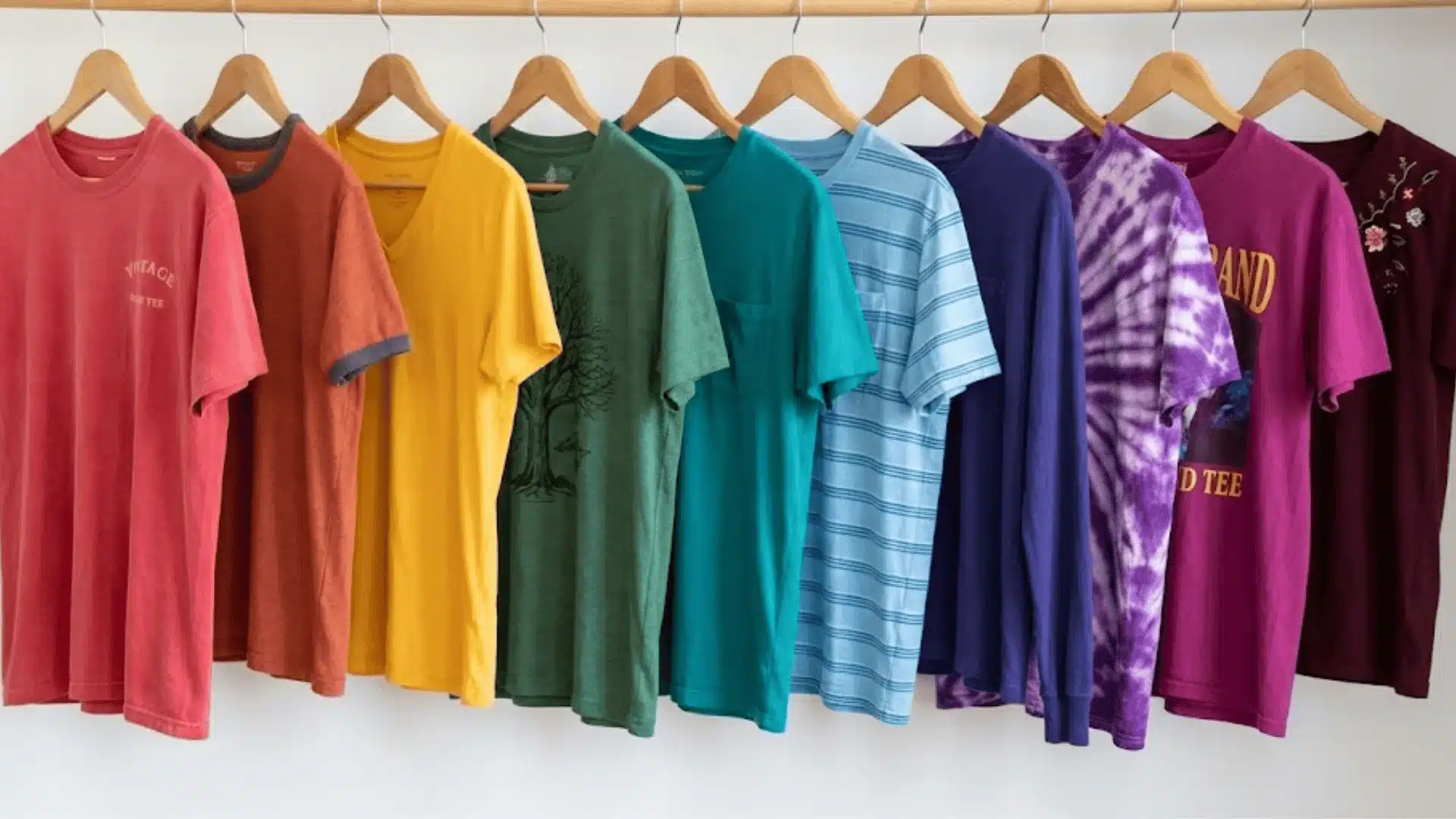
Color-coding is a practical and visually calming way to organize clothes.
You can arrange it from light to dark or group similar colors together to make it easier to distinguish. It helps with quick outfit planning by reducing visual clutter.
It gives the closet a clean, themed look, well coordinated with colors.
Maintenance Tips
Key maintenance habits include:
- Put clothes in the wash immediately after use.
- Fold laundry before placing it in the closet.
- Do a quick weekly closet check to clean or improve the setting.
From Clutter to Calm
An organized closet is based on creative habits that support daily life.
With a few simple steps and creative ideas, you can turn an overcrowded closet into a functional space.
Try out any closet idea and build a setting that is easy to maintain. Pick the easiest tip from this guide and start there.
Ready to turn your closet chaos into calm? You’ve got this.
Frequently Answered Questions (FAQ’s)
1. In What Order Should I Put My Clothes in My Closet?
Sort by category, usage frequency, season, then color.
2. What are Common Closet Organizer Mistakes?
Overcrowding of clothes, avoiding or delaying decluttering, and poor zoning are the common mistakes.
3. How to Organize Your Closet with Little Space?
Use vertical storage options, fold the clothes in a smart manner, and rotate the clothes season-wise.