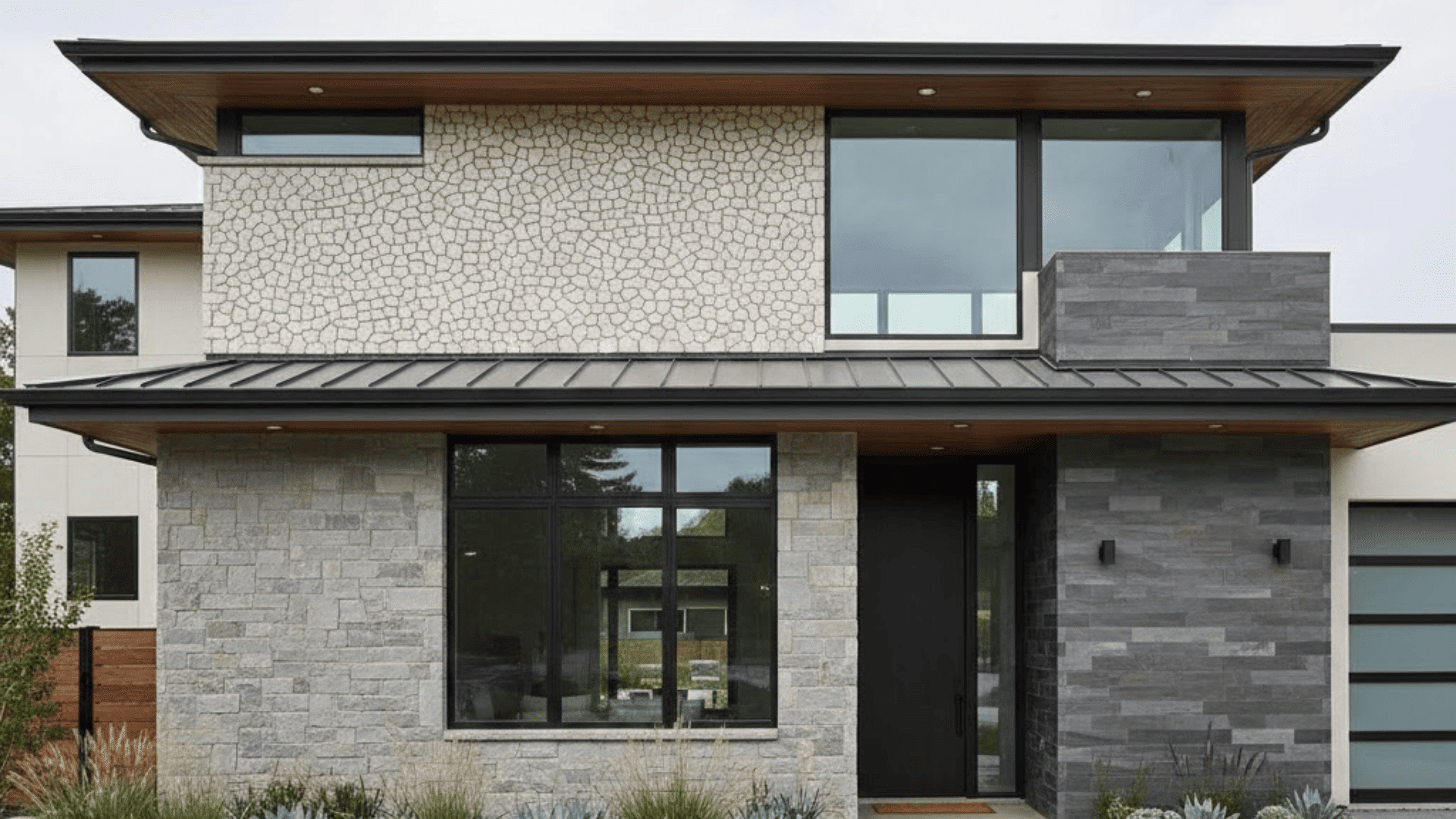
Your home’s exterior sets the first impression before anyone walks inside.
Flat, plain walls can make even well-built houses look forgettable.
Stone cladding changes that by adding depth, strength, and long-term value.
The right types of exterior house stone can reshape how a home appears from the street.
From classic limestone to modern stacked panels, house exteriors with stone and siding create finishes that stay reliable and visually strong for many years.
Why is it Necessary to Know Different Types of Exterior House Stone?
Stone exteriors have been around for centuries, and there’s a good reason why. They protect your home from harsh weather.
They protect your home from harsh weather. They increase property value significantly. I’ve worked with homeowners who changed dated houses into mesmerizing properties using the right stone.
The key is understanding what each type offers.
Some stones handle freeze-thaw cycles better. Others work perfectly in hot and dry climates.
Let me explain the most popular types of exterior house stone available today.
Best Stones for the Exterior of Your House
Natural stones bring unique properties that manufactured materials can’t match.
Durability factors you should know:
- Density affects how well stone resists weathering
- Porosity determines water absorption rates
- Hardness influences resistance to scratches and chips
Climate considerations matter:
- Freeze-thaw damage affects both roofs and stone exteriors
- Humid areas require low porosity options
- Coastal homes benefit from salt-resistant varieties
Think long term when selecting your material. The best stone combines beauty with performance in your specific location.
Now, look at some major types of exterior house stone that you can choose for your house.
1. Granite
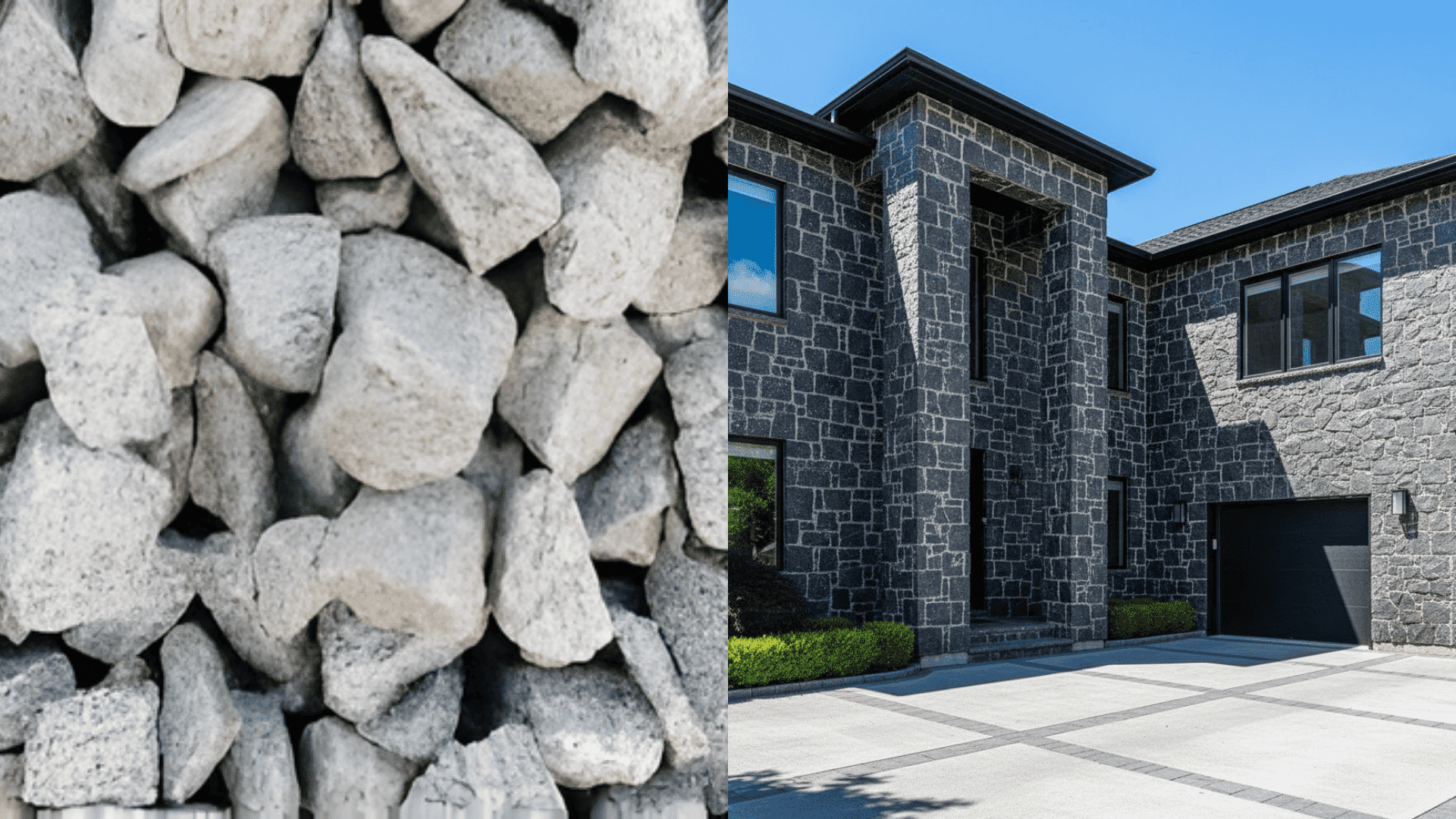
Granite tops my list for strength and weather resistance. This igneous rock forms deep underground under extreme pressure.
It contains quartz, feldspar, and mica crystals. The result is a stone that easily handles rain, snow, and blazing sun.
Why granite works so well:
- Withstands temperatures from freezing to scorching
- Resists scratches better than most materials
- Available in gray, black, pink, and white tones
I’ve seen granite facades look pristine after 50 years. It costs more upfront but saves money on repairs.
Many upscale homes feature granite as the primary accent material for lasting appeal.
Installation Cost: Approx. $35 to $50 per square foot installed
2. Sandstone
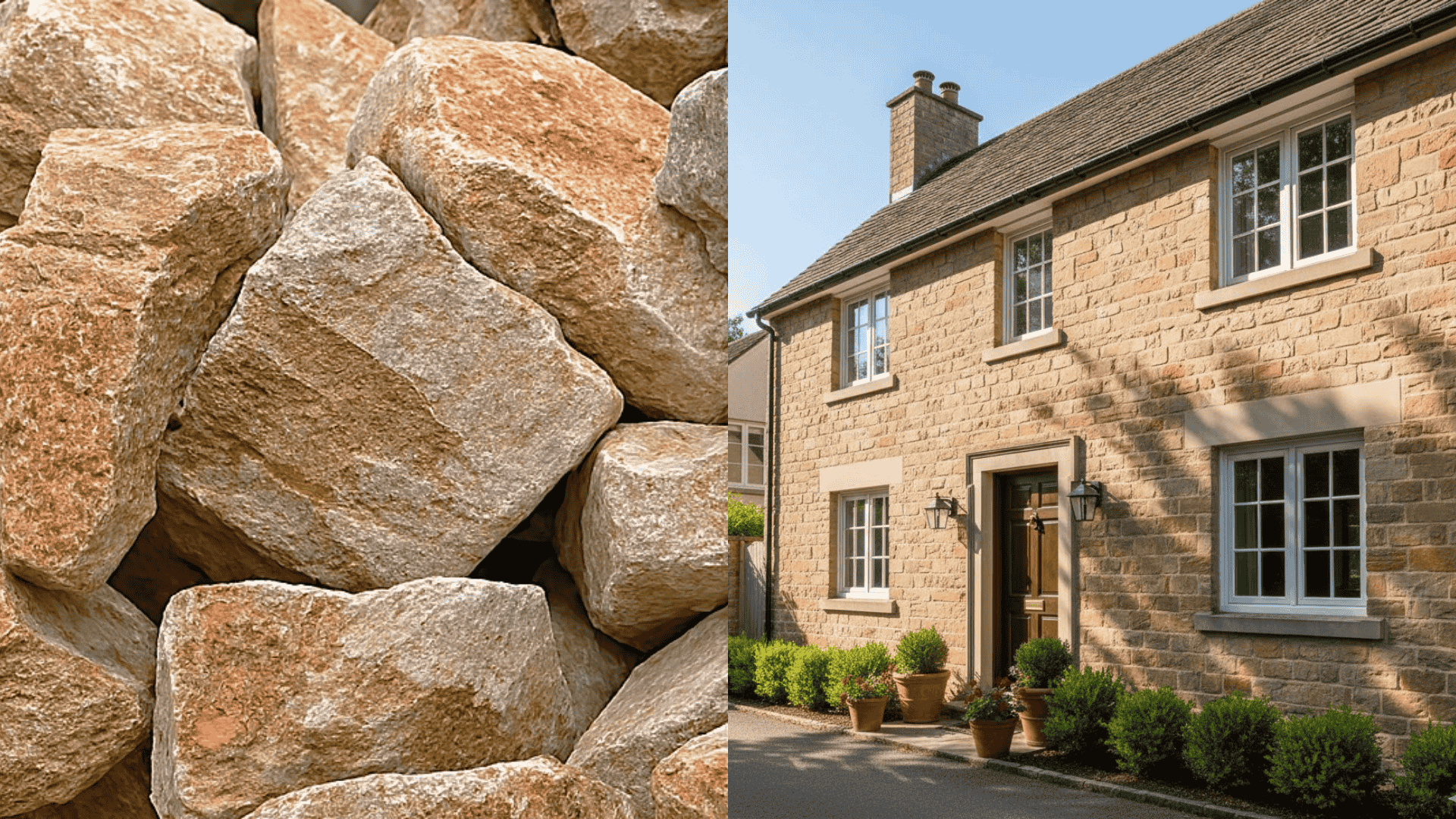
Sandstone offers workability that other stones can’t match.
Masons love it because it cuts cleanly and shapes easily. This sedimentary rock consists of sand grains cemented together naturally over millions of years.
Advantages of Sandstone:
- Cuts into custom shapes without cracking
- Comes in warm earth tones like tan, red, and brown
The downside? It absorbs water more readily. Seal sandstone every 3 to 5 years. This prevents staining and extends its life considerably.
Installation Cost: Approx. $20 to $30 per square foot installed
3. Limestone
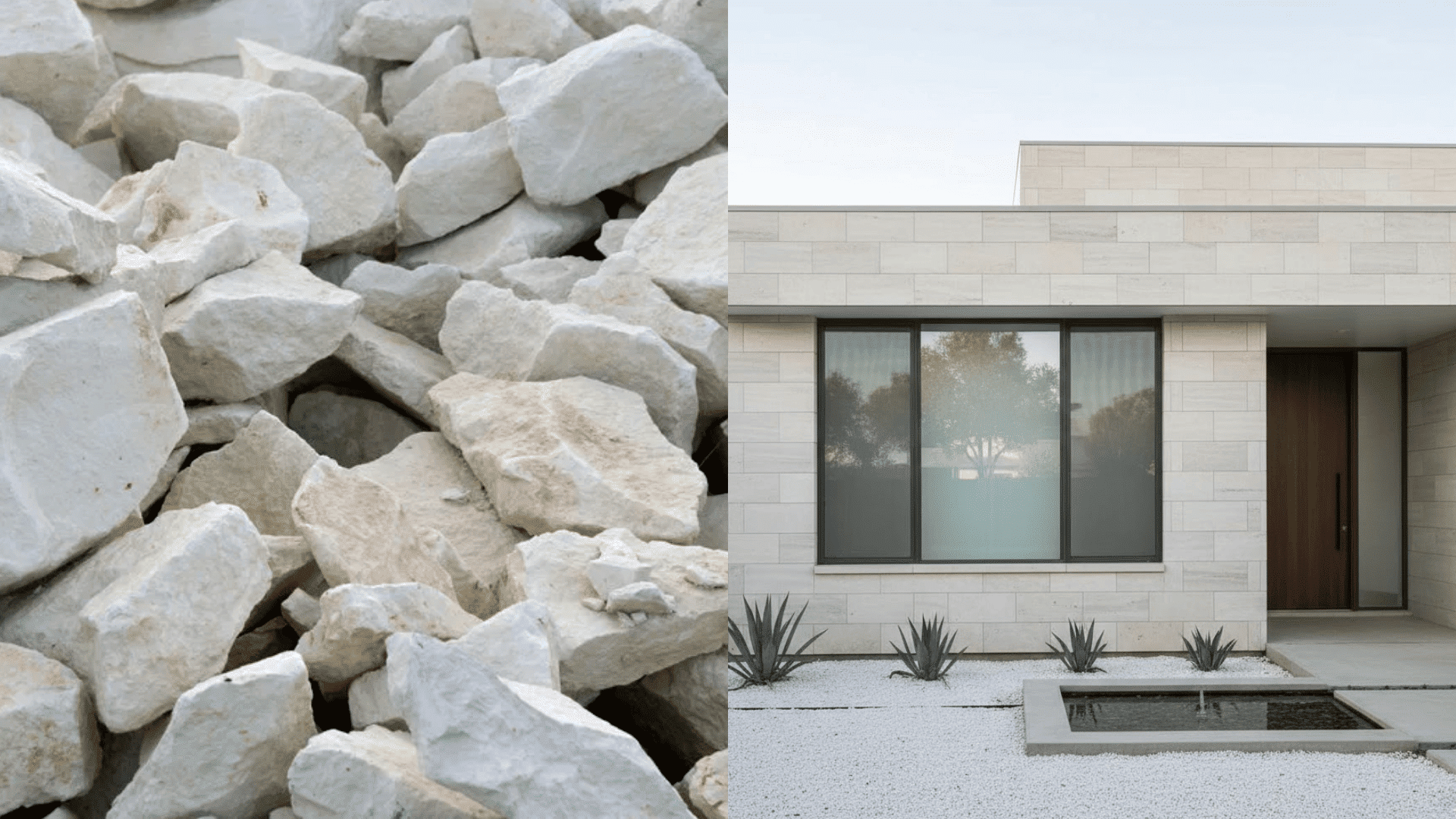
Limestone brings beauty through its light, neutral colors. This sedimentary stone forms from ancient sea creatures and coral.
It creates a decent look that planners favor for contemporary designs.
Limestone characteristics:
- Ranges from cream to light gray shades
- Provides good insulation properties
- Suits both modern and classical architecture
Limestone works best for covered areas or mild climates. It’s softer than granite, so it can show wear in harsh weather.
Installation Cost: Approx. $25 to $40 per square foot installed
4. Slate
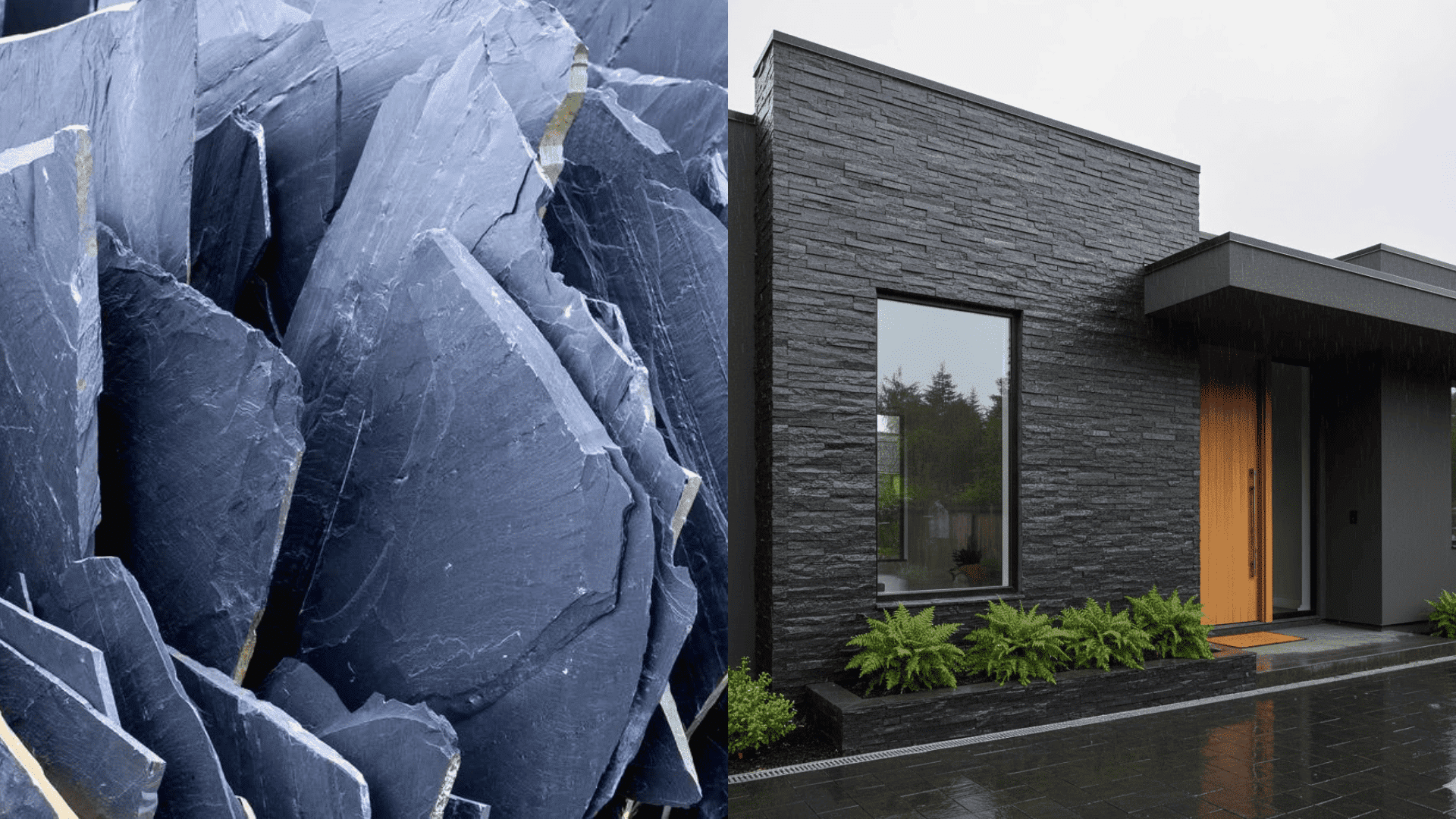
Slate handles moisture like a champion. This metamorphic rock splits into thin, flat layers naturally. Those layers make it ideal for wall cladding and accents.
Use slate frequently in rainy climates. It doesn’t crack when water freezes inside like porous stones do.
The textured surface adds visual interest without looking too busy.
Installation Cost: Approx. $30 to $45 per square foot installed
5. Quartzite
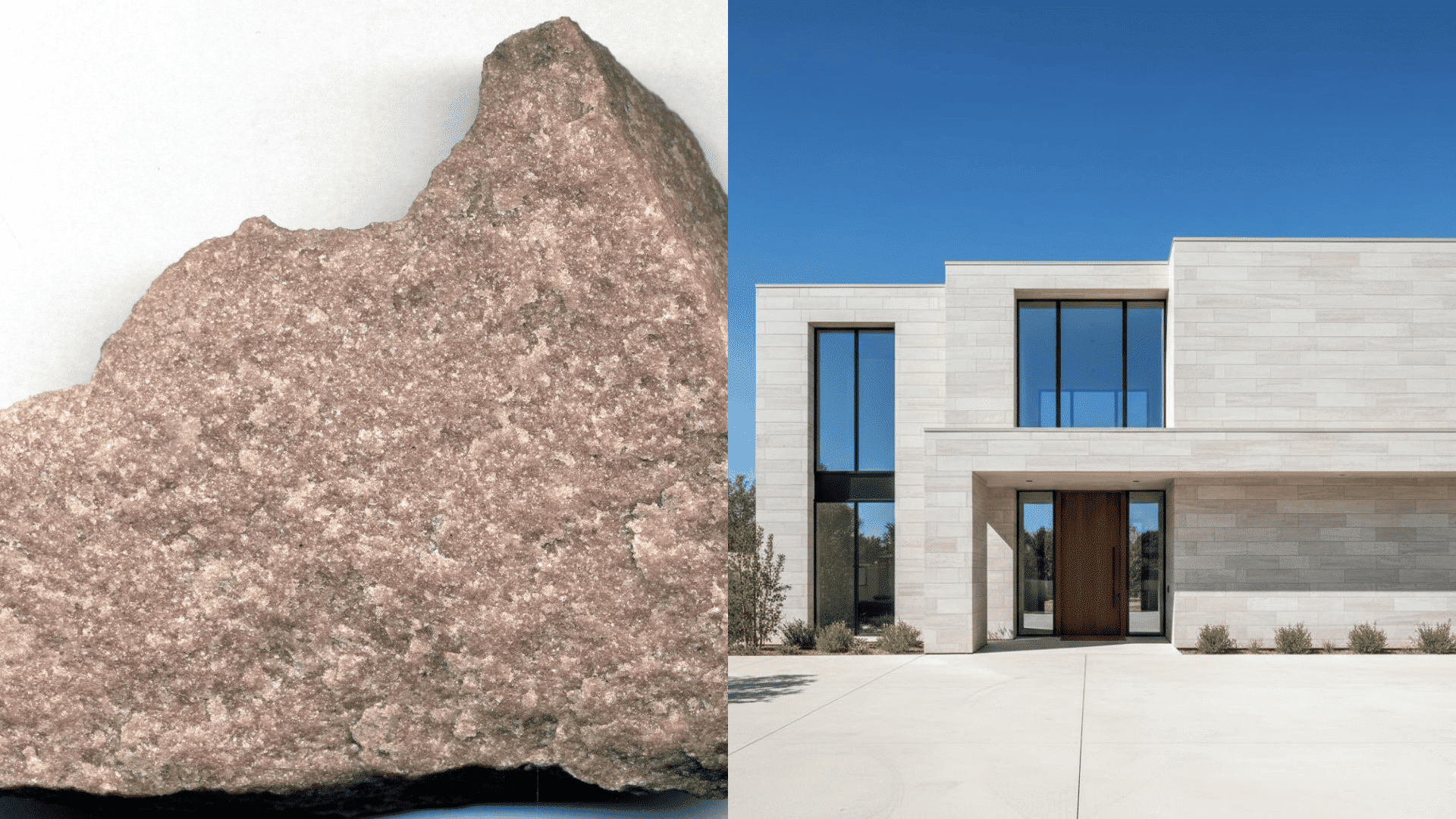
Quartzite brings modern appeal through its clean lines and durability.
This metamorphic rock starts as sandstone, then heat and pressure transform it into something much harder.
Quartzite is harder than granite in most cases and it resists etching from acids.
This stone has gained popularity in upscale renovations recently.
Installation Cost: Approx. $40 to $60 per square foot installed
6. Marble
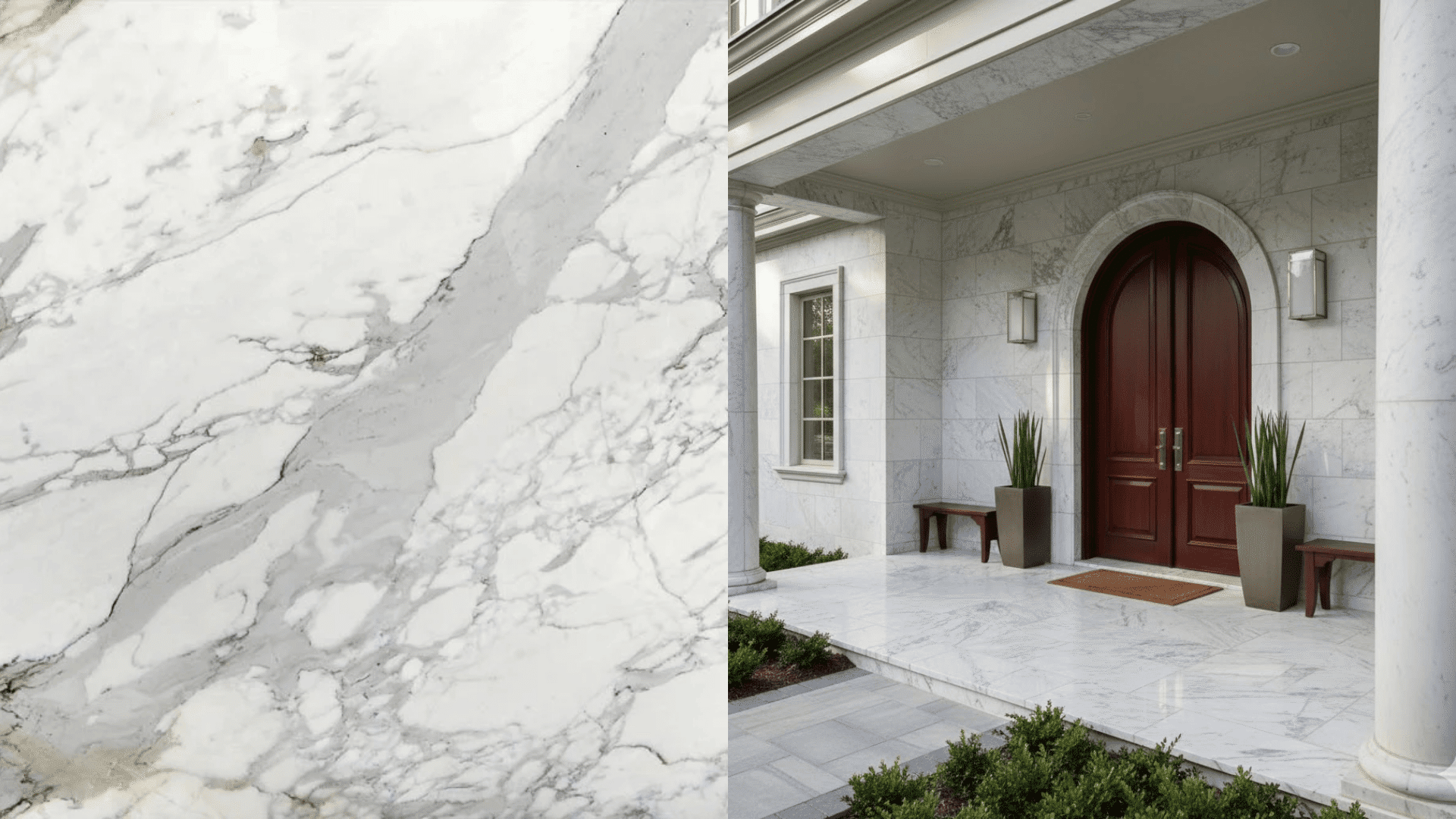
Marble serves best as an accent rather than full exterior coverage.
This metamorphic rock offers unmatched beauty but requires more care outdoors.
Marble considerations:
- Pretty veining patterns in white, gray, and colored varieties
- Softer than other stones, so it scratches more easily
- Reacts to acid rain in some environments
Steer clients toward marble for entry surrounds or covered porches.
Installation Cost: Approx. $50 to $75 per square foot installed
7. Basalt
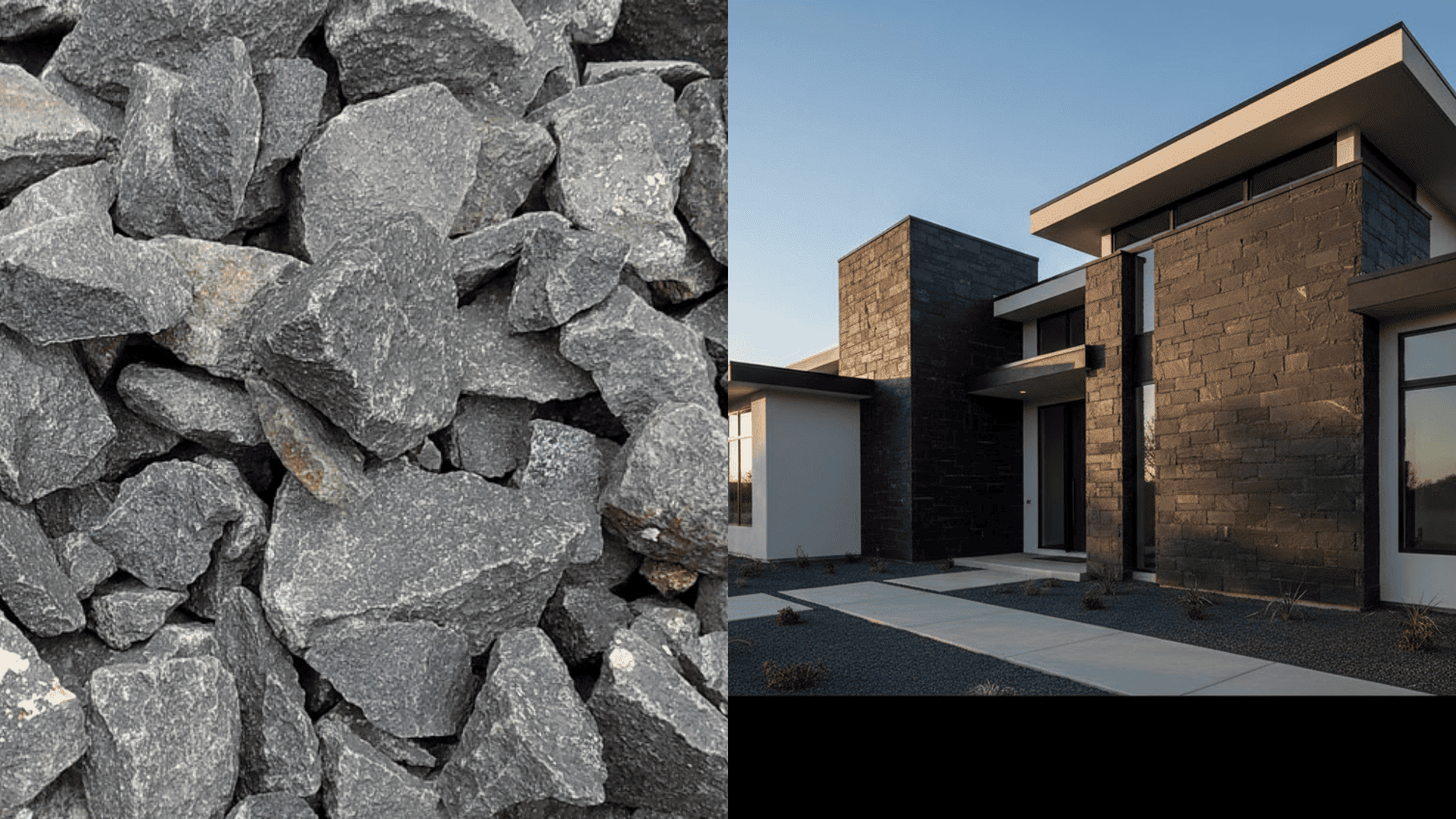
Basalt delivers strength with striking dark colors. This volcanic rock cools quickly from lava, creating dense, durable stone.
Basalt advantages:
- Very hard and resistant to weathering
- Deep black to dark gray colors
- Fine grain gives a smooth, modern appearance
- Extremely long lifespan in any climate
Installation Cost: Approx. $35 to $50 per square foot installed
8. Fieldstone
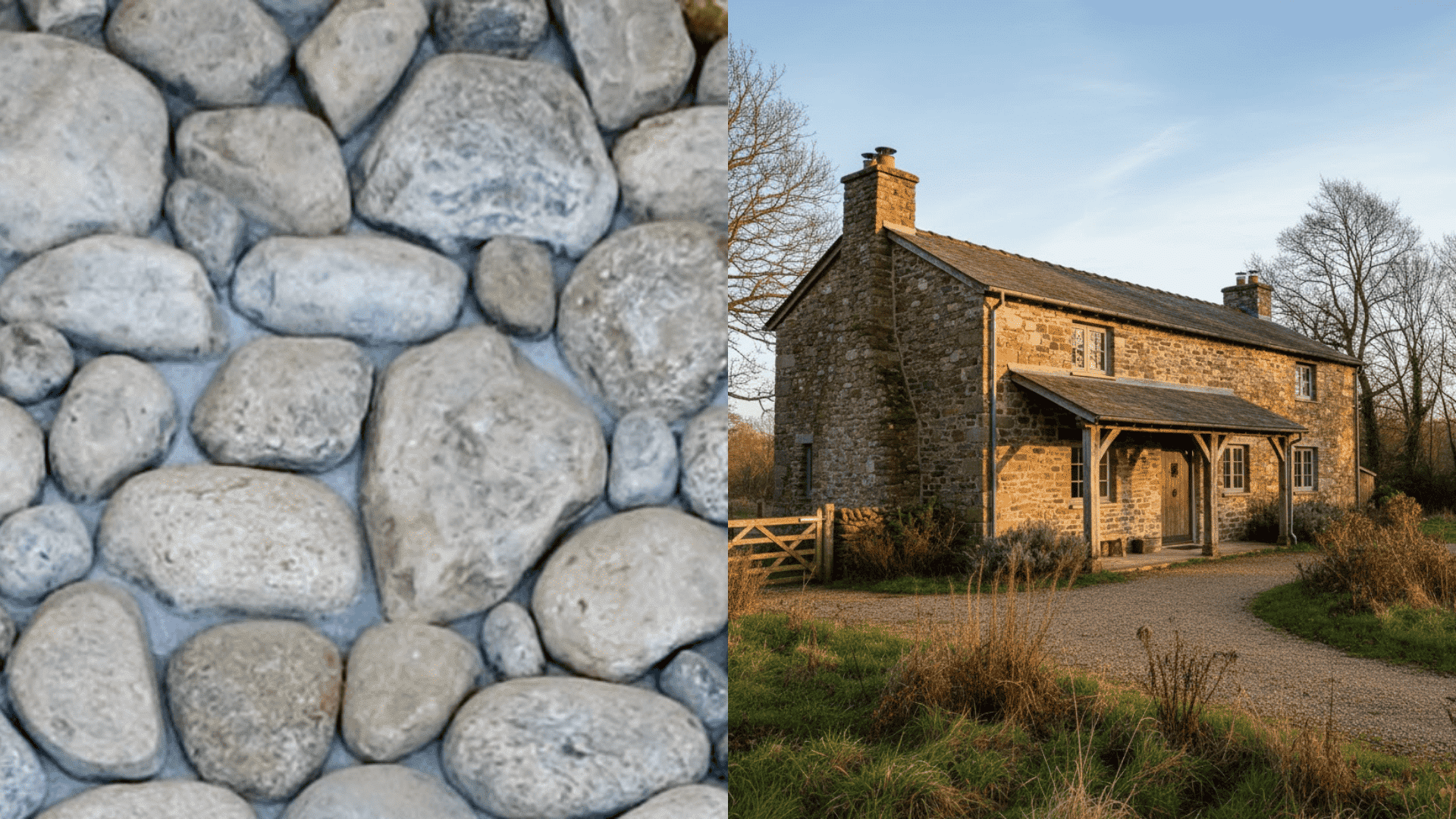
Fieldstone creates that authentic rustic charm.
These naturally rounded stones come straight from fields and riverbeds. Glaciers deposited them thousands of years ago.
The irregular shapes and sizes add character that manufactured stone can’t replicate.
Each piece brings a mix of colors that creates organic patterns across your exterior.
Installation Cost: Approx. $25 to $35 per square foot installed
9. River Rock
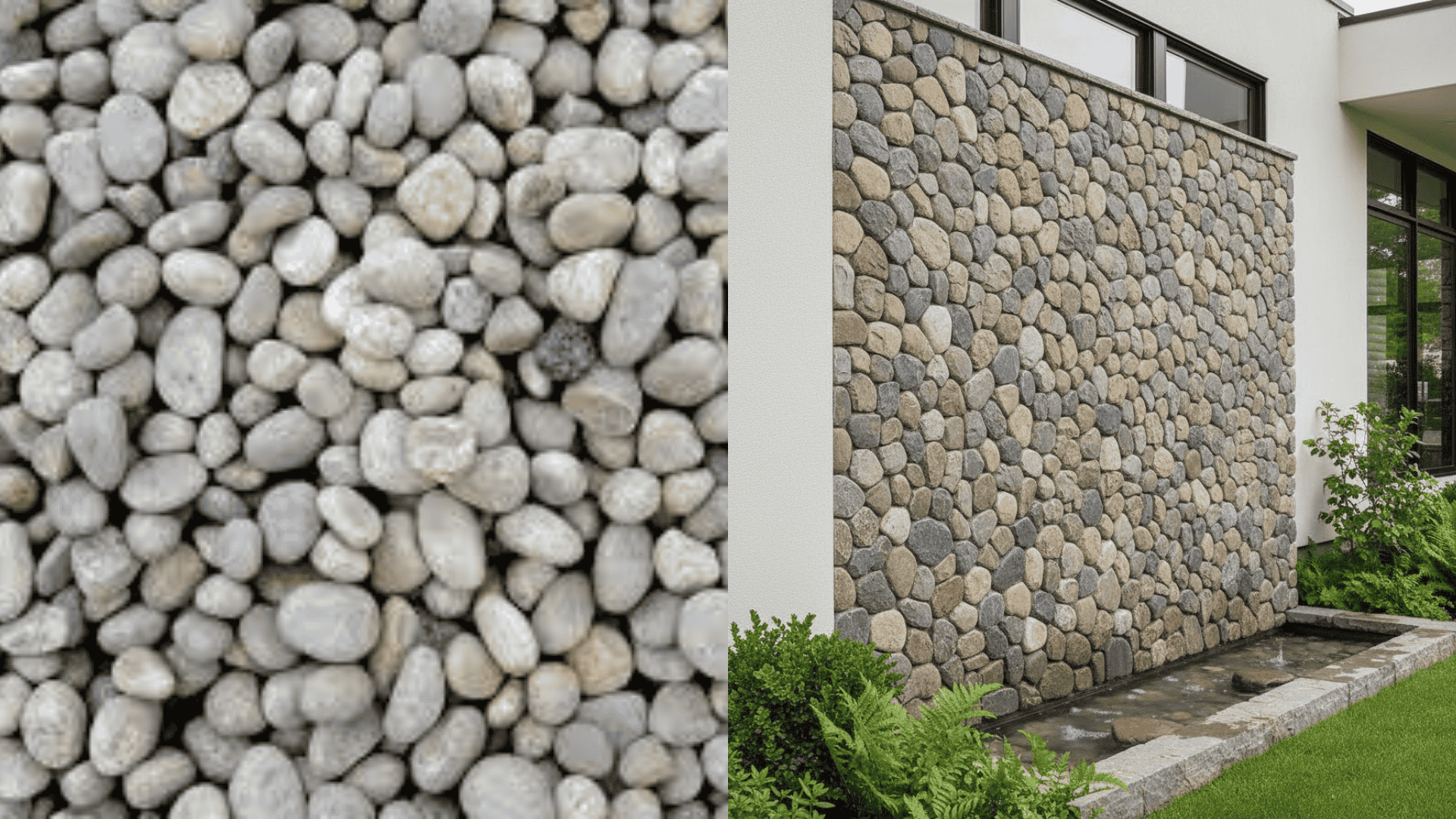
River rock brings smooth, rounded beauty to exteriors. Water tumbles these stones for years, creating their distinctive shape.
They range from pebble size to large boulders.
River rock works well for:
- Mixing with other stone types
- Achieving a natural, organic visual appearance.
Combining river rock with flat stones creates interesting texture contrasts. These stones install quickly using modern adhesive methods.
Installation Cost: Approx. $15 to $25 per square foot installed
10. Travertine
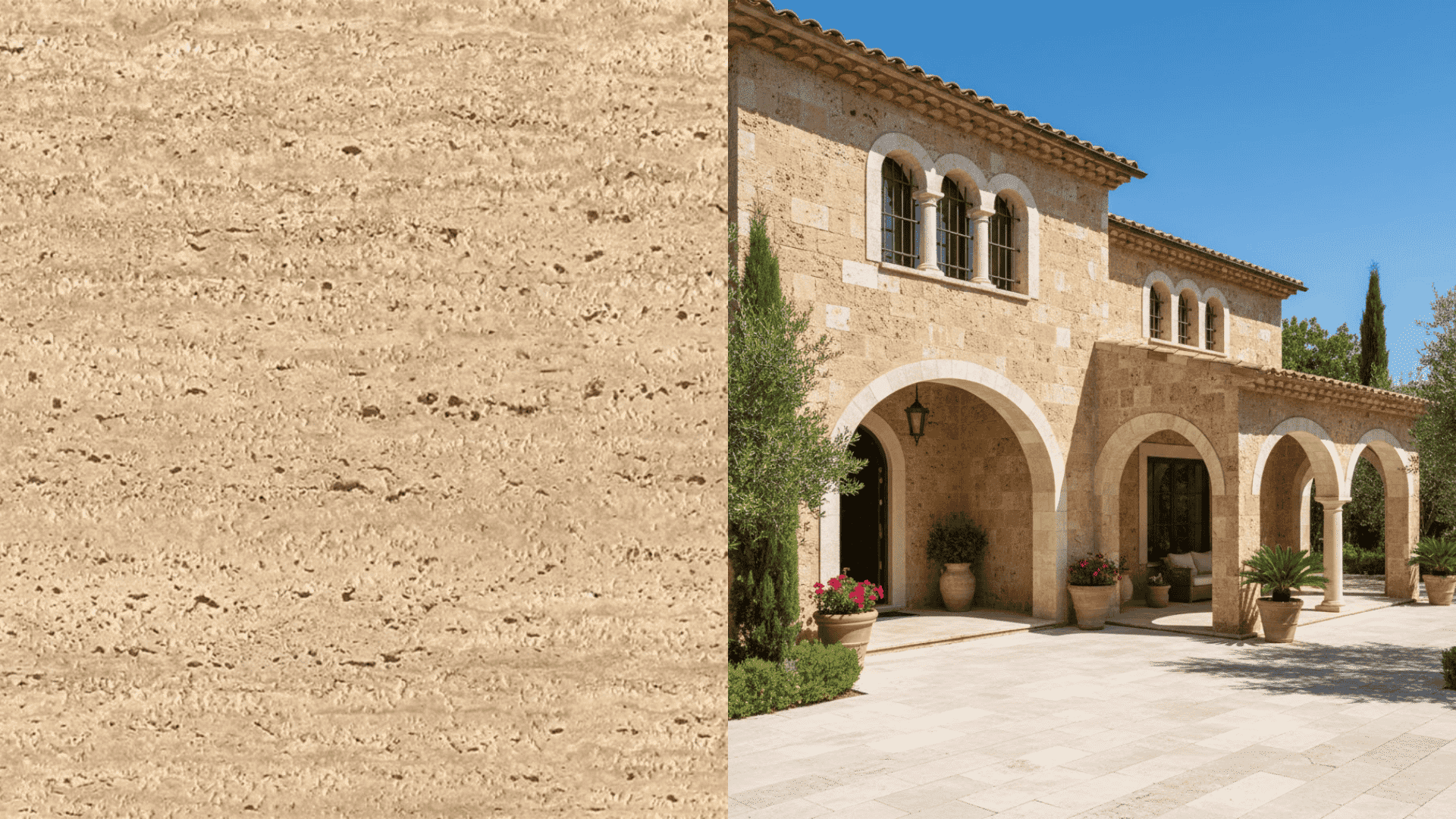
Travertine offers a softer alternative with distinctive pitting. This sedimentary rock forms around mineral springs. The holes give it unique character.
Fill the holes with grout for exterior use.
This prevents water infiltration and dirt collection. Travertine suits Mediterranean and Spanish style homes perfectly.
Installation Cost: Approx. $20 to $35 per square foot installed
11. Onyx
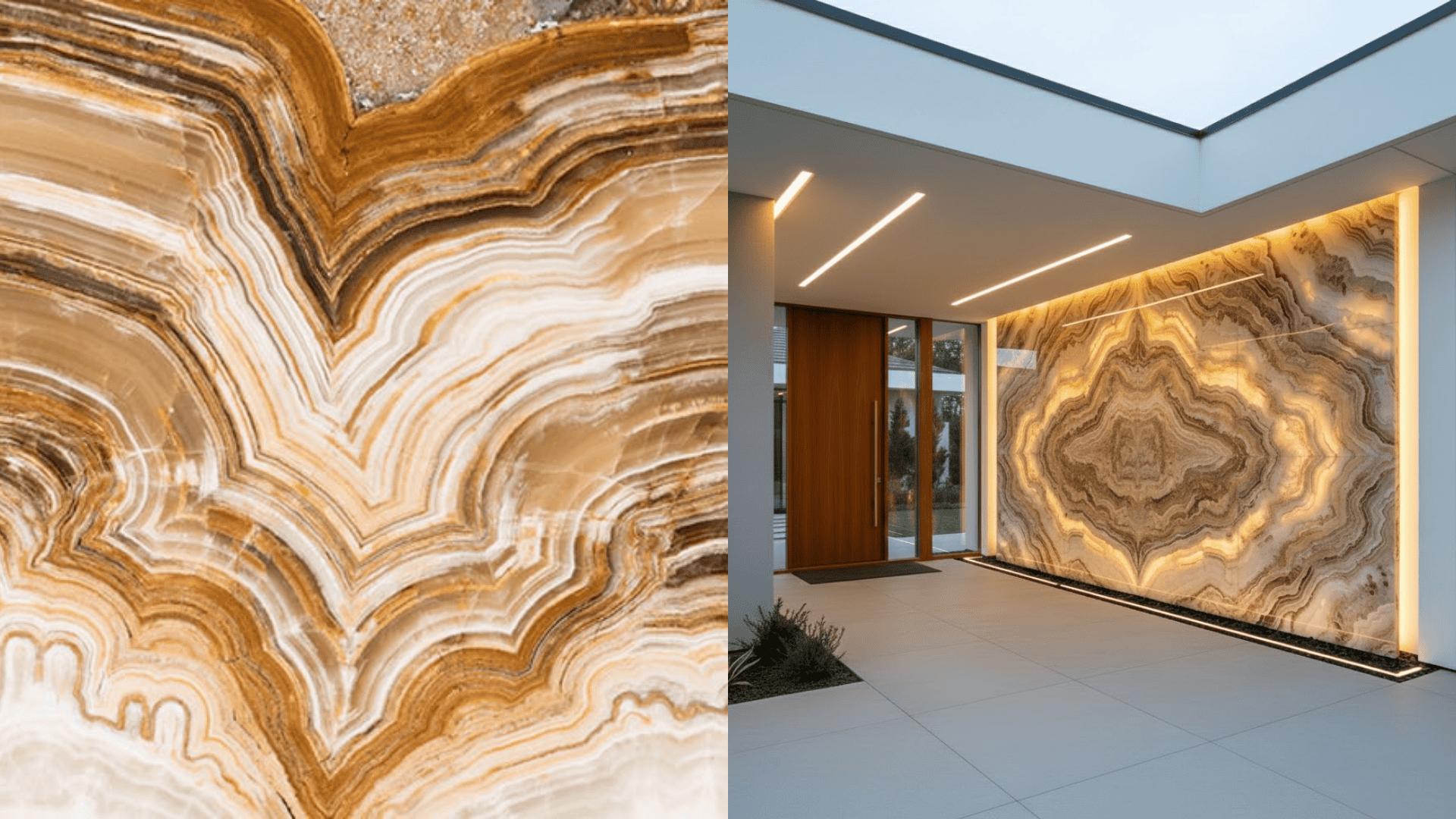
Onyx serves as a lavish accent stone for special applications.
This translucent stone creates dramatic effects when backlit. It’s not practical for full exteriors.
Onyx use cases:
- Feature walls in covered entries
- Decorative panels near lighting
- Small accent sections for visual impact
- Modern luxury home details
Use onyx sparingly due to its softness and cost. It makes incredible first impressions in protected locations.
Installation Cost: Approx. $75 to $150 per square foot installed
12. Soapstone
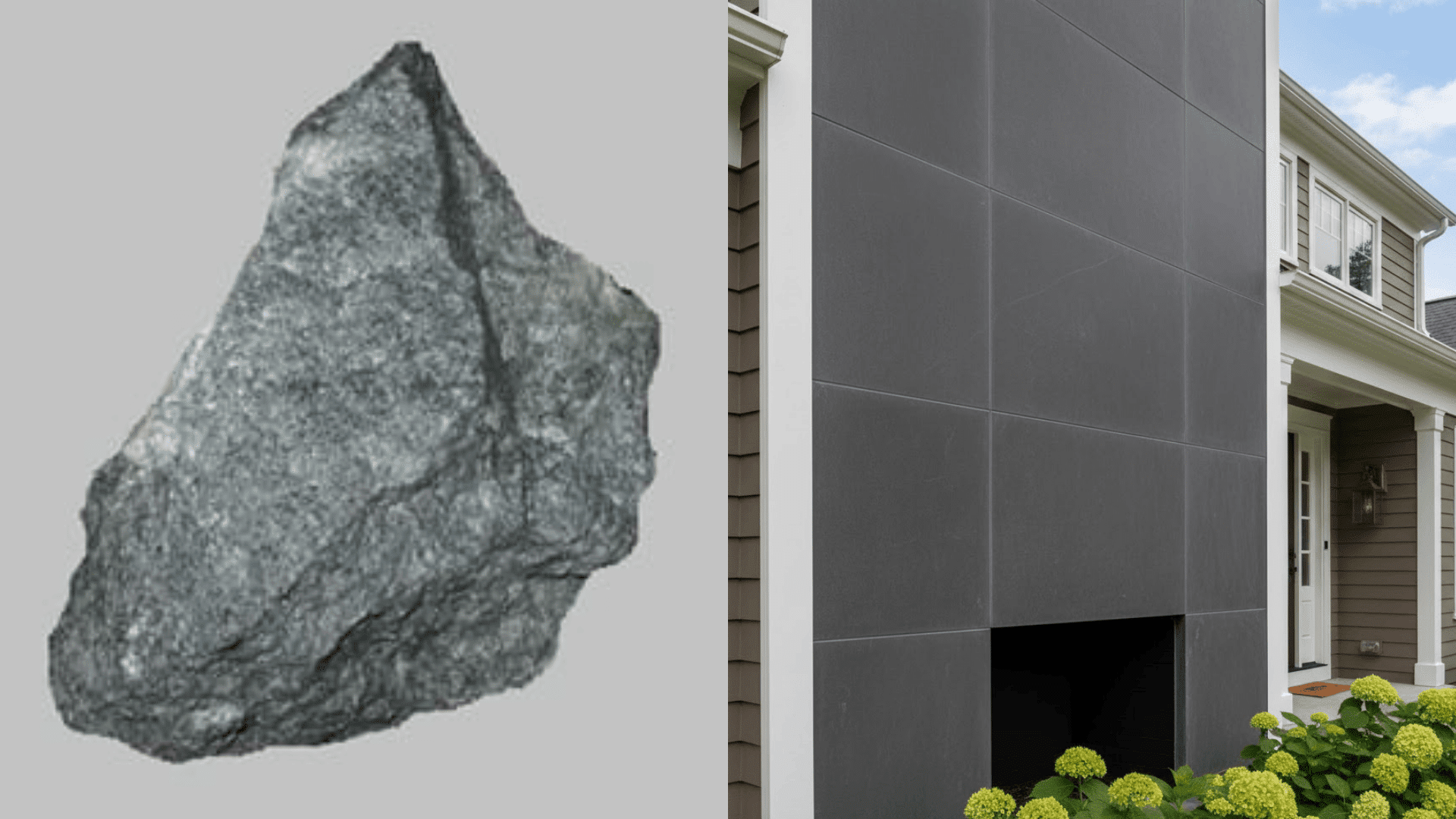
Soapstone resists heat and weather exceptionally well.
This metamorphic rock feels smooth and contains high talc content. It darkens beautifully with age.
Soapstone properties:
- Soft enough to carve custom details
- Develops rich patina over time
Installation Cost: Approx. $30 to $45 per square foot installed
Different Types of Exterior House Stone Colors
| Stone Type | Primary Colors | Best Matches |
|---|---|---|
| Granite | Gray, black, pink, white | Modern and traditional homes |
| Sandstone | Tan, red, brown, cream | Rustic and southwestern styles |
| Limestone | Cream, beige, light gray | Contemporary and classical designs |
| Slate | Charcoal, gray, green, purple | Cottage and craftsman homes |
| Quartzite | White, gray, beige with sparkle | Modern and minimalist exteriors |
| Marble | White, gray with veining | Luxury and classical architecture |
| Basalt | Black, dark gray | Contemporary and bold designs |
| Fieldstone | Mixed earth tones | Farmhouse and country homes |
| River Rock | Brown, gray, tan, mixed | Natural and organic styles |
| Travertine | Beige, tan, ivory | Mediterranean and Spanish homes |
| Onyx | Translucent with bands | Luxury accent applications |
| Soapstone | Gray, blue gray, black | Traditional and modern accents |
Different Types of Exterior House Stone Material
Stone materials fall into three geological categories. Each forms differently and brings unique benefits:
Igneous stones (volcanic origin):
- Granite and basalt form from cooled magma
- Extremely dense and hard
- Best for high traffic or weather exposed areas
- Higher cost but longest lifespan
Sedimentary stones (layered formation):
- Sandstone, limestone, and travertine build up over time
- Easier to cut and shape
- More affordable options
- Require sealing in most climates
Metamorphic stones (updated by heat and pressure):
- Slate, marble, quartzite, and soapstone change from other rock types
- Combine beauty with strength
- Mid to high price range
- Varied maintenance needs
Match material type to your specific needs carefully. Climate plays a huge role. So does the architectural style.
Budget matters too, but remember that quality stone is an investment. It can last longer than the house itself.
Best Design Ideas for House Exteriors With Stone and Siding
Exterior design elements naturally connect to create dimension and visual appeal.
Combining stone and siding strategically helps you achieve high end looks without breaking the bank.
These approaches give you flexibility in design while maximizing your investment.
Stone Foundation with Siding Above
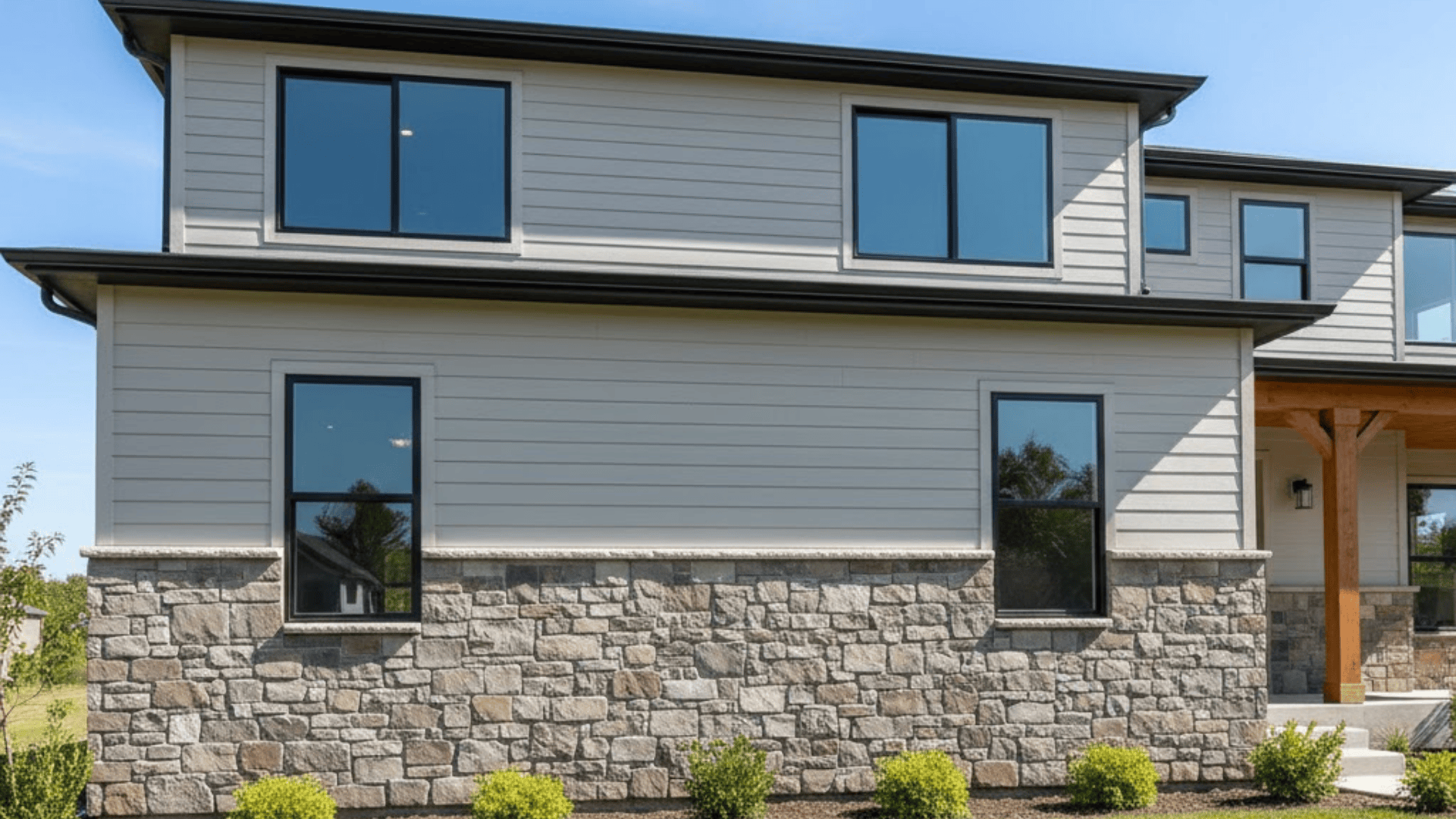
This classic approach creates a grounded, substantial look that works with any home style. It protects lower walls from ground moisture while keeping costs reasonable.
Try extending the stone to about 3 feet high for the best visual balance.
Stone Accent Walls
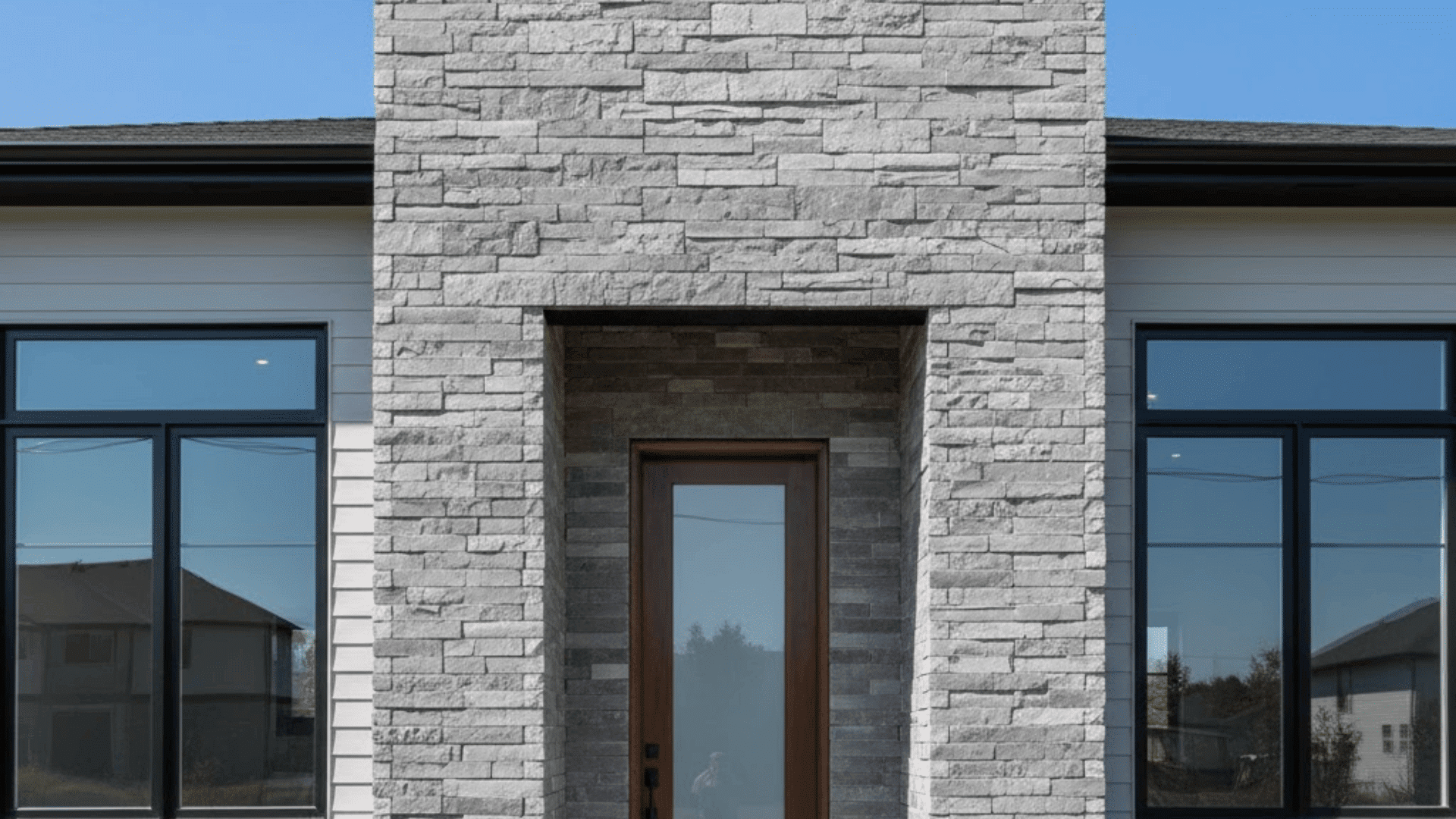
Feature one full wall in stone to draw attention to entries or key architectural details. This adds texture without overwhelming the design and works great for modern farmhouse styles.
Focus stone placement on the front facing wall where it creates maximum impact.
Mixed Materials by Section
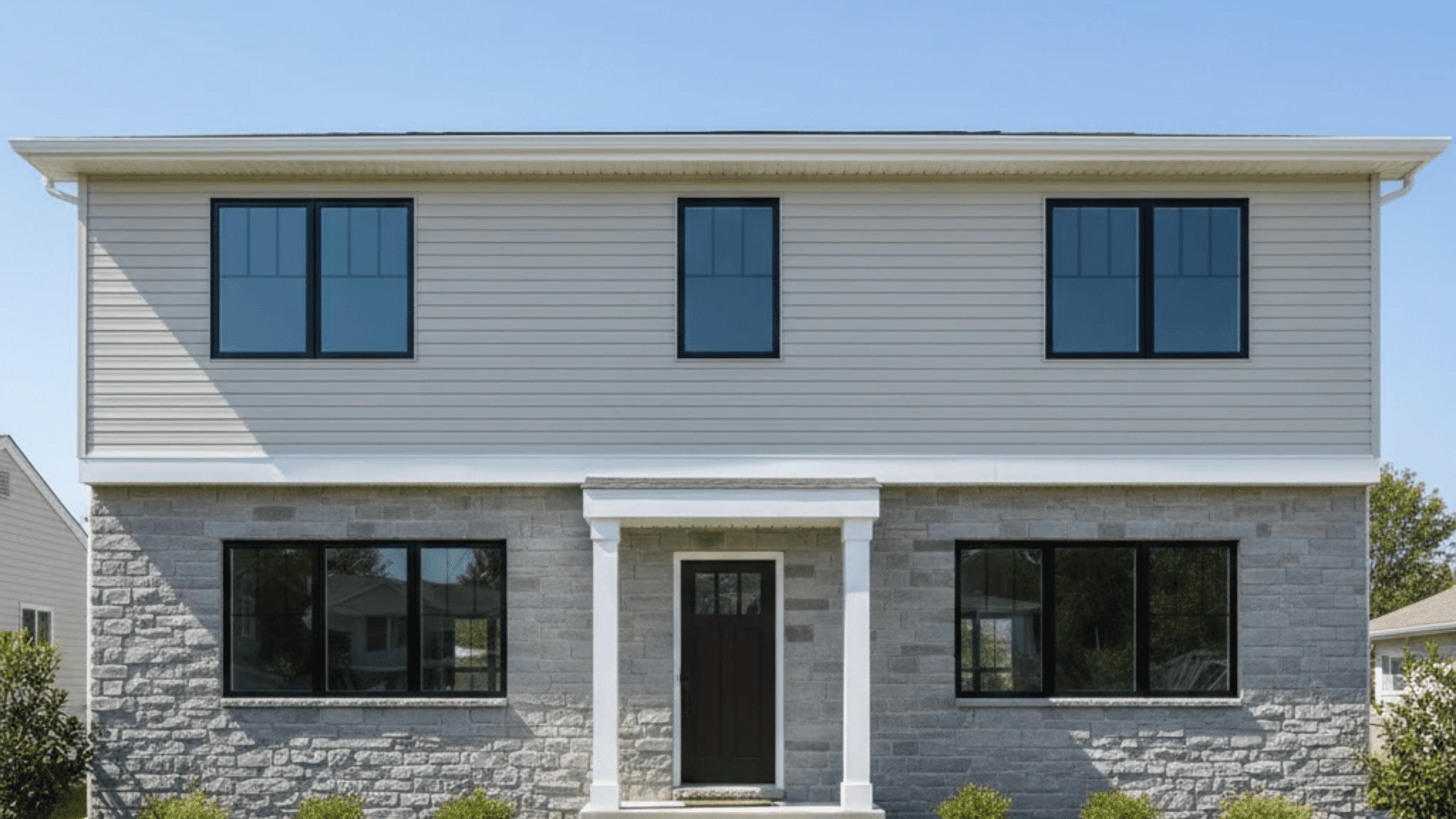
Place stone on the first floor and siding on the second to create clear visual separation. This reduces overall stone costs and appears commonly in transitional designs.
Use a horizontal trim board between materials to create a clean transition line.
Stone Corners and Trim
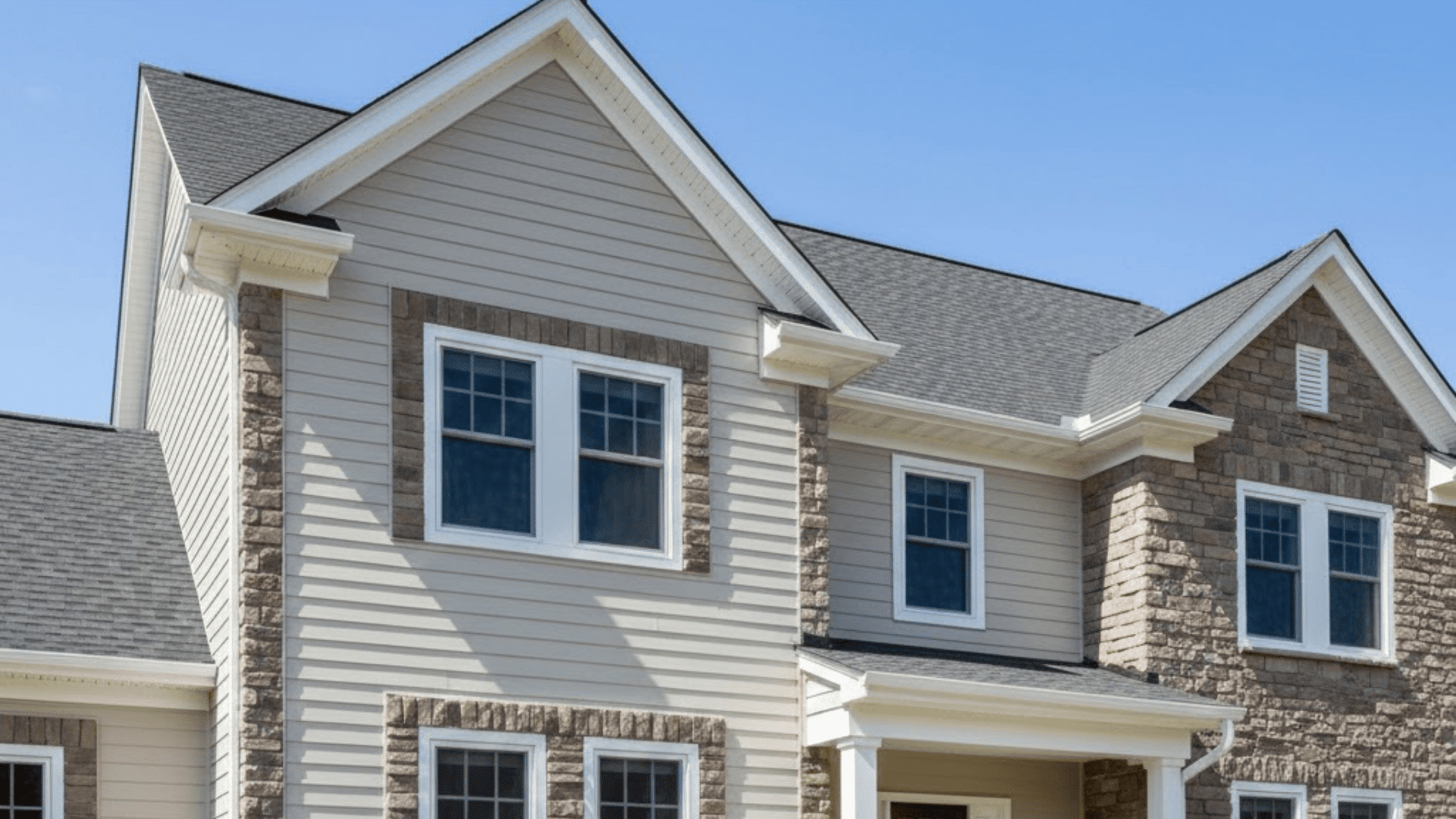
Frame your house with stone elements while siding fills the main wall areas. This provides definition and structure that works beautifully on colonial homes.
Keep corner stone widths consistent at 12 to 18 inches for a professional finished look.
Color Coordination Tips:
- Match stone undertones to siding colors
- Use three colors maximum for cohesion
- Let stone be the star with neutral siding
- Test samples together in natural light
Always mock up combinations before installation.
What looks good in photos might clash with your actual house. Consider your roof color and landscaping too.
Conclusion
Selecting types of exterior house stone doesn’t have to feel overwhelming.
Start with your climate needs, then choose colors that complement your style. I’ve shown you some solid options that you might like and can work.
Now it’s your turn to pick one and transform your home’s curb appeal.
Frequently Asked Questions (FAQ’s)
1. What is the Lifespan of Stone Cladding for Exteriors?
Stone cladding lasts 50 to 100 years with proper installation. Granite and slate offer the longest lifespans. Softer stones, such as sandstone, may need replacement sooner in harsh climates.
2. What’s the Best Stone to Put Around the House?
Granite works best for most homes. It handles all weather conditions and needs minimal maintenance.
3. Can Natural Stone Be Used Outside?
Yes, natural stone works perfectly outside. It’s actually designed by nature to handle weather. Choose dense stones like granite or slate for the best results.
4. What is the Most Durable Type of Stone for a House Exterior?
Granite ranks as the most durable exterior stone. Quartzite comes close second. Both resist weathering, scratches, and temperature changes better than other options.