

Key Takeaways
A 48-hour fast means going without food for two full days while drinking water, tea, or black coffee.
Your body enters ketosis and burns stored fat for energy after the first 18-24 hours.
Proper preparation and breaking the fast correctly are essential for safety and results.
Why People Choose a 48 Hour Fast?
A 48-hour fast means you don’t eat anything for two full days. You can drink water, black coffee, or tea, but no calories go into your body during this time. Some people fast for weight loss.
When you stop eating, your body burns stored fat for energy. Others do it to improve their metabolic health.
Fasting can help lower blood sugar levels and reduce inflammation in your body.
Many choose it for mental clarity. After the initial hunger passes, some report feeling more focused and alert.
Religious or spiritual reasons matter too. Fasting has been part of various traditions for centuries.
Honestly, some just want to challenge themselves and see what their body can handle.
Main 48 Hour Fast Benefits
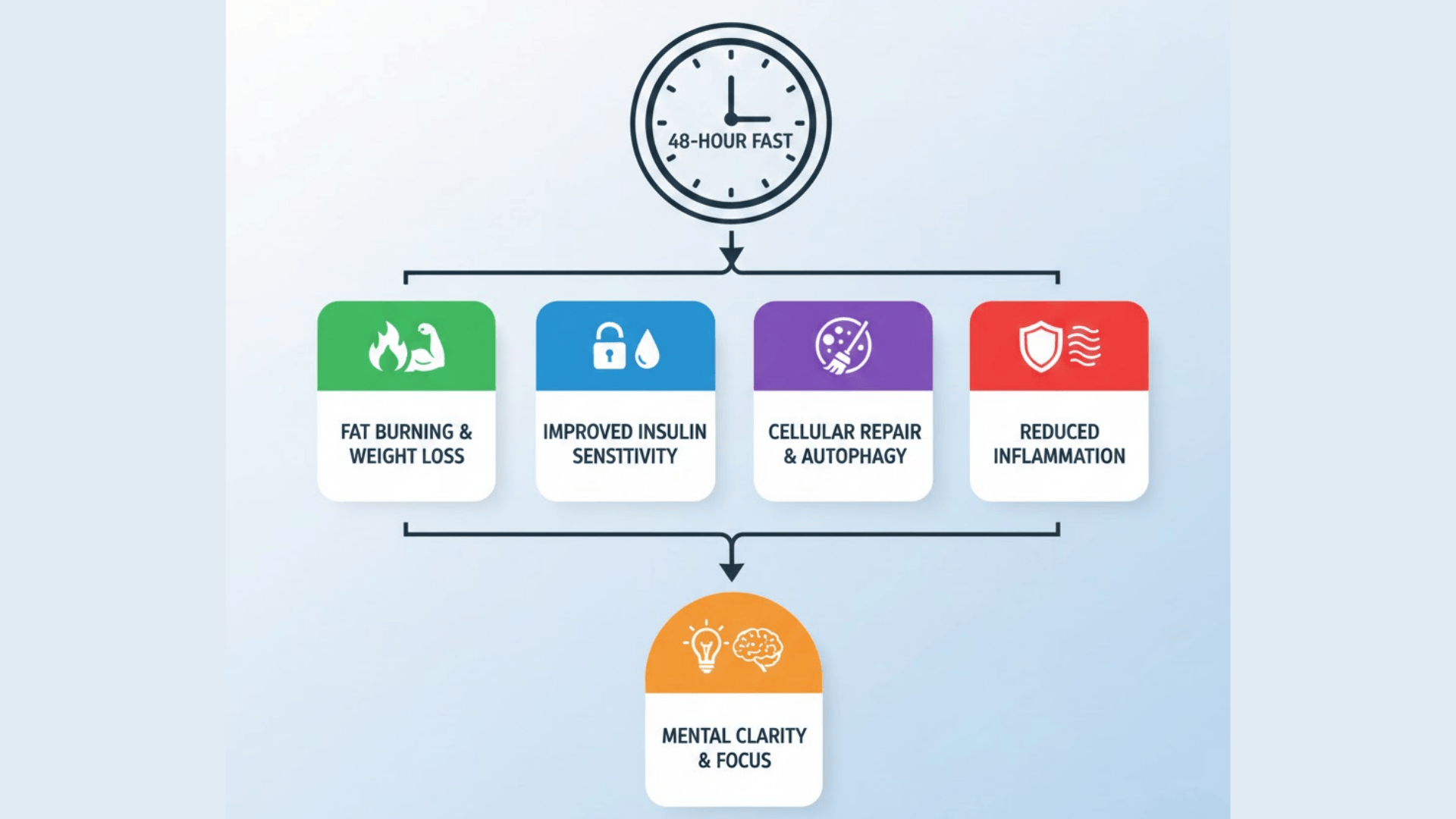
When you go without food for 48 hours, your body shifts into a different mode.
It starts using fat for fuel, cleans out old cells, and makes changes at a cellular level.
Here are the most important benefits you might experience:
Weight Loss and Fat Burning
Your body runs out of glucose after about 12-18 hours of fasting. After that, it turns to stored fat for energy.
This process, called ketosis, helps you burn fat more effectively.
Over 48 hours, you’ll lose water weight and start tapping into actual fat stores.
Improved Insulin Sensitivity
Fasting gives your pancreas a break from producing insulin. When you’re not constantly digesting food, your cells become more responsive to insulin.
This means your body can manage blood sugar better, which is crucial for preventing type 2 diabetes.
Cellular Repair and Autophagy
During a fast, your body activates autophagy. Think of it as your cells taking out the trash.
They break down and recycle damaged proteins and components. This cleaning process may protect against diseases and slow down aging.
Reduced Inflammation
Fasting can lower inflammation markers in your body. Less inflammation means reduced risk of chronic diseases like heart disease and arthritis.
Many people report feeling less bloated and more comfortable after completing a 48-hour fast.
Mental Clarity and Focus
Once you get past the initial hunger, something interesting happens.
Your brain starts running on ketones instead of glucose. Many people report sharper thinking and better concentration during the second day of fasting.
Here’s How to Prepare for a 48 Hour Fast
- Ease into it by reducing portion sizes a few days before you start.
- Stay well-hydrated in the days leading up to your fast.
- Avoid processed foods and sugar before beginning.
- Plan your fast for days when you’re not too busy or stressed.
- Stock up on water, herbal tea, and black coffee.
- Clear your schedule of intense workouts or demanding physical activities.
- Eat a balanced meal with protein, healthy fats, and vegetables as your last meal.
- Get enough sleep the night before you start.
- Have electrolytes on hand in case you need them.
- Know your personal health conditions and consult a doctor if needed.
- Choose a start time that works with your schedule.
What Happens During a 48 Hour Fast?
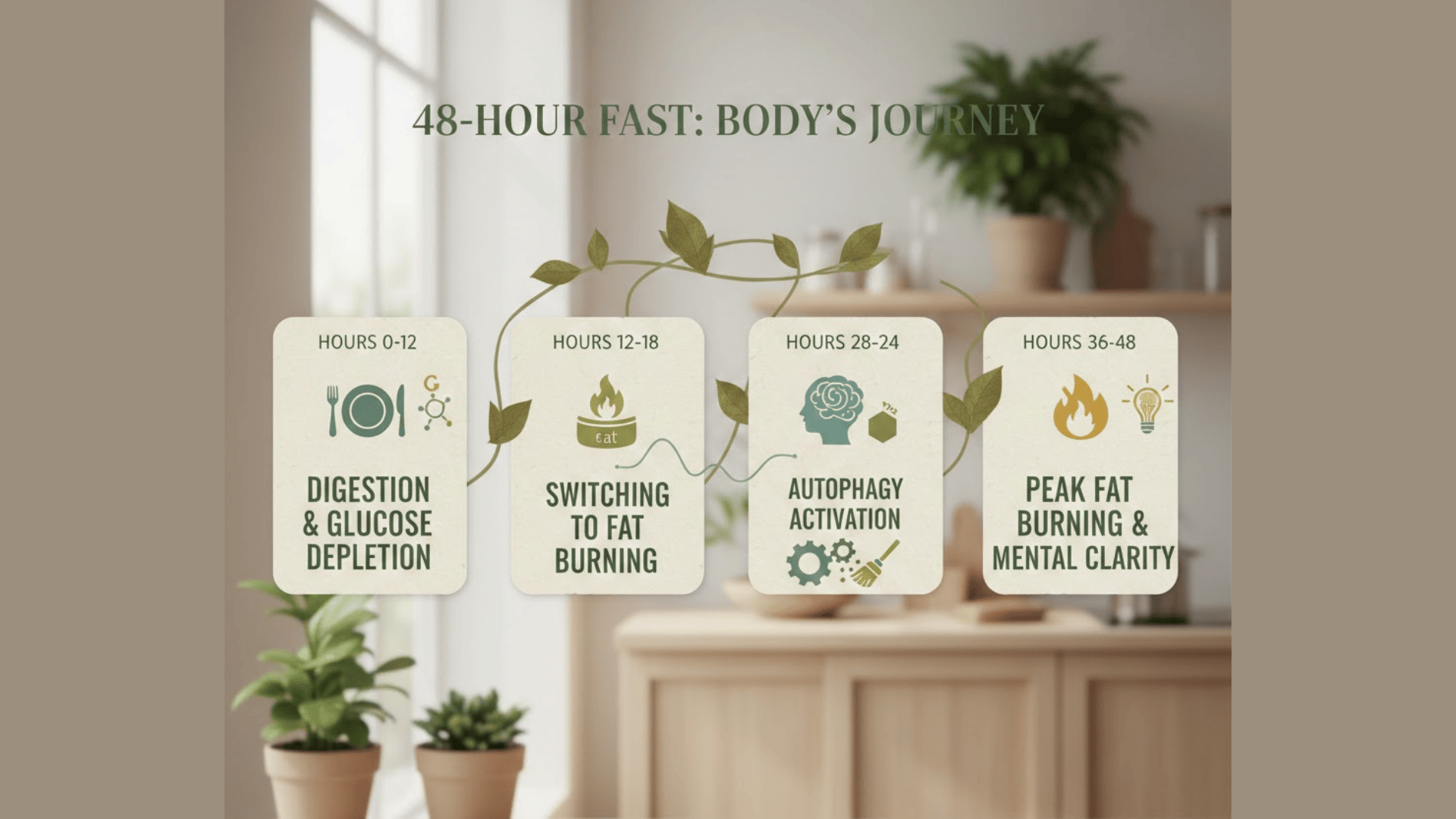
Your body experiences various phases during a 48-hour fast, each with different changes as it adapts to fasting.
Hours 0-12: Digestion and Glucose Depletion
Your body finishes digesting your last meal. It uses up the glucose in your bloodstream and liver for energy.
You might feel normal hunger pangs during this phase.
Hours 12-18: Switching to Fat Burning
Glucose stores run low. Your body begins breaking down fat cells into ketones.
This growth period can make you feel tired or slightly irritable as your system adjusts.
Hours 18-24: Entering Ketosis
Ketone production ramps up. Your brain and muscles start using ketones for fuel instead of glucose. Hunger often decreases as ketones suppress your appetite naturally.
Hours 24-36: Autophagy Activation
Your cells kick autophagy into high gear. They start cleaning out damaged components and recycling proteins.
Your body focuses energy on repair rather than digestion.
Hours 36-48: Peak Fat Burning
You’re in full ketosis now. Fat burning reaches its peak. Mental clarity often improves greatly.
Some people feel energized, while others may still feel low energy.
Common Side Effects to Expect
- Hunger pangs that come and go in waves.
- Headaches, especially in the first 24 hours.
- Fatigue and low energy levels.
- Irritability or mood swings.
- Dizziness when standing up too quickly.
- Bad breath from ketone production.
- Trouble sleeping or changes in sleep patterns.
- Feeling cold as your metabolism slows down.
- Nausea or stomach discomfort.
- Muscle weakness during physical activity.
- Increased thirst and dry mouth.
- Heart palpitations or irregular heartbeat in some cases.
Who Should Avoid a 48 Hour Fast?
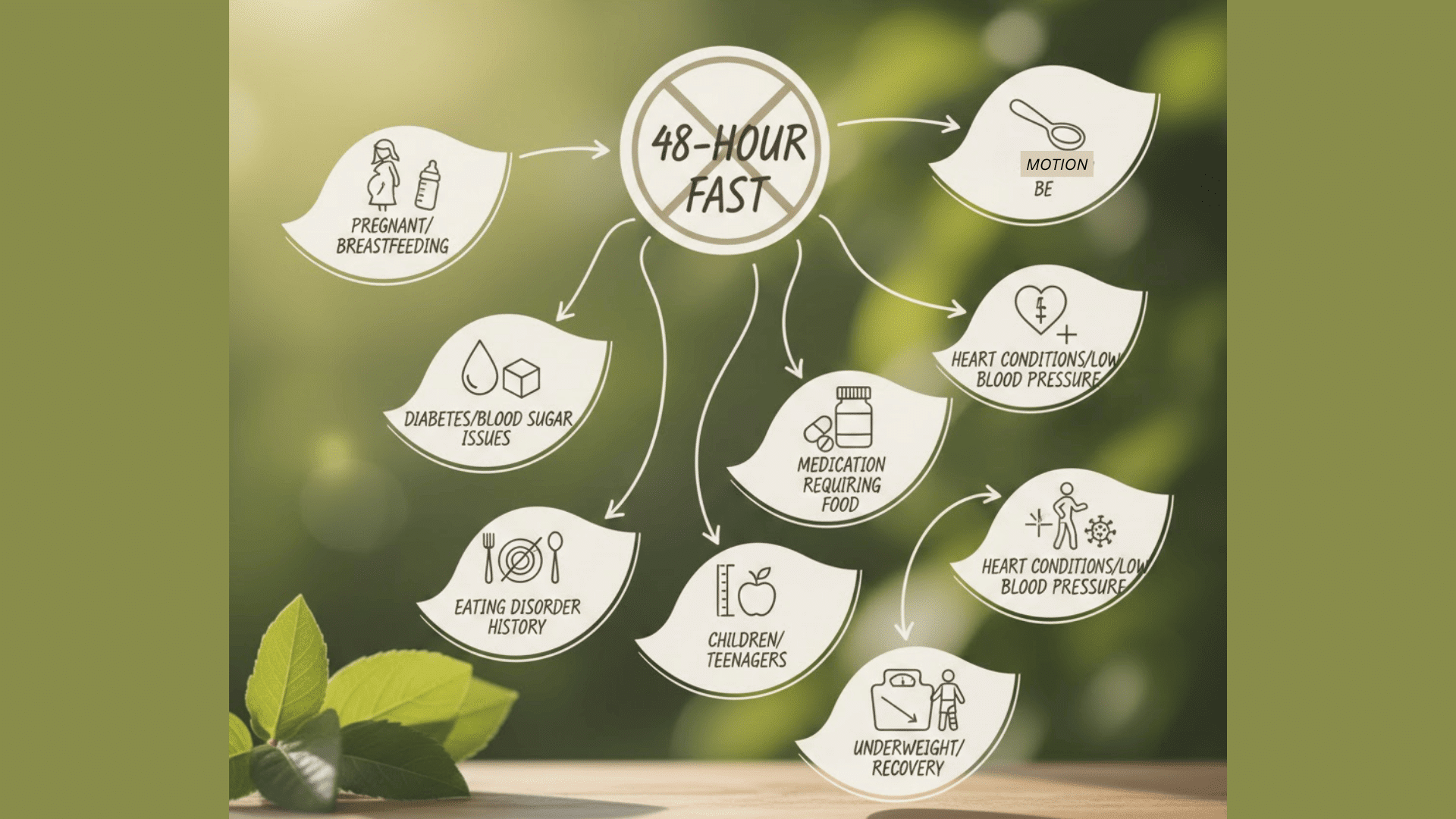
A 48-hour fast isn’t safe for everyone.
Pregnant or breastfeeding women should never fast because they need consistent nutrition. People with diabetes or blood sugar issues risk dangerous drops in glucose levels.
If you have a history of eating disorders, fasting can trigger unhealthy patterns.
Those taking medications that require food should skip it too.
Children and teenagers need regular meals for growth and development.
People with heart conditions, low blood pressure, or chronic illnesses should talk to their doctor first.
If you’re underweight or recovering from surgery, your body needs steady fuel to heal properly.
How to Break a 48 Hour Fast Properly
Breaking your fast correctly is as important as fasting. Eating too much or the wrong foods can cause digestive problems.
- Start with bone broth or vegetable broth first.
- Wait 30 minutes, then eat something small and light.
- Choose easily digestible foods like steamed vegetables or avocados.
- Avoid heavy proteins and fats in your first meal.
- Eat slowly and chew your food thoroughly and carefully.
- Keep portions small for the first few hours after fasting.
- Skip processed foods, sugar, and dairy products initially to avoid issues.
- Gradually increase food intake over the next 24 hours after breaking.
48 Hour Fast vs Shorter Fasts
| Aspect | 16-Hour Fast | 24-Hour Fast | 48-Hour Fast |
|---|---|---|---|
| Difficulty Level | Easy for beginners | Moderate challenge | Requires experience |
| Ketosis | Tiniest or none | Light ketosis starts | Full ketosis achieved |
| Fat Burning | Limited fat burn | Moderate fat loss | Maximum fat burning |
| Autophagy | Low activation | Moderate activation | Peak cellular cleanup |
| Hunger Levels | Manageable | Gets tough at times | Intense first day, easier second |
| Time Commitment | Fits daily routine | One full day | Two complete days |
| Mental Clarity | Slight improvement | Noticeable boost | Major sharpness |
| Weight Loss | 0.5-1 pound | 1-2 pounds | 2-4 pounds |
| Side Effects | Very few | Some discomfort | More pronounced effects |
| Best For | Daily practice | Weekly reset | Occasional deep reset |
Tips to do a 48 Hour Fast Safely
- Drink at least 8-10 glasses of water throughout the fast.
- Listen to your body and stop if something feels seriously wrong.
- Avoid strenuous exercise and stick to light walking instead.
- Keep yourself busy with low-stress activities to distract from hunger.
- Monitor how you feel and track any concerning symptoms.
- Break your fast immediately if you experience severe symptoms.
- Supplement with electrolytes if you get muscle cramps or weakness.
- Avoid caffeine overload, even though black coffee is allowed.
- Have emergency snacks nearby in case you absolutely need them.
Final Thoughts
A 48 hour fast benefits your health in many ways.
It helps with weight loss, improves insulin sensitivity, and triggers cellular repair. Start slow if you’re new to fasting. Work your way up from shorter fasts first.
Pay attention to how your body responds, and don’t ignore warning signs.
Fasting isn’t right for everyone. If you have health conditions or take medications, check with your doctor first.
The key is preparation and breaking your fast properly. Rush either step, and you’ll have a rough time.
Pick a weekend. Stay hydrated and see how your body handles it.