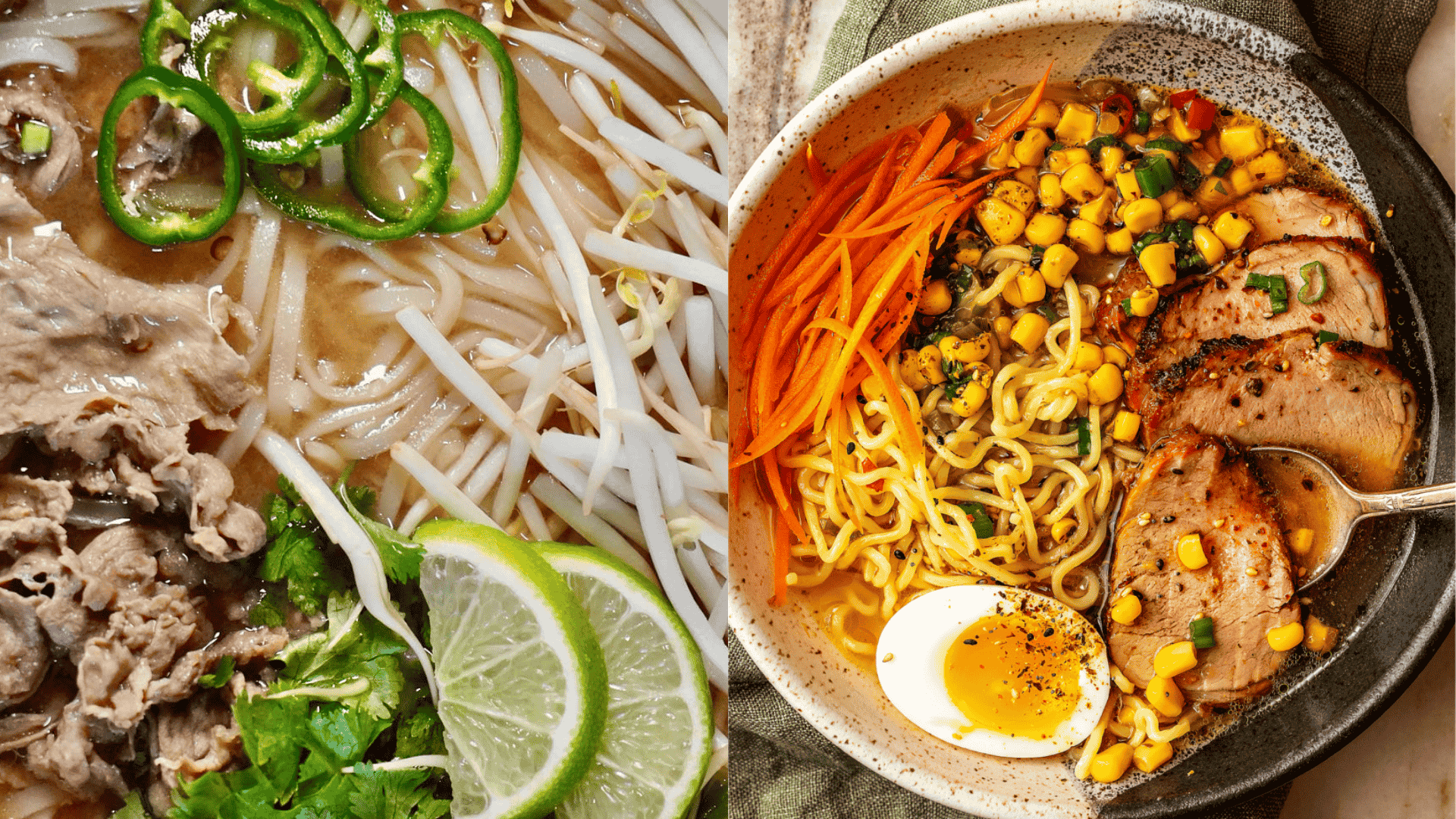
Two steaming bowls sit before you. One is pho. The other is ramen. Both smell incredible.
You love noodle soups, but these two always leave you wondering. What makes them different?
Most people think they’re basically the same. They’re not. The broth, noodles, and toppings tell completely different stories. And the flavors? Totally distinct.
This blog gathers a complete breakdown of pho vs ramen for you.
You’ll learn what sets them apart, ingredients, noodles, how they’re made, and which one might be the right choice.
Origins and Cultural Background
Every great dish has a story. Here’s a complete overview of where these two soups came from and why they matter.
Pho: Vietnam’s National Treasure
Pho started in northern Vietnam during the early 1900s.
French colonization influenced its creation, blending Vietnamese and French cooking styles. The clear broth takes hours to make, using beef bones and spices.
It represents comfort and tradition for Vietnamese families everywhere.
Ramen: Japan’s Comfort Food Icon
Ramen originated in China and arrived in Japan in the late 1800s. Japanese chefs changed it into something uniquely theirs.
Regional styles developed across Japan, each with distinct flavors. The rich, complex broth can be made from pork, chicken, or seafood.
It’s now a symbol of Japanese food culture worldwide.
Pho vs Ramen Ingredients
Here’s what goes into each bowl and how they differ.
| Ingredient | Pho | Ramen |
|---|---|---|
| Noodles | Flat rice noodles, soft texture | Wheat noodles, chewy and springy |
| Broth Base | Beef or chicken bones | Pork, chicken, or seafood bones |
| Cooking Time | 12-24 hours | 8-12 hours |
| Flavor Profile | Light, aromatic, clear | Rich, thick, intense |
| Key Spices | Star anise, cinnamon, cloves | Miso, soy sauce, salt |
| Protein | Thinly sliced beef or chicken | Pork belly, chicken, or egg |
| Toppings | Bean sprouts, herbs, lime | Seaweed, bamboo shoots, corn |
| Garnish | Fresh basil, cilantro, jalapeños | Green onions, nori, sesame seeds |
Broth: The Heart of the Bowl
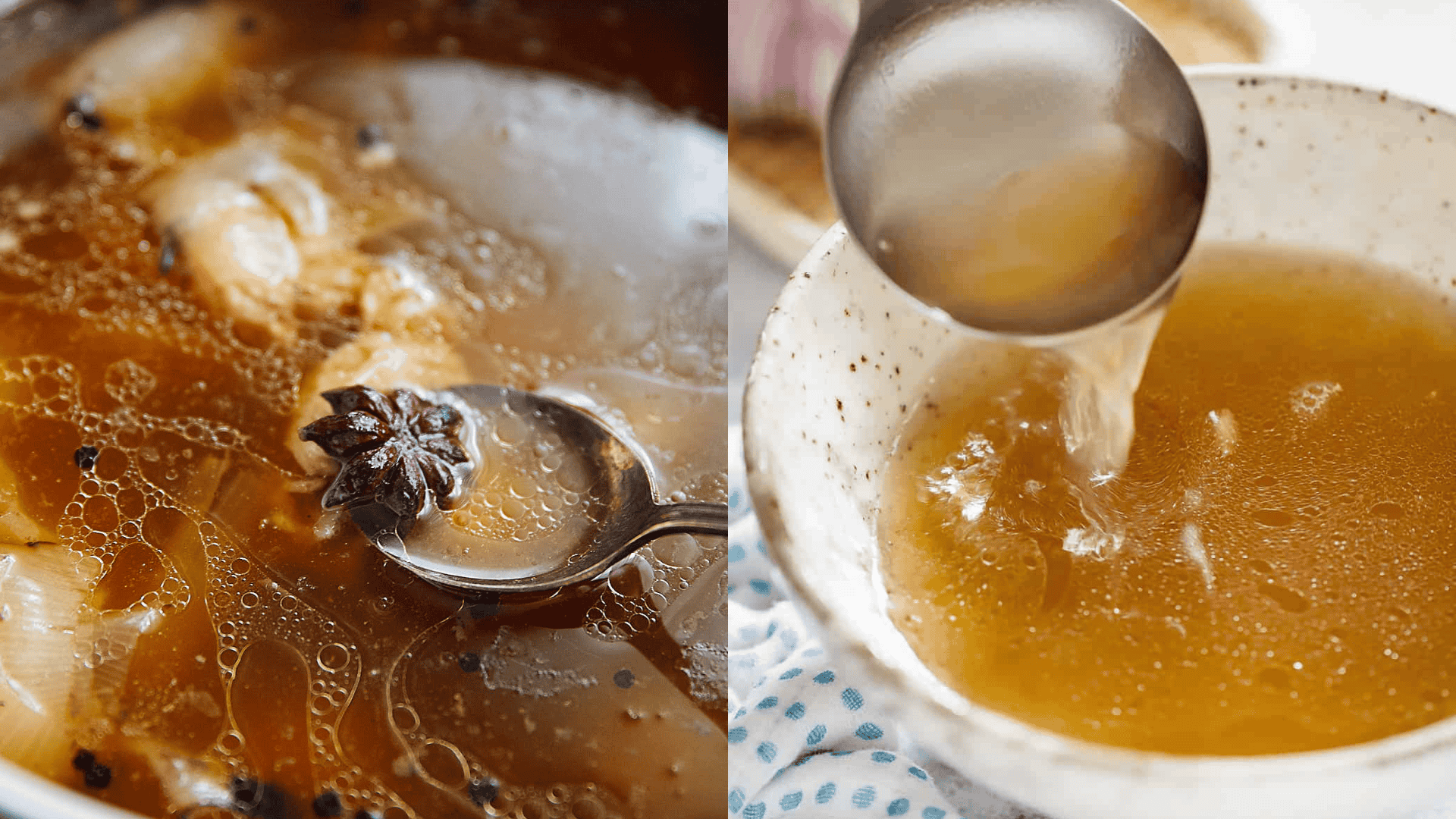
The broth makes or breaks your noodle soup experience. Let’s see how each one gets its flavor.
Pho Broth: Clear and Aromatic
This broth simmers for up to 24 hours with beef or chicken bones.
Charred onions and ginger add sweetness and depth. Star anise, cinnamon, and coriander create that signature fragrance. The result is crystal clear and light. You can taste each spice individually.
It feels clean on your palate, never heavy or overcrushed.
Ramen Broth: Rich and Layered
This broth cooks at a rolling boil, extracting maximum flavor from pork or chicken bones. Fat emulsifies into the liquid, making it creamy and opaque.
Soy sauce, miso, or salt form the flavor base. Some versions add dried fish or kelp for umami depth.
The texture coats your mouth. Each spoonful feels satisfying and full-bodied
Pho vs Ramen Noodles
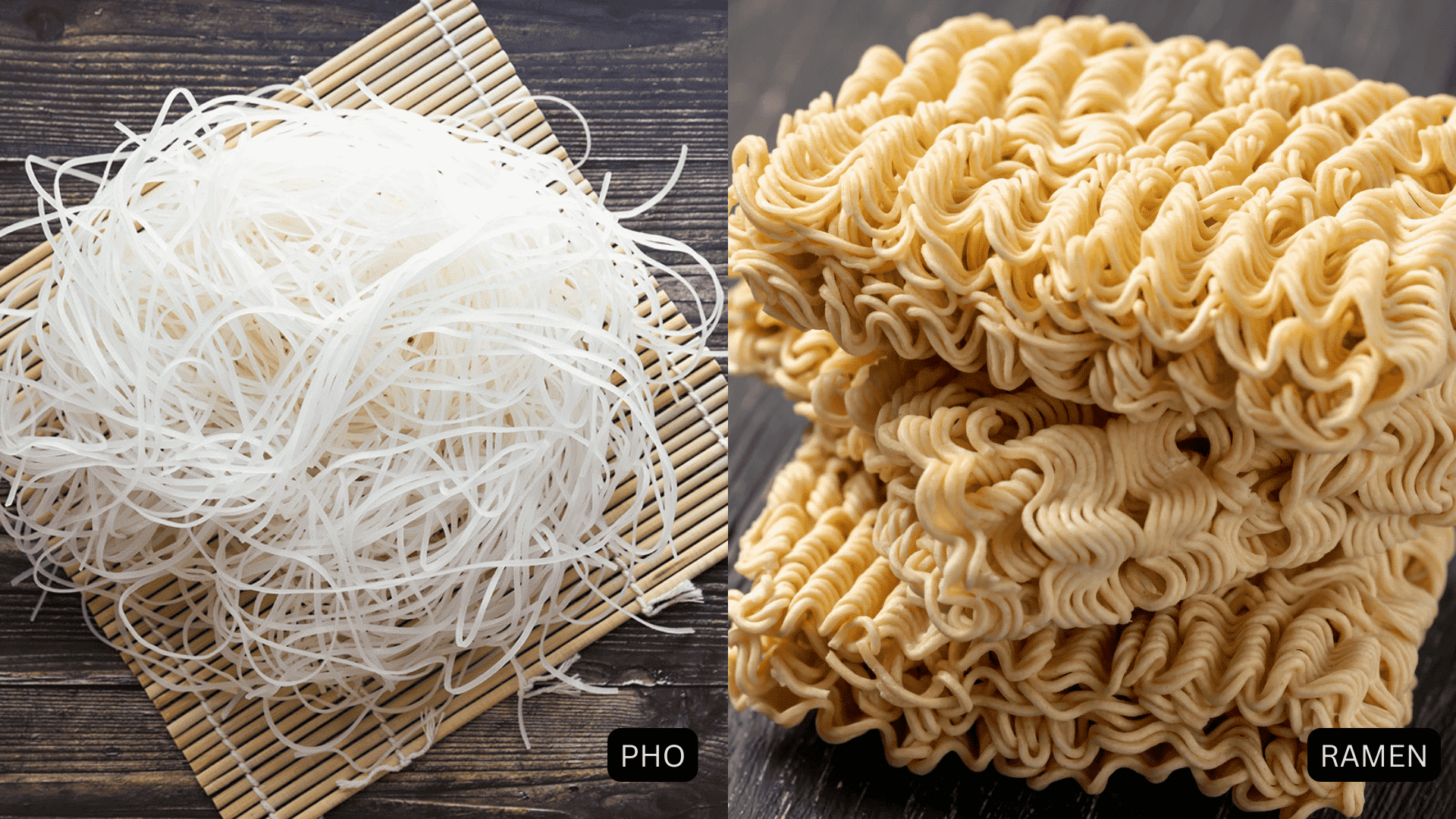
The noodles define your eating experience. Here’s how they compare side by side.
Pho Noodles
Made from rice flour and water, these flat noodles are soft and slippery. They soak up broth beautifully without getting mushy or heavy.
Ramen Noodles
Wheat flour mixed with alkaline water creates a chewy, springy texture.
The noodles hold their firmness even in hot broth for longer periods.
Thickness
Pho offers thin, medium, or wide options. Ramen comes in thin, thick, or wavy styles.
Your choice changes how the broth clings.
Cooking Method
Pho noodles are soaked or briefly boiled. Ramen noodles cook longer to achieve that signature bounce and chew you expect. Pho feels smooth and gentle on your tongue.
Ramen provides resistance and bite. Both work perfectly with their respective broths and toppings.
Flavor Profile and Overall Taste
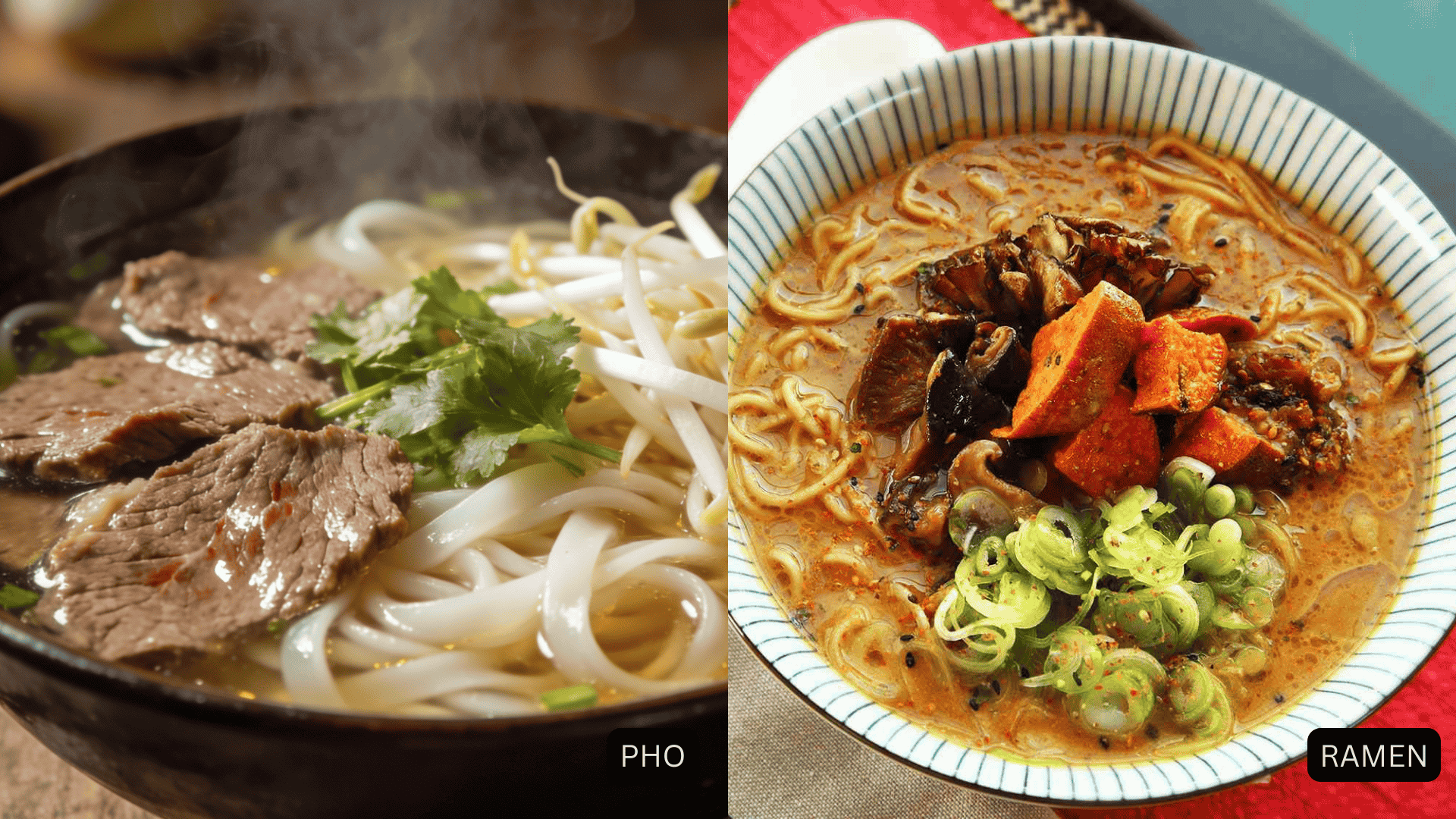
Pho: Fresh and Herbaceous
This hits you with bright, clean flavors from the first sip. The broth tastes light but deeply aromatic. You’ll notice the hot spices, anise, and cinnamon right away. They create a sweet, slightly floral background.
Herbs like basil, cilantro, and mint add a cooling element. Lime juice brings acidity that cuts through the richness.
Bean sprouts give crunch and freshness. The beef or chicken tastes tender and mild.
Everything feels balanced and refreshing. You can eat a big bowl without feeling weighed down. The flavor builds as you add more herbs and sauce.
Each bite feels different depending on what you mix in. It’s customizable and personal to your taste preferences.
Ramen: Savory and Umami-Rich
This delivers an intense, full-flavored punch. The broth is thick and coats your spoon.
Umami dominates that deep, savory taste you can’t quite describe. Soy sauce, miso, or salt creates the base flavor.
Pork fat adds richness and smoothness. The noodles absorb the broth, becoming flavor bombs themselves.
Toppings like marinated eggs, pork belly, and bamboo shoots add layers.
Each element contributes something different. The green onions give sharpness. Seaweed adds a hint of the ocean.
Some versions include spicy chili oil for heat. The overall taste is complex and satisfying. You feel full and content after finishing. It’s comfort food that heats you from the inside out completely.
Pho vs Ramen Preparation and Cooking Process
Making these soups takes time and care. Here’s what goes into preparing each one properly.
Pho Preparation Process
- Char onions and ginger over an open flame. Add beef bones to a large pot with water.
- Simmer for 12-24 hours with star anise, cinnamon, and cloves. Skim the surface regularly to keep it clear.
- Soak rice noodles in hot water until soft. Boil briefly just before serving.
- Drain and place them in your serving bowl immediately.
- Arrange thin slices of raw beef in the bowl. Pour hot broth over everything.
- Add bean sprouts, fresh basil, cilantro, lime wedges, and sliced jalapeños on the side.
Ramen Preparation Process
- Boil pork or chicken bones at high heat for 8-12 hours. The broth turns cloudy and creamy.
- Add aromatics like garlic, ginger, and green onions. Season with soy sauce, miso, or salt.
- Cook wheat noodles in boiling water for 2-4 minutes.
- They should be firm and chewy. Drain quickly and rinse if needed.
- Place noodles in a bowl first. Ladle hot broth over them.
- Top with sliced pork belly, soft-boiled eggs, bamboo shoots, corn, seaweed, and green onions.
- Drizzle with sesame oil or chili oil if desired.
Popular Variations of Pho and Ramen
Both soups come in multiple styles. Each region puts its own spin on the classic recipe.
Pho Bo (Beef Pho)
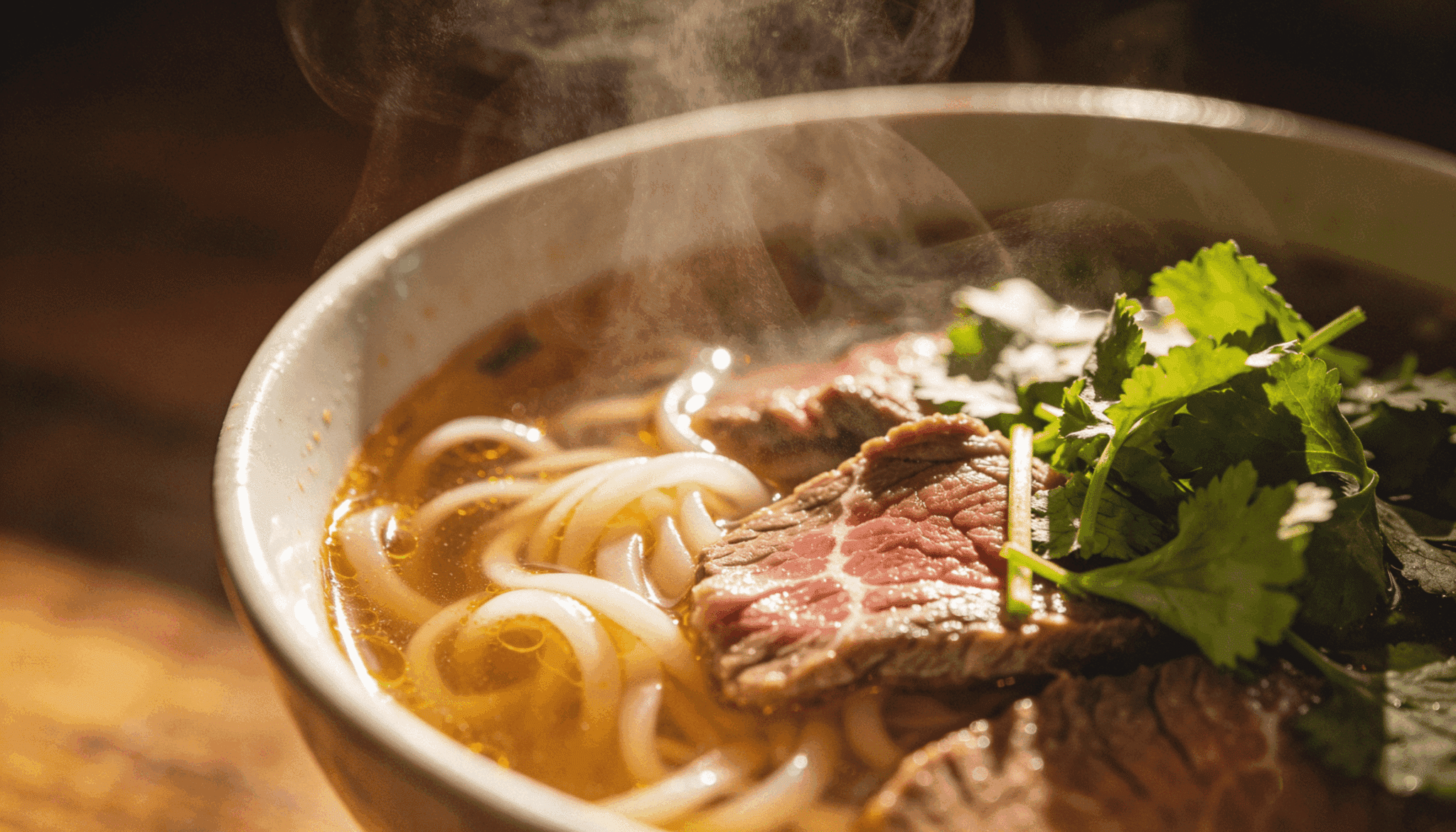
The most traditional version uses beef bones for broth.
You get thin slices of raw beef, brisket, or tendon. The meat cooks in the hot broth.
Northern style keeps it simple with fewer herbs. Southern style adds more toppings and sweetness. This is what most people think of when they hear about this.
Pho Ga (Chicken Pho)
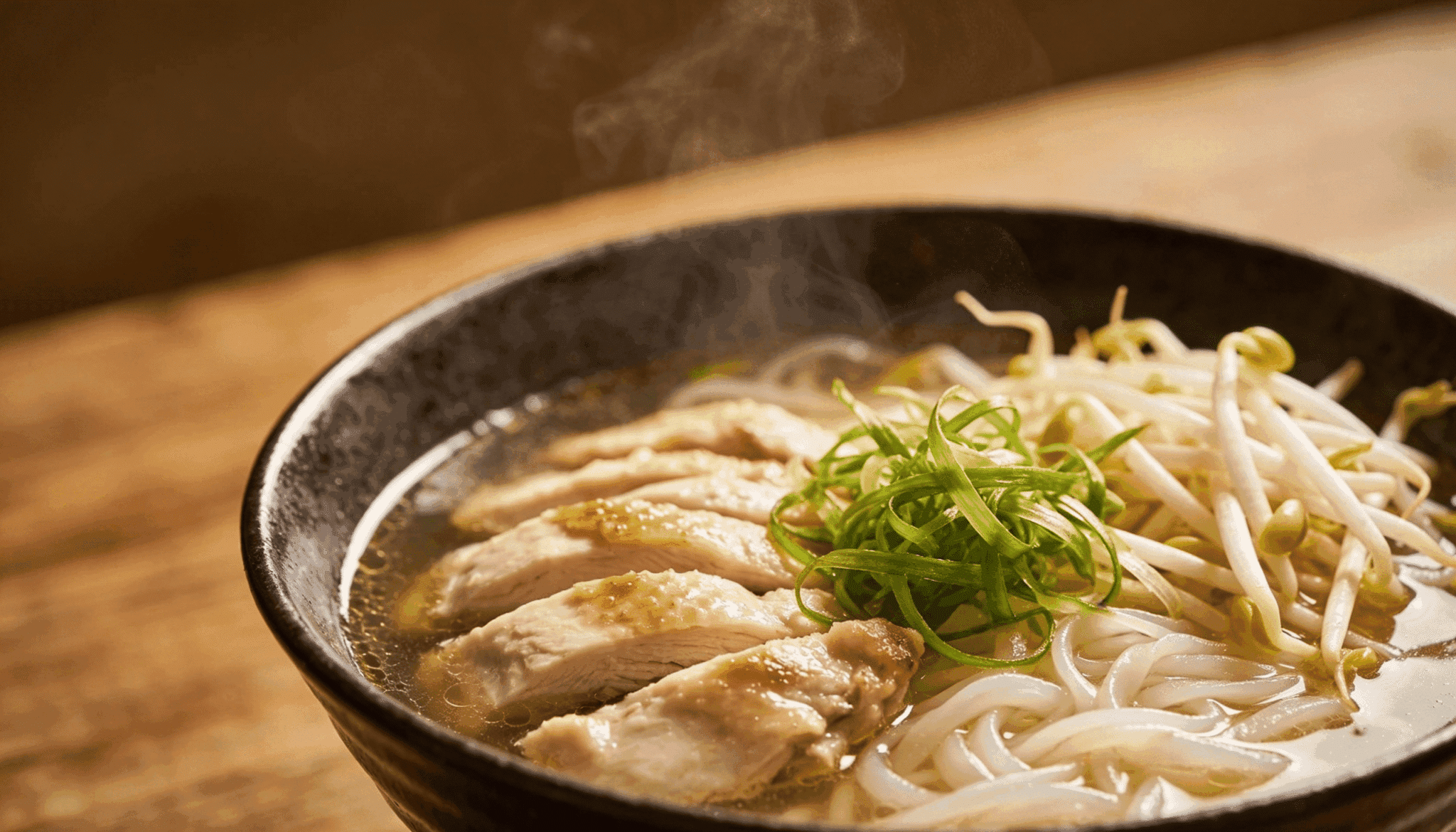
Chicken replaces beef for a lighter option. The broth uses chicken bones and tastes more delicate.
Shredded chicken meat sits on top. It’s perfect for people who want something less heavy. The flavor is gentler but still aromatic and satisfying.
Tonkotsu Ramen
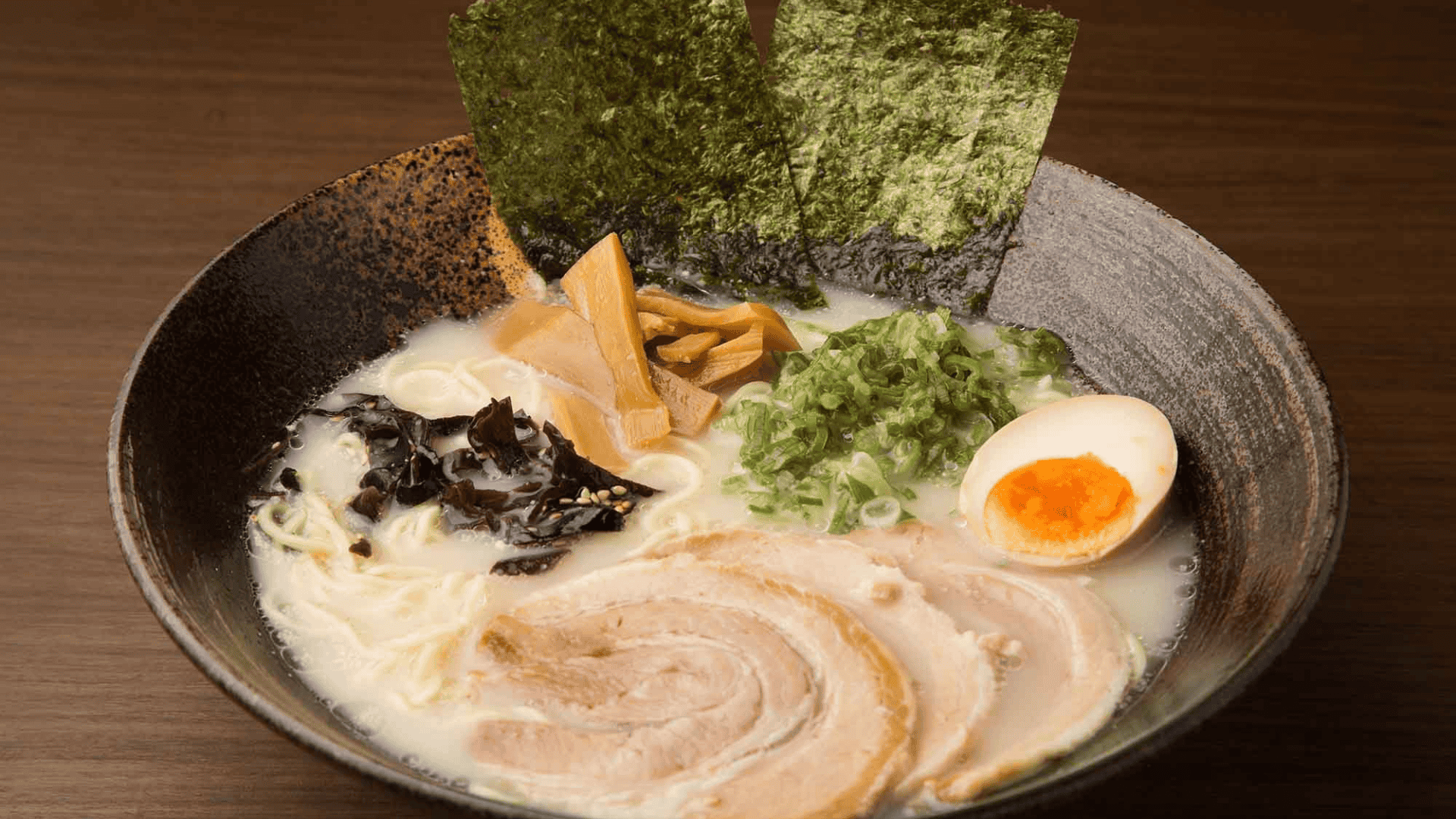
This style comes from Fukuoka, Japan. Pork bones boil for hours until the broth turns milky white.
The texture is thick and creamy. It’s rich and fills you up fast.
Thin noodles work best here. Toppings include pork belly, wood ear mushrooms, and pickled ginger.
Miso Ramen
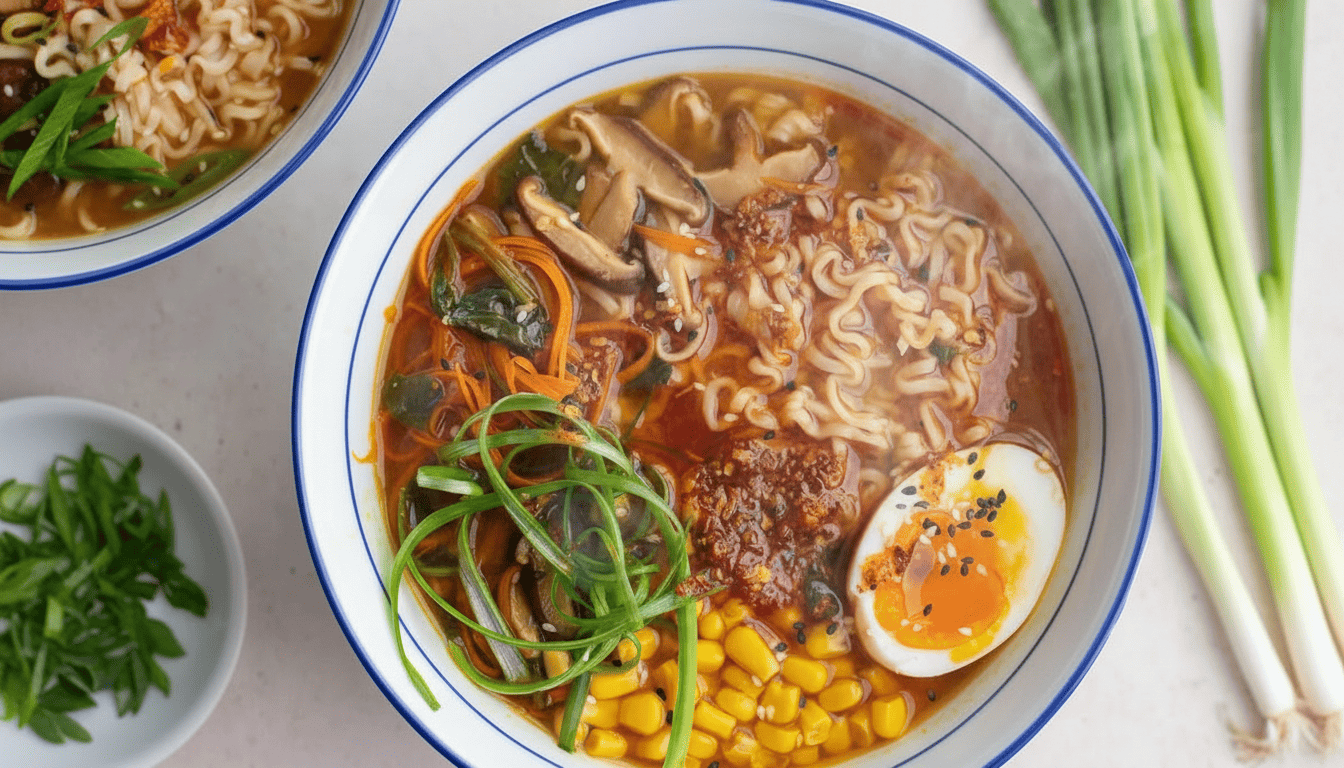
Miso paste creates a salty, fermented flavor base. The broth is hearty and hot.
Corn, butter, and bean sprouts are common toppings.
This version from Hokkaido features thick noodles that resist the heavy broth, making it ideal for cold weather.
Shoyu Ramen
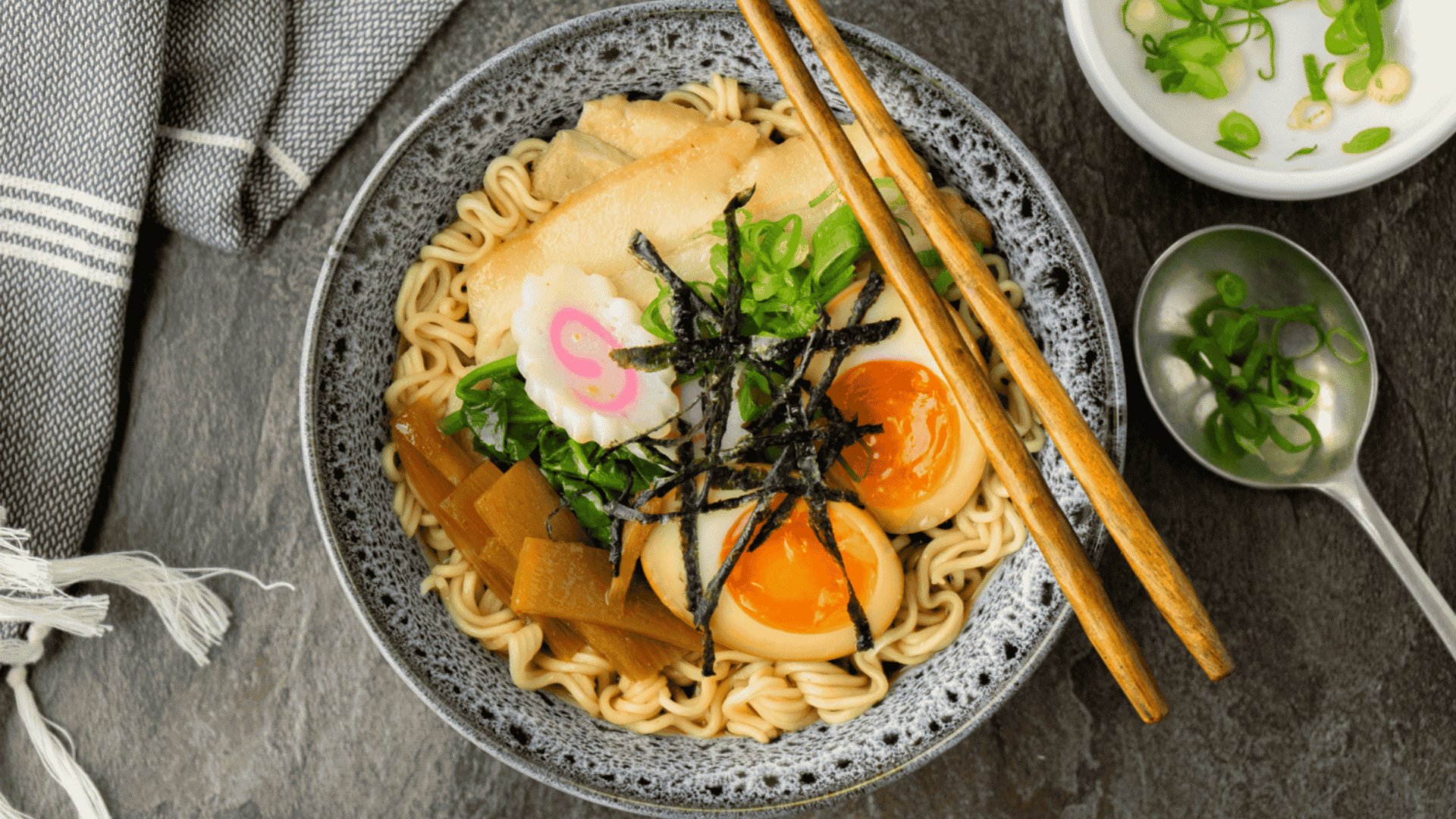
Soy sauce forms the foundation of this Tokyo-style ramen. The broth is clear and brown in color. It tastes savory with a hint of sweetness.
Toppings include bamboo shoots, seaweed, fish cake, and green onions.
The noodles are medium-thickness and slightly curly. This is the most common type you’ll find in restaurants
Pho vs Ramen Nutrition and Health Considerations
Both soups offer different nutritional benefits. Here’s how they stack up against each other.
| Nutritional Aspect | Pho | Ramen |
|---|---|---|
| Calories per Bowl | 350-450 calories | 450-600 calories |
| Sodium Content | Moderate (1,500-2,000mg) | High (2,000-3,000mg) |
| Fat Content | Lower, mostly from meat | Higher, from pork and oil |
| Protein | 20-30g from beef or chicken | 25-35g from pork and eggs |
| Carbohydrates | Rice noodles, lighter | Wheat noodles are denser |
| Vegetables | Fresh herbs, bean sprouts | Corn, bamboo shoots, seaweed |
| Broth Density | Light and clear | Thick and creamy |
| Digestibility | Easier on the stomach | Heavier, takes longer |
| Gluten | Gluten-free (rice noodles) | Contains gluten (wheat noodles) |
| Customization | Add herbs and vegetables | Limited modifications |
Which One Should You Choose?
Here are the key factors to help you decide between the two.
Choose Pho If:
- You want something light and refreshing that won’t weigh you down.
- You prefer clear, aromatic broths with hot spices like star anise and cinnamon.
- You’re looking for a gluten-free noodle option made from rice.
- You need a lower-calorie meal that’s still filling and satisfying.
Choose Ramen If:
- You crave rich, hearty comfort food with intense umami flavor.
- You prefer thick, creamy broths that coat your mouth.
- You want chewy wheat noodles with a springy texture.
- You enjoy bold, savory tastes from miso or soy sauce.
- You love toppings like pork belly, soft-boiled eggs, and seaweed.
Final Thoughts
So, pho vs ramen, which one to choose? Honestly, both options are perfect here.
Both soups bring something special to the table. Some days you’ll want the clean simplicity of pho.
Other times, only rich ramen will hit the spot. Switch between them depending on how you feel.
Try both if you haven’t already. Pay attention to the broth, the noodles, and how each one makes you feel.