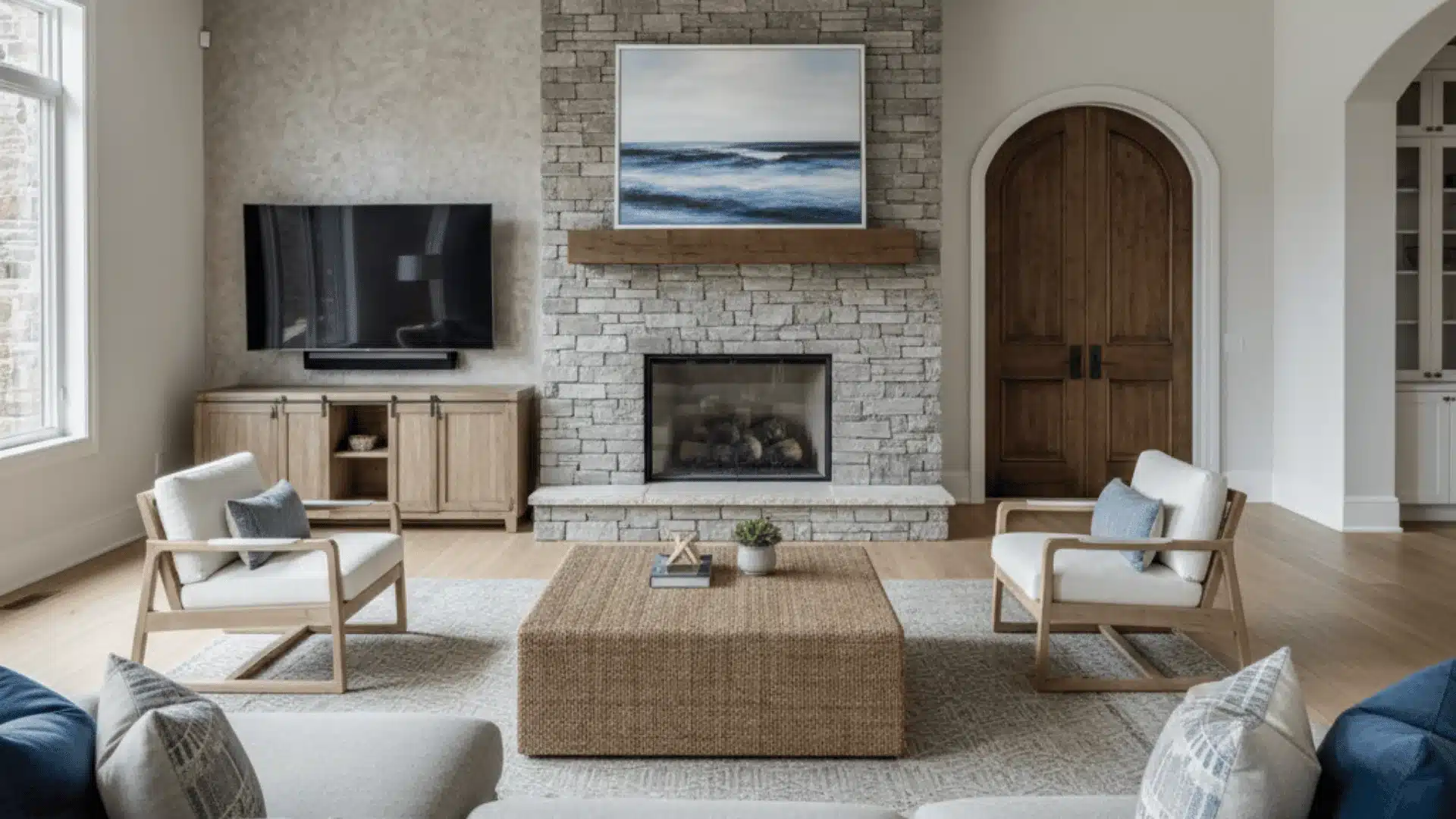
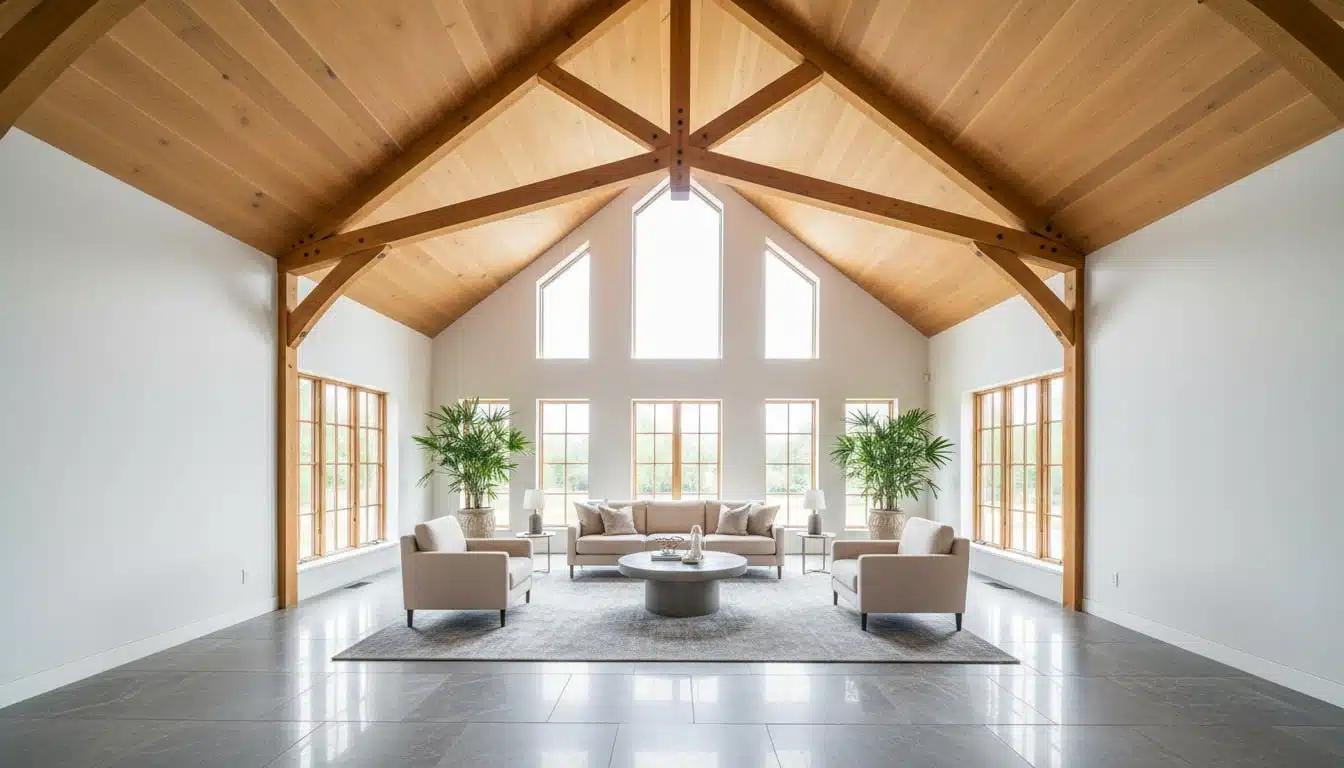
Cathedral ceilings look stunning, but decorating them feels overwhelming.
The right design ideas can turn that blank space into the best feature in your home.
In this blog, you’ll get creative ideas to bring your cathedral ceiling to life.
What is a Cathedral Ceiling?
It is a type of ceiling that follows the natural slope of the roof.
Both sides rise upward and meet at a central ridge, forming an inverted V shape. It gives the room an old-school look.
Unlike a flat ceiling, it sits much higher, giving any room a wide, open feel.
It gets its name from the vaulted ceilings found in old churches built centuries ago, and today it shows up in living rooms, bedrooms, and open-plan homes.
Why You Should or Shouldn’t Design Your Cathedral Ceilings?
Designing a ceiling can completely change how your room looks, but it’s not always the right move for every home or every budget.
Let’s look at both sides so you can make the best call for your space
Advantages that You’ll Get
Cathedral ceilings bring a lot more to a home than just good looks.
They change the way a room feels the moment someone walks in, and, apart from providing a good look, they also have a few natural advantages.
Works Well With Different Interior Styles
Cathedral ceilings fit into many design styles.
Whether your home is a modern rustic, or traditional, a cathedral ceiling complements it well.
You can add wooden beams for a farmhouse look or go sleek and minimal for a contemporary feel. It adapts easily to whatever style you prefer.
Makes a Room Feel Larger
The ceiling adds vertical space that a standard flat ceiling simply cannot.
The extra height makes even a medium-sized room feel open and generous. It gives the whole space a sense of breathing room that is hard to achieve any other way.
The extra-spacious look also makes the room’s furniture look good.
Brings in More Natural Light
The sloped design of the ceiling allows for higher windows and skylights.
This means more natural light enters the room throughout the day. Brighter rooms feel more welcoming.
And it can even reduce the need for artificial lighting during daytime hours.
Improves Air Circulation
Hot air rises naturally. With a cathedral ceiling, warm air rises and moves away from your living space.
Add a ceiling fan, and you can push that air back down in winter.
This keeps your room comfortable across different seasons without much extra effort.
Things that Might Demotivate You
Like most things in home design, there are trade-offs involved.
Cathedral ceilings are impressive, but they do come with a few drawbacks that are worth knowing before making any decisions.
Higher Energy Costs
Because heat rises, the ceiling can make a room harder to keep warm in winter.
The extra vertical space means the heating system has to work harder to evenly distribute the heat across the room.
This can lead to higher energy bills over time, especially in colder climates.
Difficult to Maintain
Cleaning, painting, or repairing a cathedral ceiling is not easy.
The height makes it hard to reach without specialized equipment, which can make a simple task like changing a light bulb challenging.
And that costs more time and money than expected.
Limited Storage Space
With walls that slope inward toward the peak, you lose usable wall space.
You can’t place tall furniture or shelving units along angled walls.
This limits your storage options and can make furnishing the room feel like a bit of a puzzle, especially in smaller homes.
Design Ideas for Cathedral Ceilings
This type of ceiling gives a room real height and presence.
But the design choices made around it can either bring it to life or leave it feeling boring and unfinished.
Some refreshing design ideas can really bring out the best in your ceiling.
1. Exposed Wooden Beams
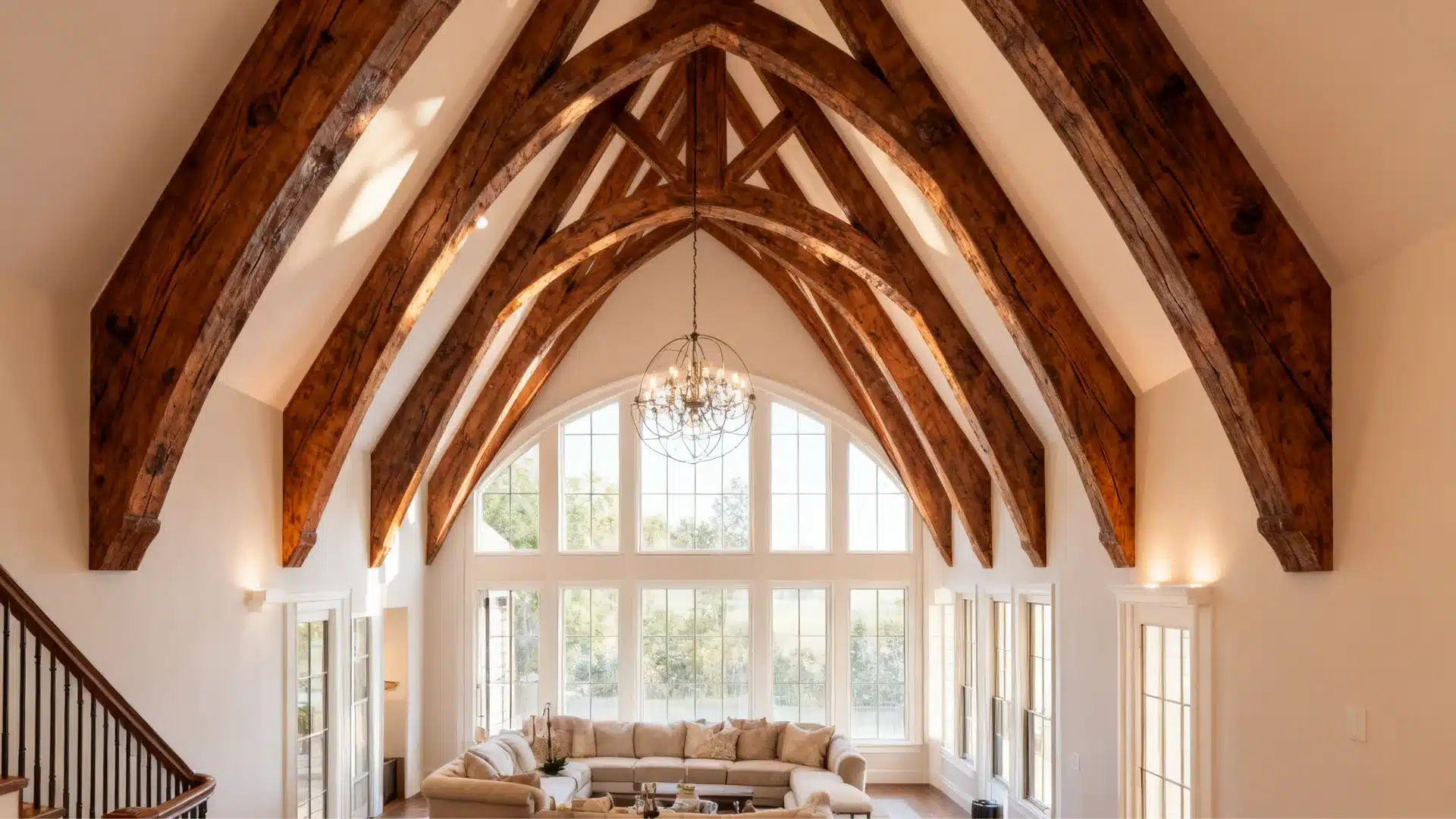
Wooden beams running along the ceiling add warmth and texture to a room.
They draw the eye upward and give the space a natural, grounded feel. Exposed beams work well in both homey leans and rustic or modern settings.
They also add a sense of structure to a ceiling that might otherwise feel too open and bare.
2. Shiplap or Wood Paneling
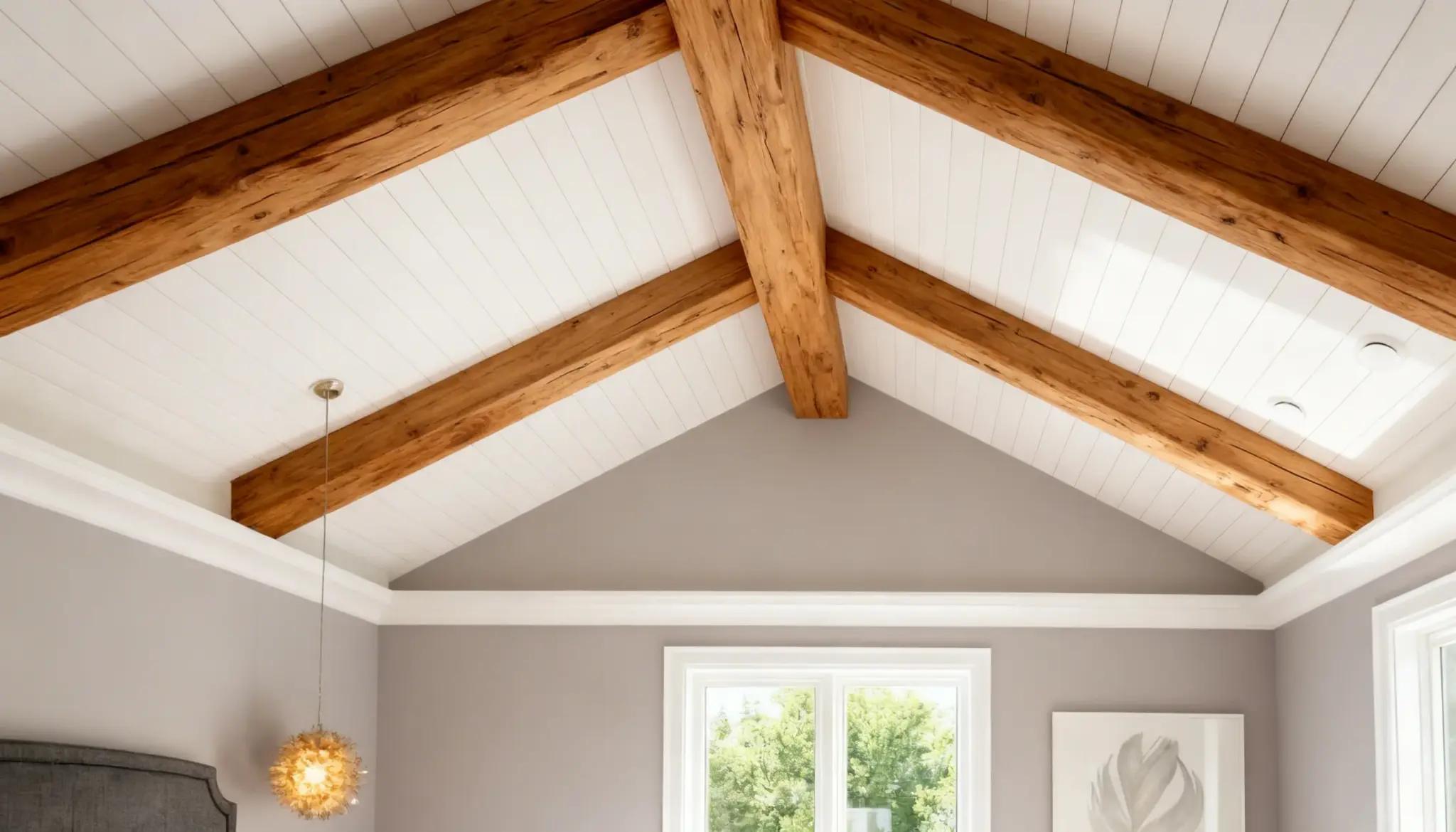
Covering the ceiling with shiplap or wood panels adds warmth without feeling heavy or like something extra was done.
The horizontal lines created by shiplap naturally follow the slope of the ceiling.
It works especially well in farmhouse or cottage-style homes.
Painted white, it keeps things bright and airy. In a darker wood tone, it adds depth and a cozy, cabin-like feel to the room.
3. Statement Lighting
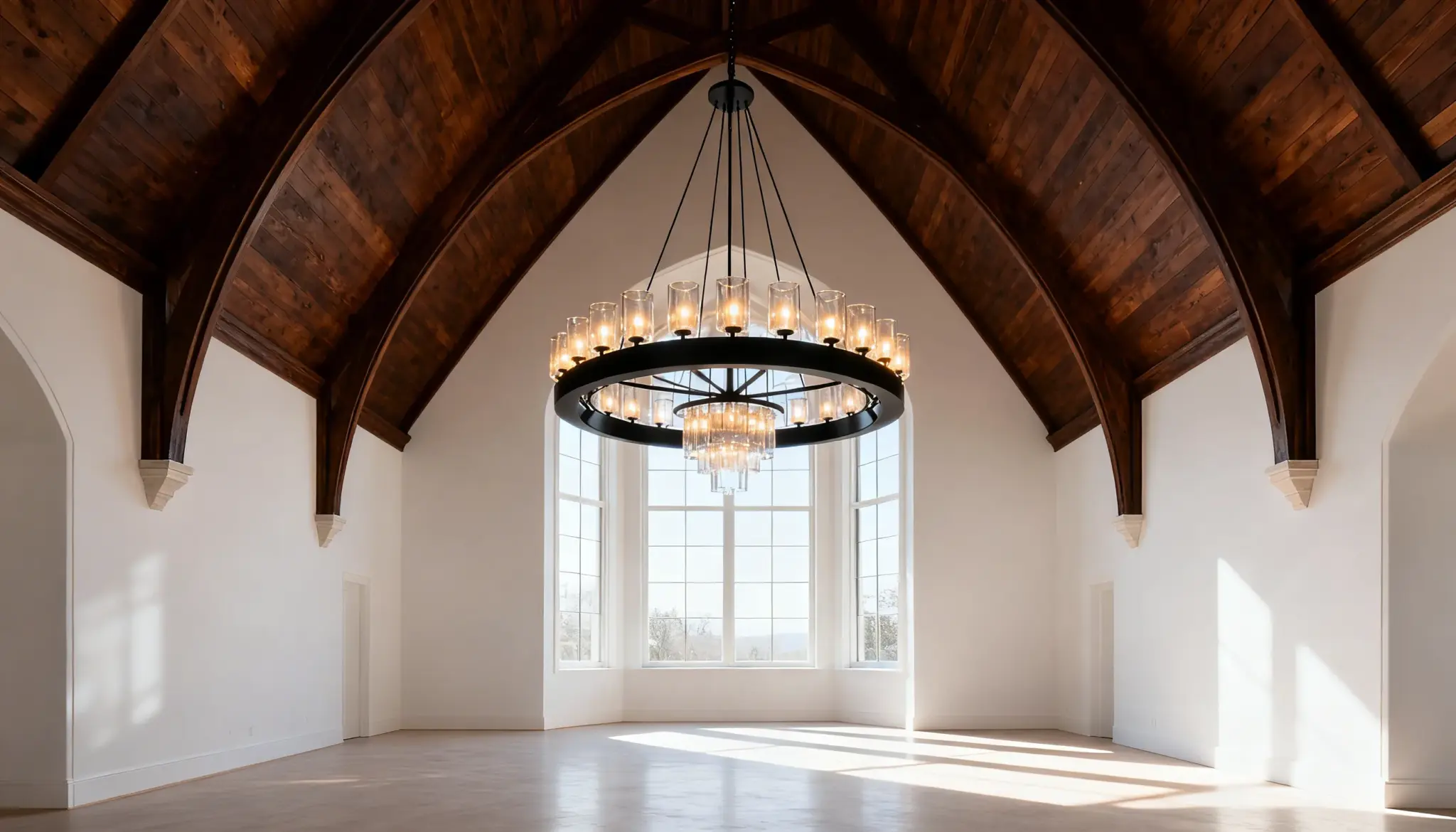
A cathedral ceiling is the perfect place for a bold light fixture.
A large chandelier or a cluster of pendant lights fills the vertical space well and becomes a focal point.
The height of the ceiling allows for fixtures that would feel too big in a standard room.
Good lighting here sets the mood for the entire space and ties the room together, giving it a very eye-pleasing look.
4. Skylights
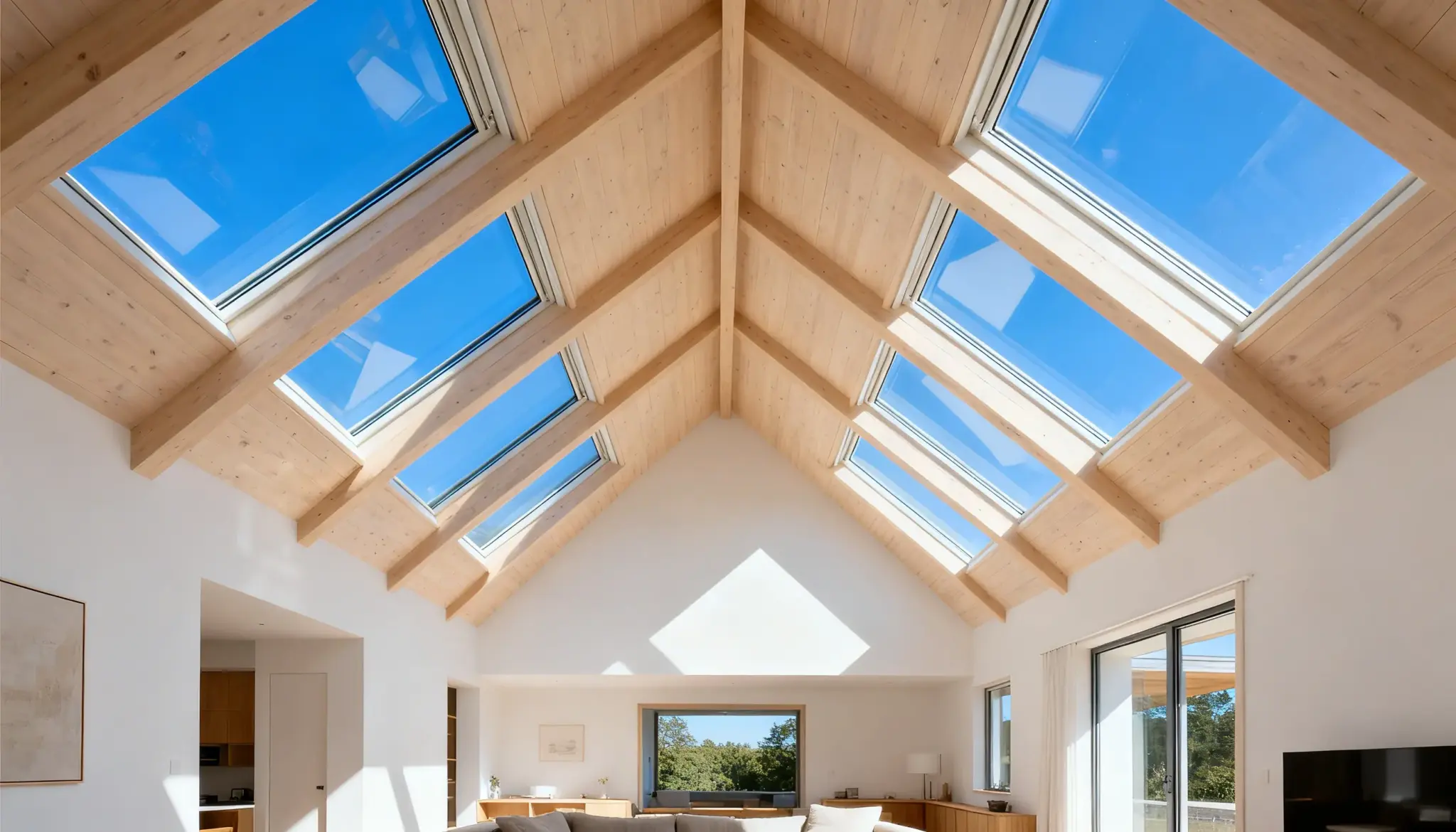
Adding skylights to the ceiling gives it a very modern look.
They bring in natural light from above, which makes the room feel bigger and brighter throughout the day.
Skylights also reduce the need for artificial lighting during daytime hours.
Placed along the slope of the ceiling, they blend in naturally and add a clean, modern touch to the space.
5. Painted Ceiling Accents
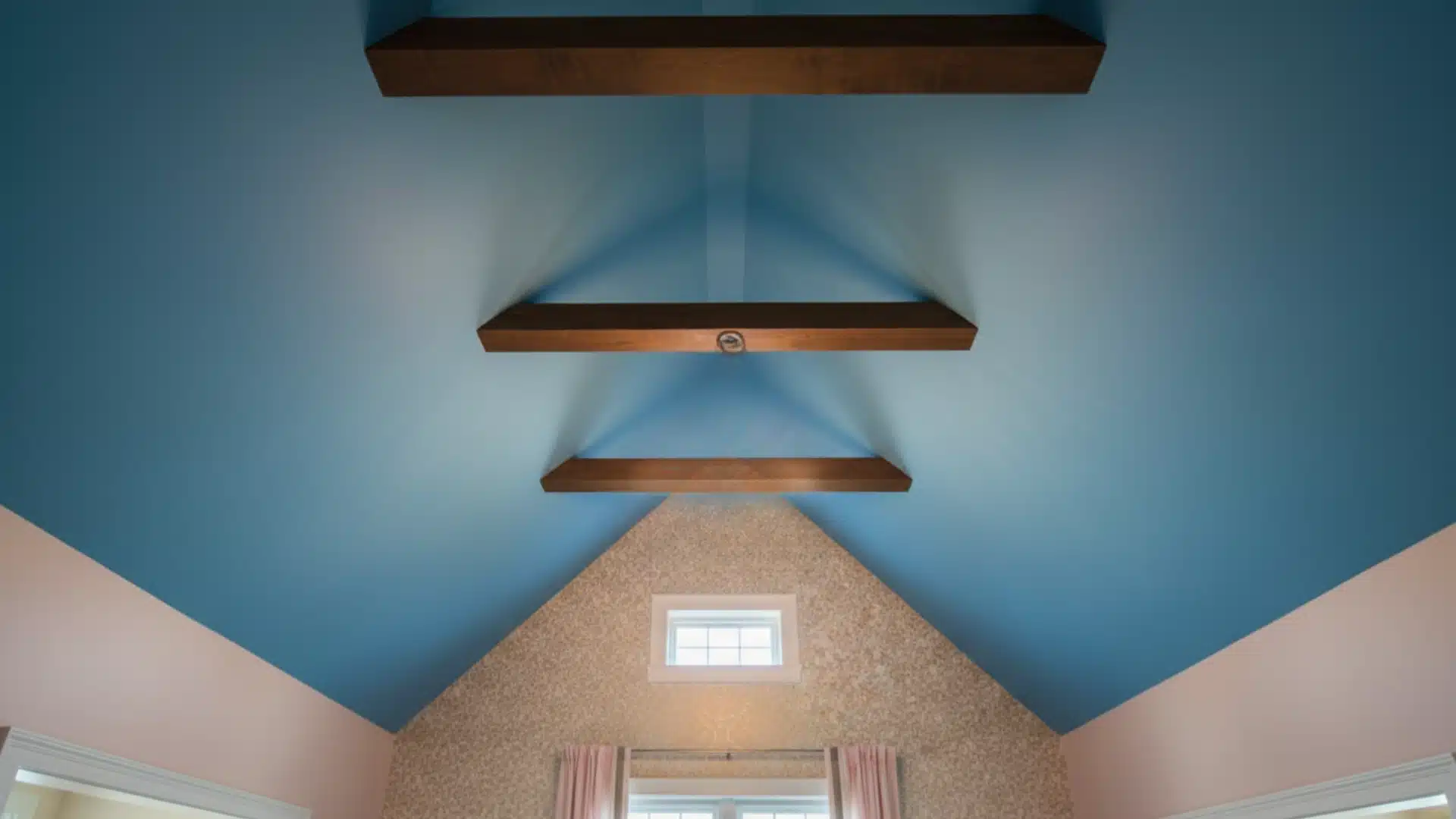
Paint is one of the simplest ways to add character to the ceiling.
A contrasting color on the ceiling draws attention upward and makes the height feel intentional, giving it a deep, moody tone.
Some houseowners keep it soft and light to maintain an open feel.
Either way, a well-chosen paint color can completely change how the room looks and feels.
6. Minimalist All White Finish
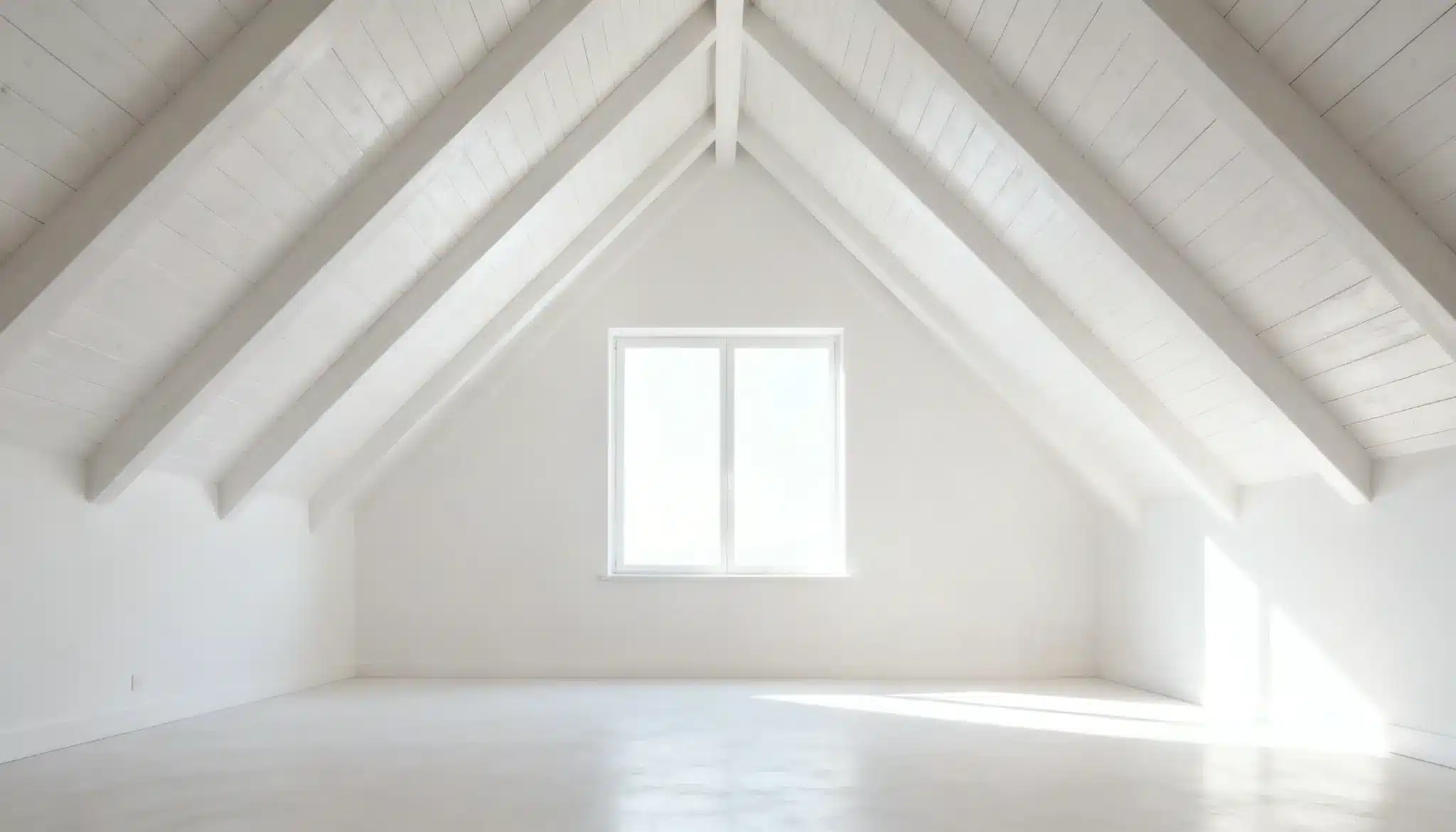
An all-white cathedral ceiling keeps things clean, sharp, and modern.
No beams, no panels, just a smooth, bright surface that reflects light beautifully, giving it a very minimalistic look.
This approach works well in contemporary homes where simplicity is the goal.
It makes the room feel larger and keeps the focus on the furniture and decor below rather than the ceiling itself.
7. Mixed Material Ceiling
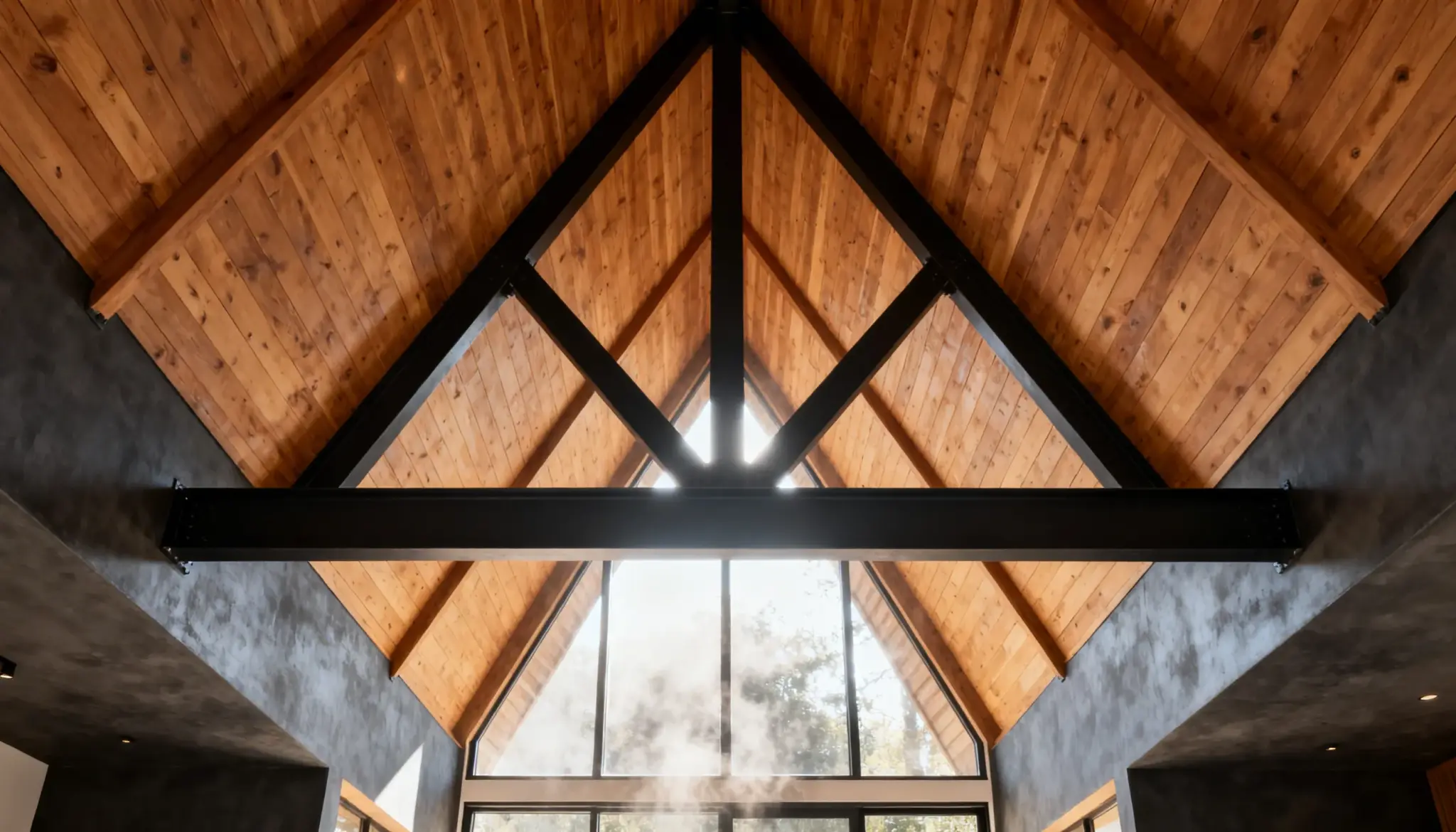
Combining two or more materials on the ceiling adds visual interest without overdoing it.
Think wood panels paired with painted drywall, or concrete look finishes alongside timber beams.
The contrast between materials gives the ceiling a layered, intentional look.
It suits modern and industrial style homes especially well, making the ceiling feel like a design feature in its own right.
8. Integrated Ceiling Speakers and Lighting
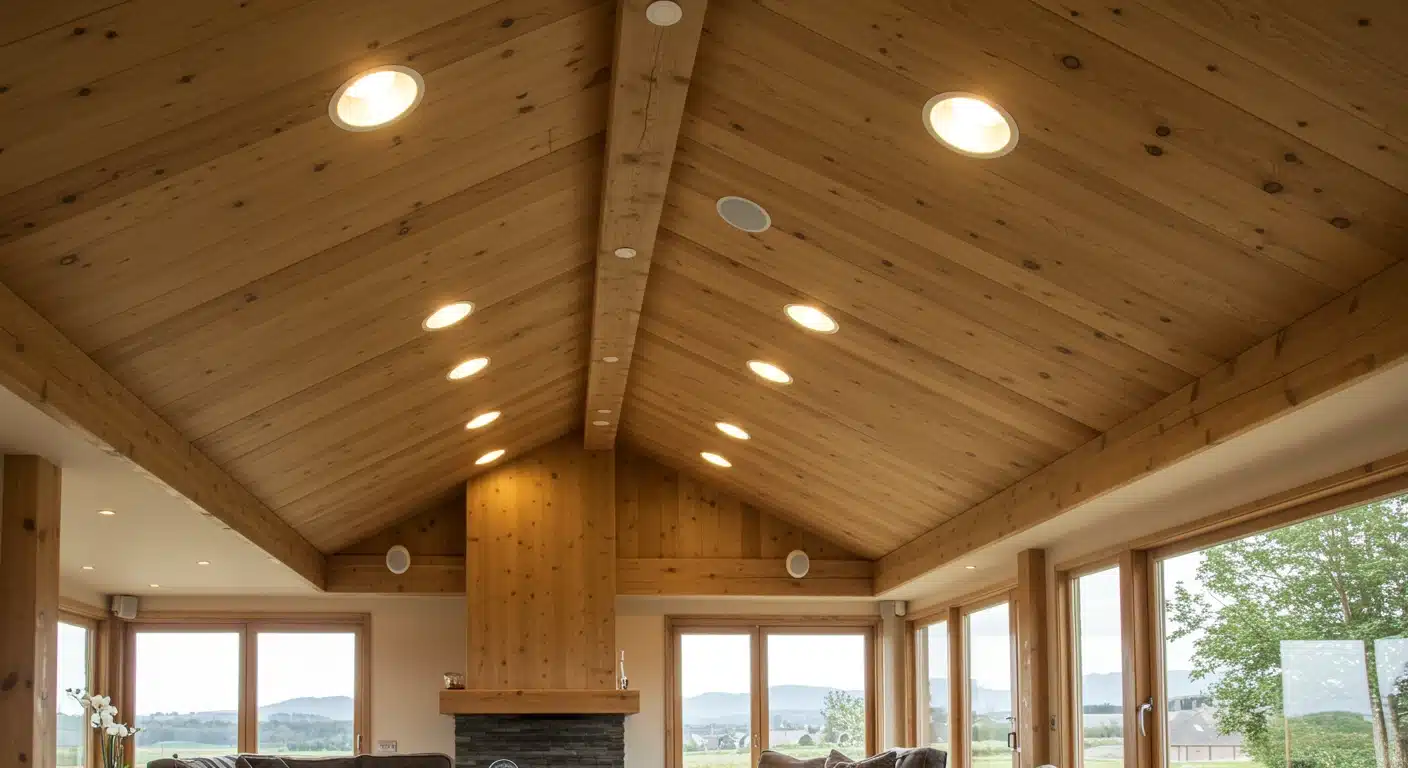
Built-in speakers and recessed lighting along the ceiling keep things clean.
There are no hanging wires or bulky fixtures to worry about. The sound fills the room evenly, and the lighting can be adjusted to suit any mood.
It is a smart choice for homeowners who want both function and a polished, modern finish.
Final Thoughts
A cathedral ceiling is one of those features that can completely change how a home looks and feels.
The design possibilities are real and worth exploring.
There are a few downsides to consider, but the visual impact and sense of space that it brings often outweigh them.
Installing the ceiling is a great place to start to decorate a home’s interior.
Frequently Asked Questions (FAQs)
1. Does a Cathedral Ceiling Add Value?
Yes, they do. Cathedral ceilings make a home feel more spacious and upscale. Buyers often see them as a premium feature, which can positively affect the resale value.
2. What do You Call the Ceiling of a Cathedral?
It is called a vaulted ceiling. In churches and cathedrals, the terms “vaulted” and “cathedral ceiling” are often used interchangeably. Both refer to a high, sloped ceiling that follows the roofline.
3. What is the Most Expensive Ceiling Type?
Coffered ceilings are among the most expensive. They feature a grid of sunken panels that require skilled labor and high-quality materials. The detailed work involved makes them costly to install and finish.