Figuring out how to arrange living room furniture can feel like solving a puzzle.
You move the sofa, then the coffee table. But something still feels off. So, you move the sofa again. But now the previous setup feels better.
And eventually you end up standing there in utter confusion.
But don’t worry, there is a simple and highly effective way to do this. Just knowing a few practical layout ideas will make the process smoother for you.
Key Steps to Take Before Arranging Furniture
Before you start moving furniture around, a little planning will save you a lot of effort.
Because going in blind and moving things around is how you end up with a sofa blocking a door.
Taking just 15 to 20 minutes to prep can save you hours of frustration.
The following is what you should do first:
- Measure your room. Note the length and width. Don’t guess.
- Mark your focal point. It could be a fireplace, TV, or window.
- Note fixed elements. Doors, windows, and power outlets can’t move; your furniture has to work around them.
- Sketch a rough layout. A simple floor plan saves you from heavy lifting later.
How to Arrange Living Room Furniture?
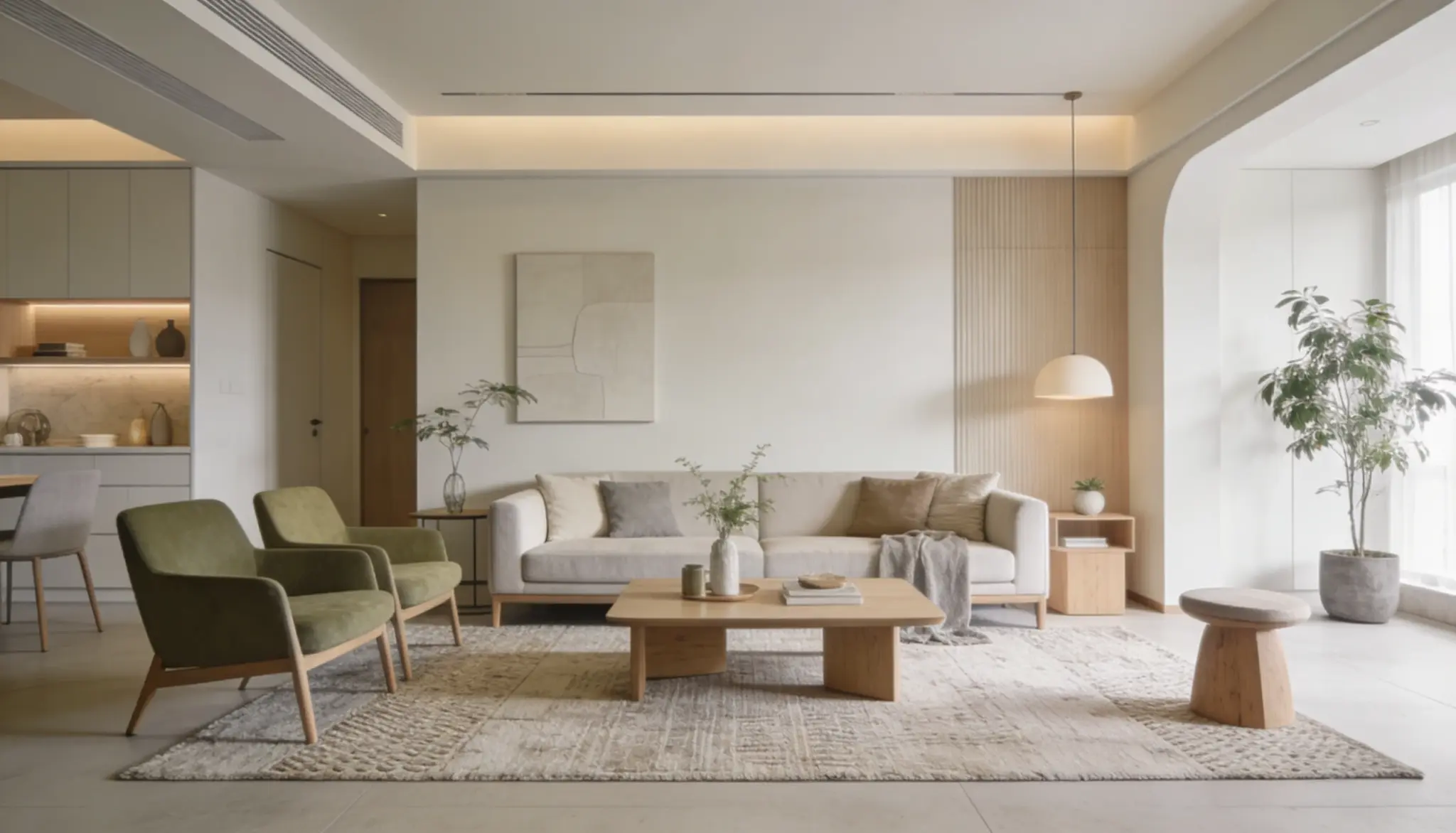
The key factor is to start simple. Work from the biggest piece and build around it.
Start With the Largest Furniture Piece
The sofa is usually the biggest piece in the room. Always start by placing it first.
Everything else gets arranged around it. Putting it against a wall works in smaller rooms. In larger spaces, floating it away from the wall can open up the space.
Getting this right makes the rest of the arrangement fall into place naturally.
Create a Functional Focal Point
Every living room needs one thing that is the center of attention.
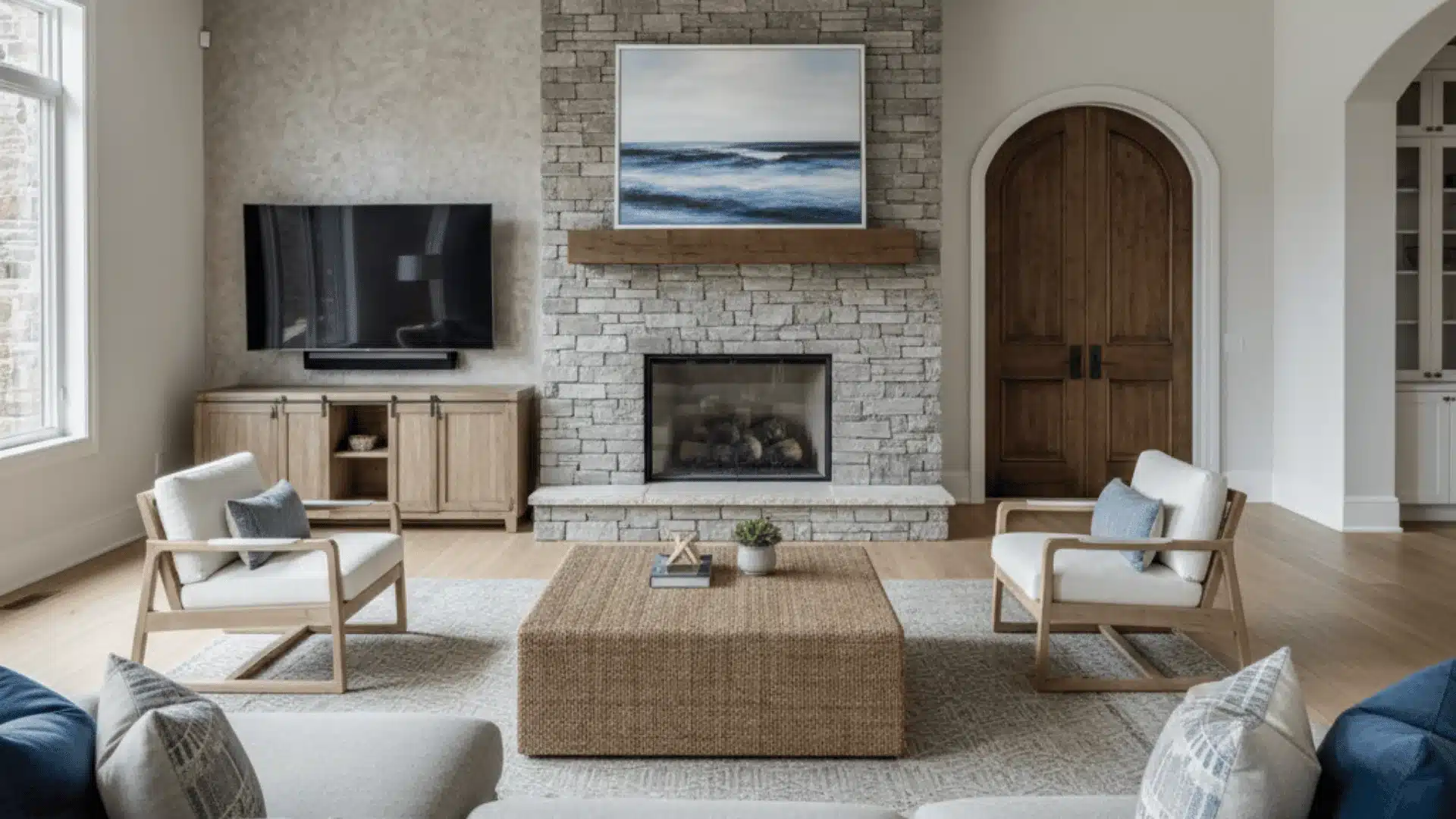
It could be a fireplace, a TV, or even a large window. Arrange your seating so it faces that focal point.
This gives the room a clear purpose because without a focal point, the room feels scattered.
Maintain Proper Walking Space
Always leave at least 2 to 3 feet between furniture pieces.
This keeps the room easy to move through. Tight spaces make a room feel cramped, even if it’s large.
Try walking through your layout before finalizing it. If you bump into anything, something needs to shift.
Balance Furniture Proportions
Don’t pair a large sofa with a tiny coffee table. It looks off.
Match the size of your furniture pieces to each other and to the room. A big room can handle larger pieces.
A small room needs lighter, smaller furniture. Getting the proportions right is very important in making the room feel uncluttered.
Layout Options for Arranging Living Room Furniture
Not every living room is the same shape or size. That’s why different layouts work better for different spaces.
The key is picking one that fits how you actually use the room.
1. Symmetrical Living Room Layout
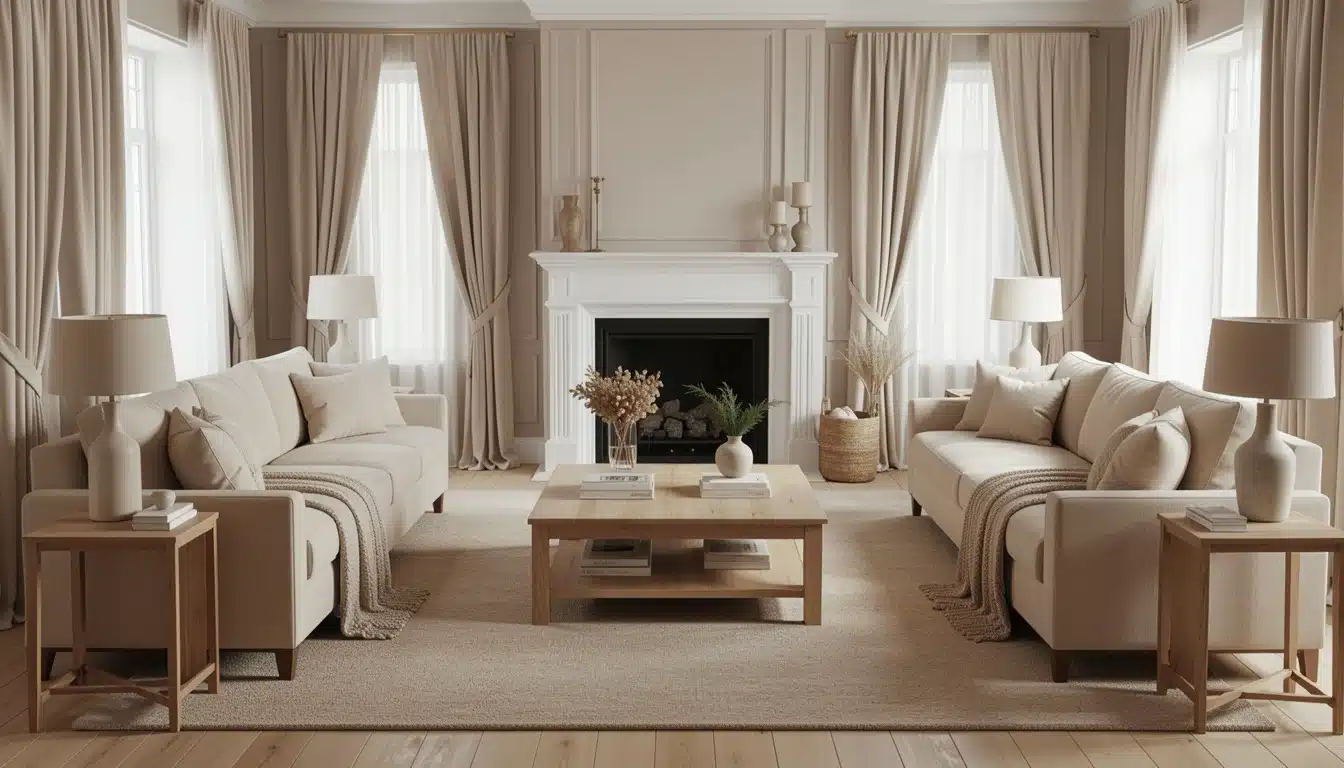
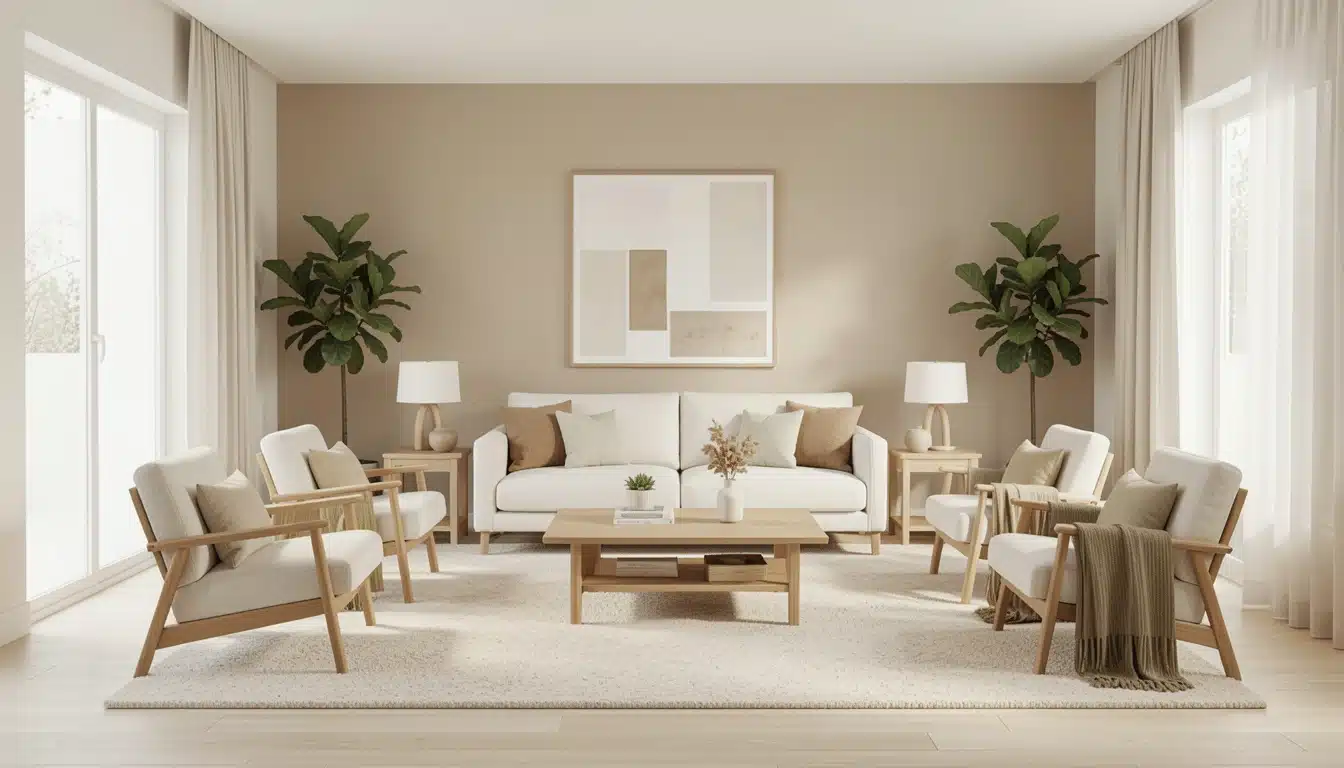
To make this layout work, place matching furniture on either side of a central focal point.
Two sofas facing each other or two armchairs flanking a fireplace are good examples. This creates a sense of order and balance in the room.
It works especially well in formal living rooms, offering a calm, organized setup.
2. Open Concept Living Room Layout
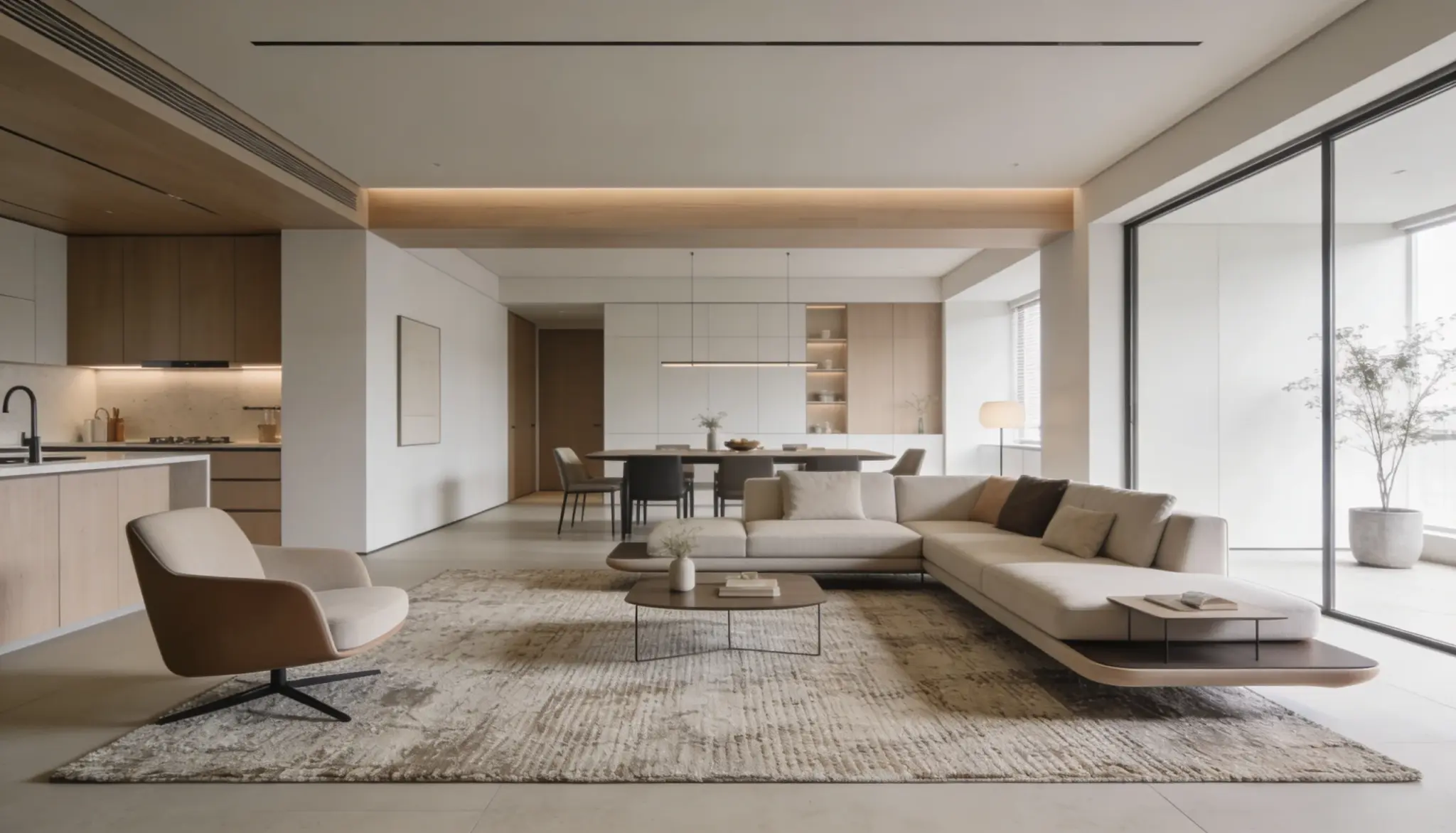
In an open-concept space, the living room shares a space with a kitchen or dining area.
To arrange furniture here, use a large rug and place the sofa to clearly define the living zone. Avoid pushing all furniture against the walls.
Instead, float pieces inward to create a distinct seating area.
This makes the space feel intentional. It also keeps the flow between areas natural and easy to move through.
3. TV Focused Furniture Arrangement
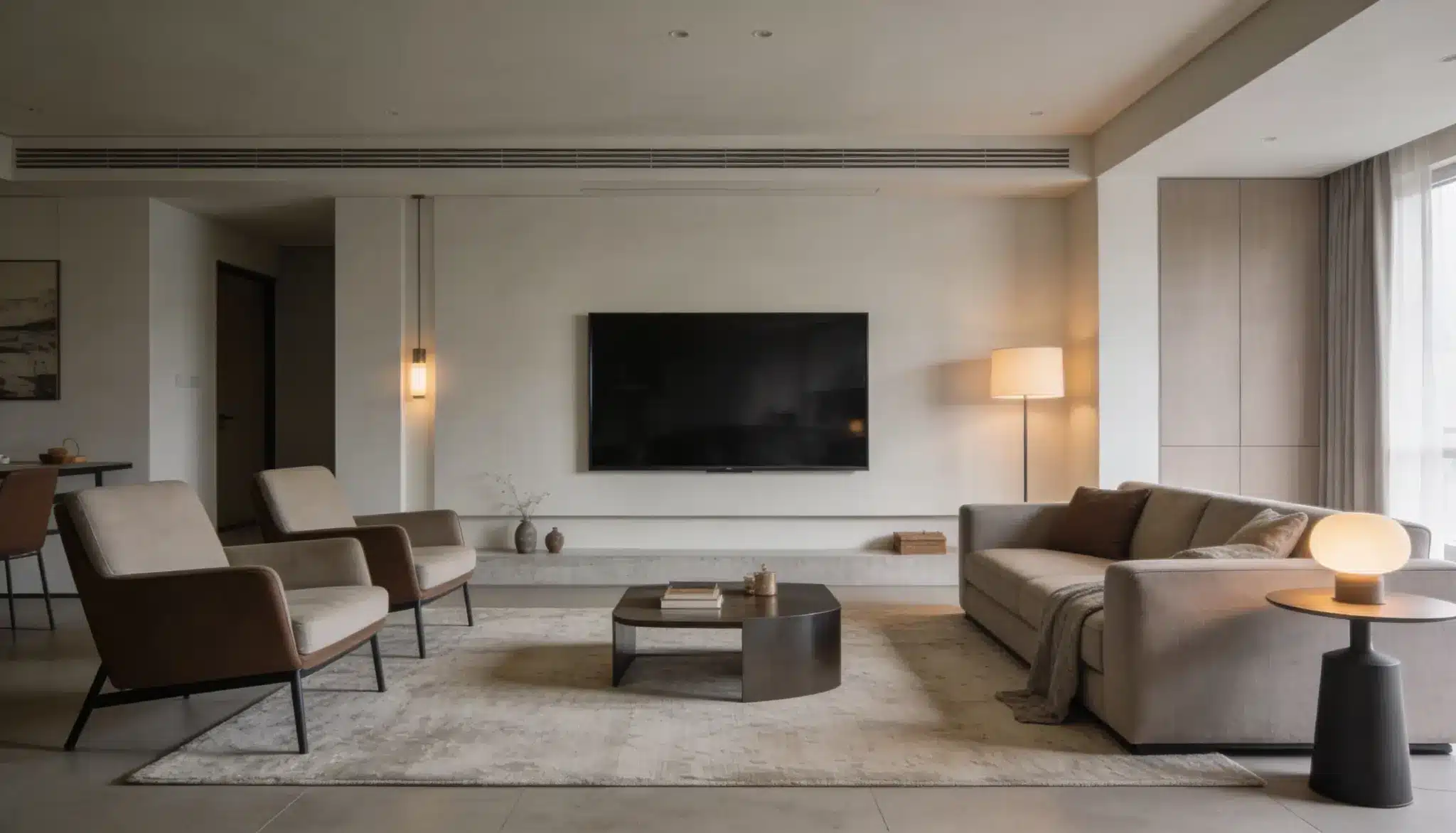
Start by placing the TV on a wall that avoids glare from windows.
Then arrange seating so every seat has a clear, comfortable view. The ideal distance between the TV and sofa is about 8 to 10 feet.
Angle chairs slightly inward if needed.
This layout works well for families or anyone who uses the living room for movie nights and daily viewing.
Mount the TV at eye level when seated, not too high, not too low to avoid stressing the neck.
4. Floating Furniture Layout
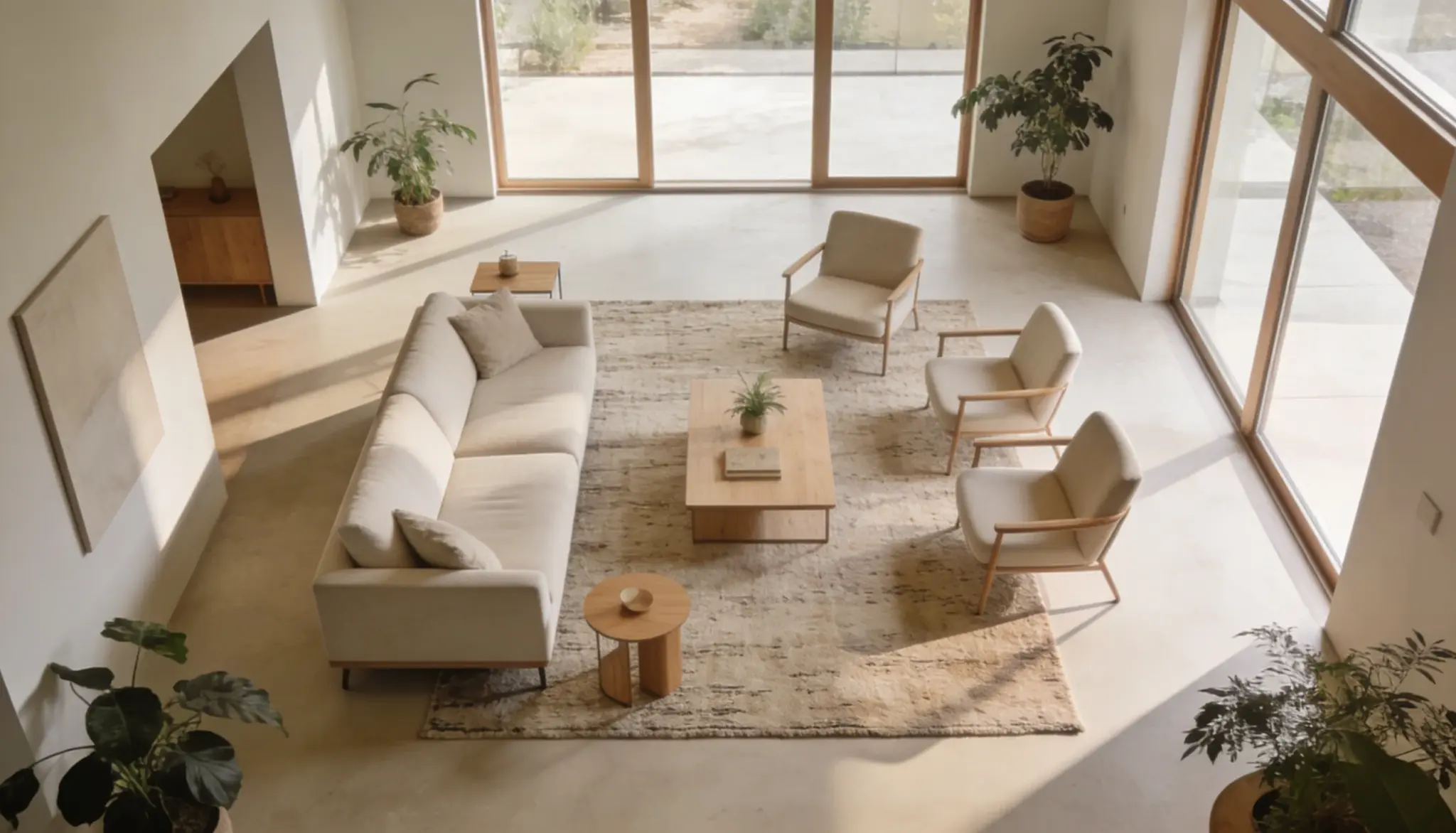
Floating means pulling furniture away from the walls and grouping it in the center of the room.
Place the sofa and chairs closer together to create a comfortable conversation area. Leave a gap of at least 12 to 18 inches between furniture and the walls.
5. Use Rugs to Define Separate Zones
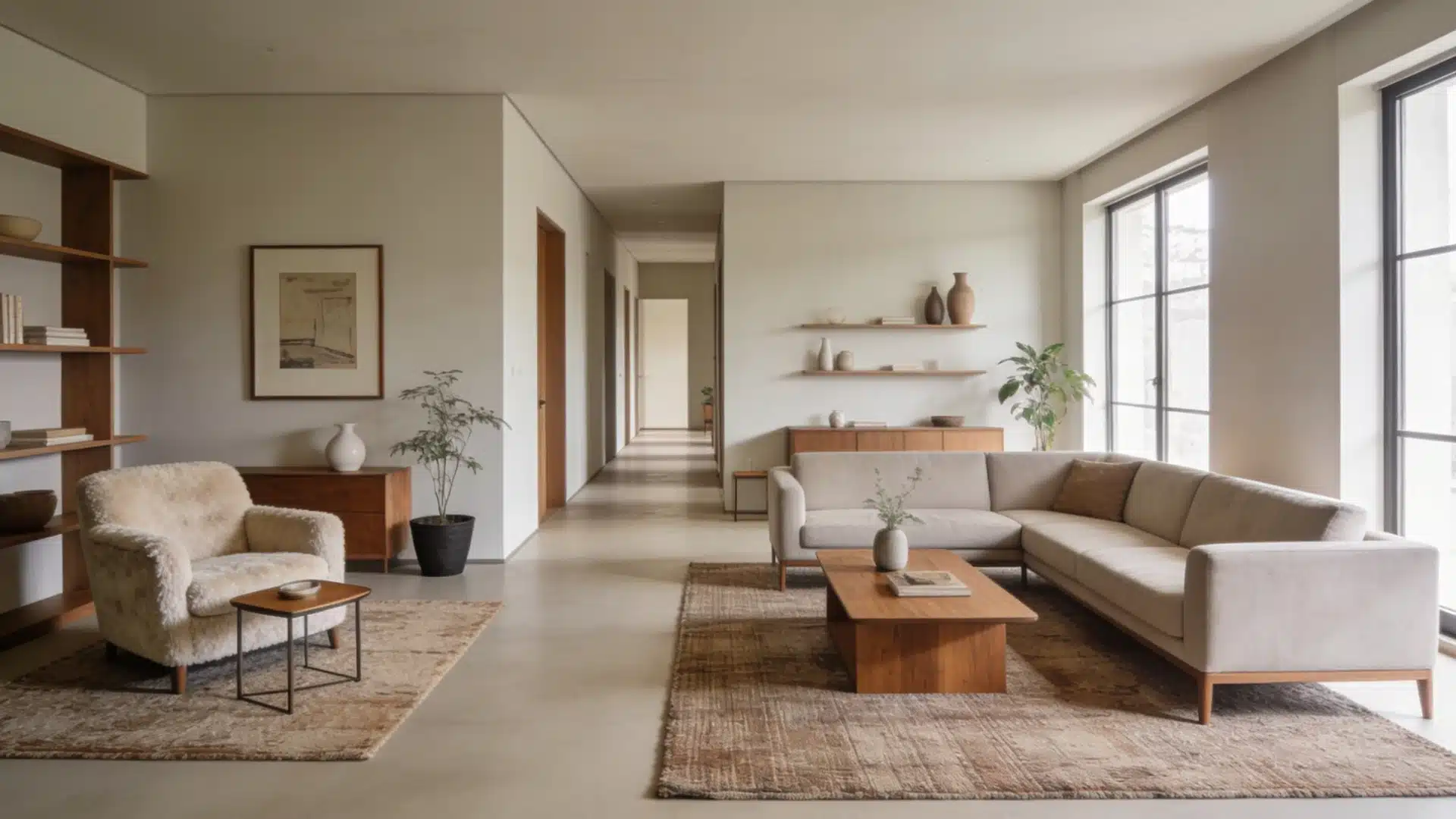
One of the easiest ways to handle a long room is to split it into zones.
Place a rug under each furniture grouping to create separate, defined areas. For example, one rug under the main seating area and another under a reading nook or games corner.
Each rug acts as a visual boundary.
Make sure each rug is large enough to anchor the furniture sitting on it. A small rug under a big sofa looks lost.
Creative Solutions for a Narrow Living Room
A narrow living room can feel tricky and really magnifies the “how to arrange furniture” problem.
But the right approach makes things a lot easier. The key is to work with the shape of the room, not fight it.
6. Use Slim and Space Saving Furniture
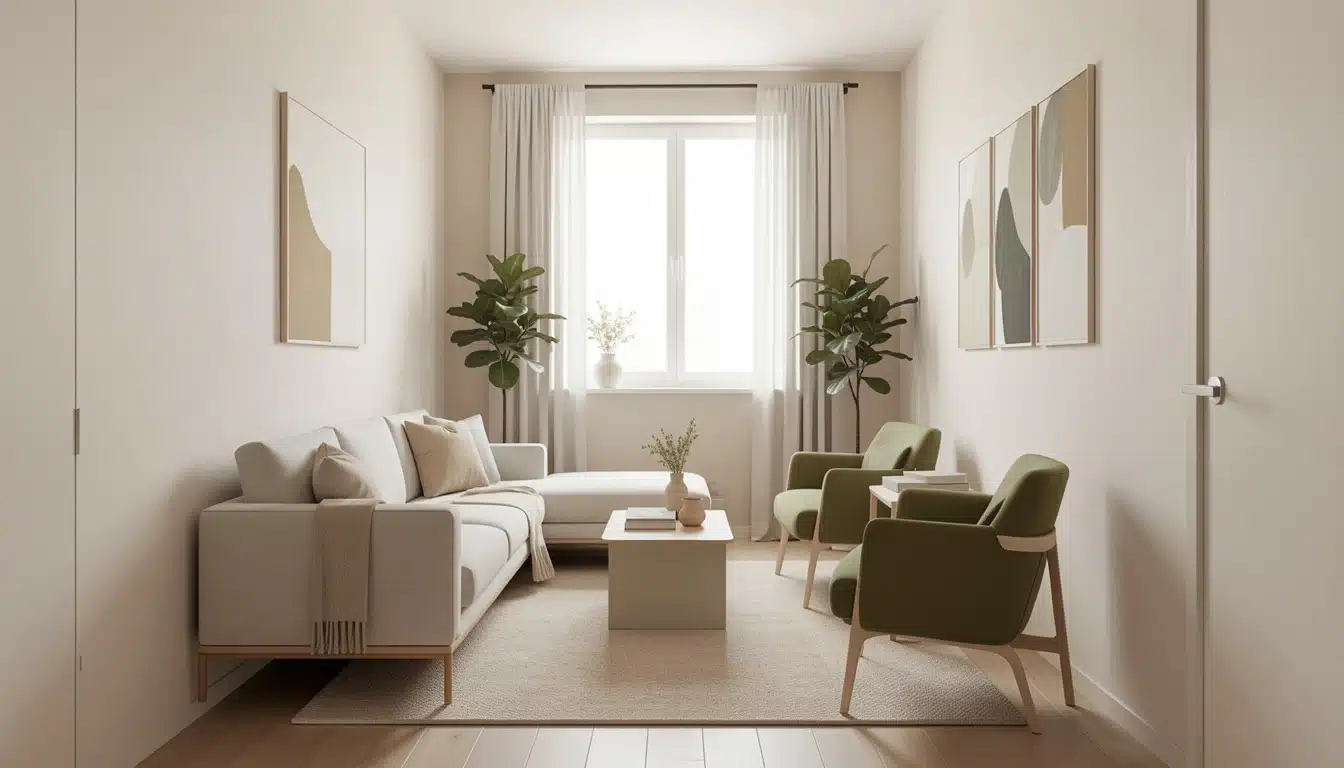
Bulky furniture is the biggest enemy of a narrow room.
Swap it out for narrow-profile sofas and armless chairs instead. These take up less visual and physical space.
A compact coffee table with a small footprint keeps the center of the room open. The result will be a room that isn’t crowded, even with multiple pieces of furniture.
Armless chairs are a great option, they look lighter and take up far less space than you’d expect.
7. Create a Clear Walking Path
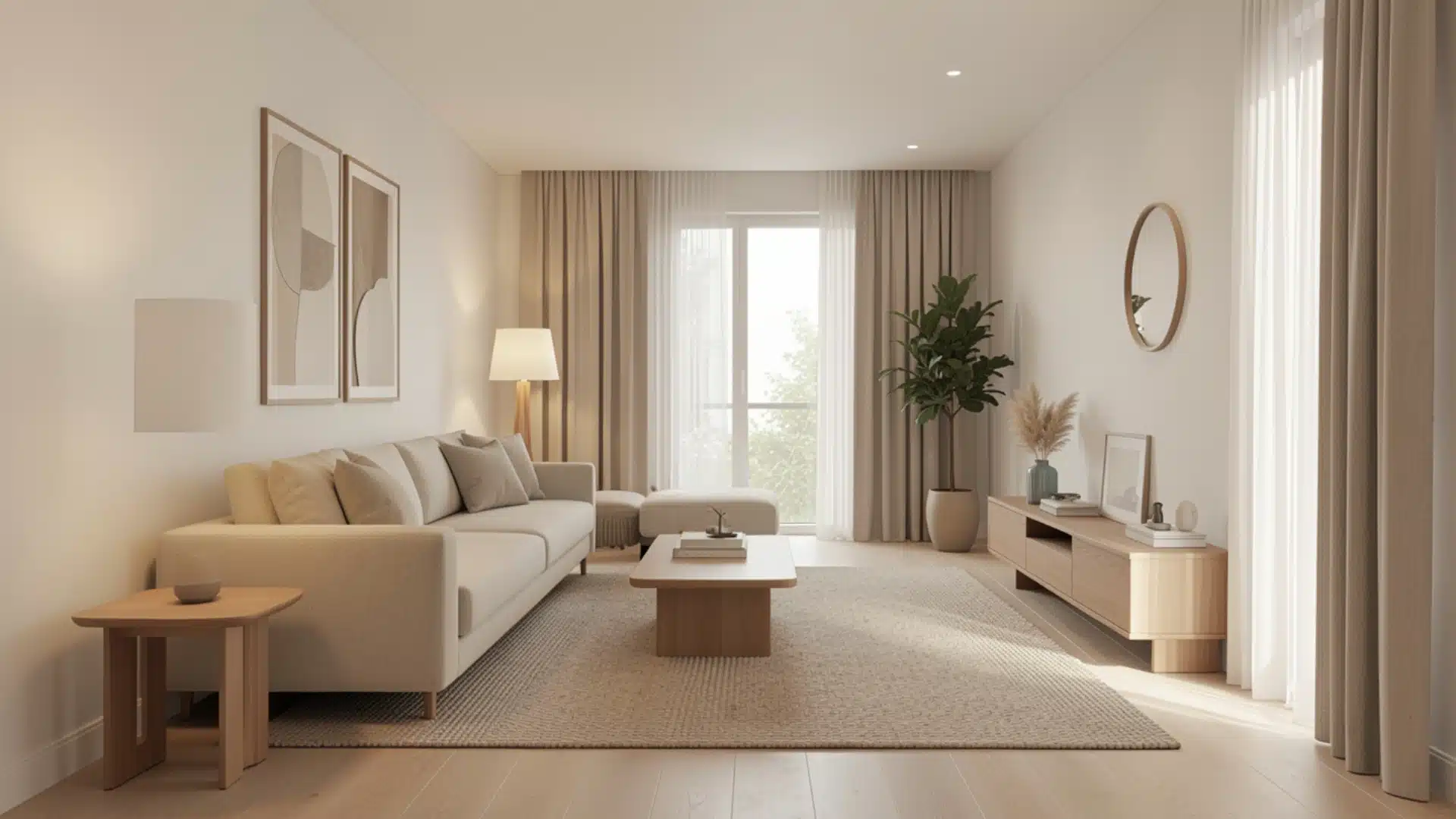
In a narrow room, foot traffic needs a straight, clear path from one end to the other.
The simplest way to do this is to push larger furniture pieces along one side of the room. Keep the opposite side lighter with smaller pieces or open floor space.
Avoid placing furniture in a way that forces people to zigzag across the room.
8. Use Vertical Space for Storage and Decor
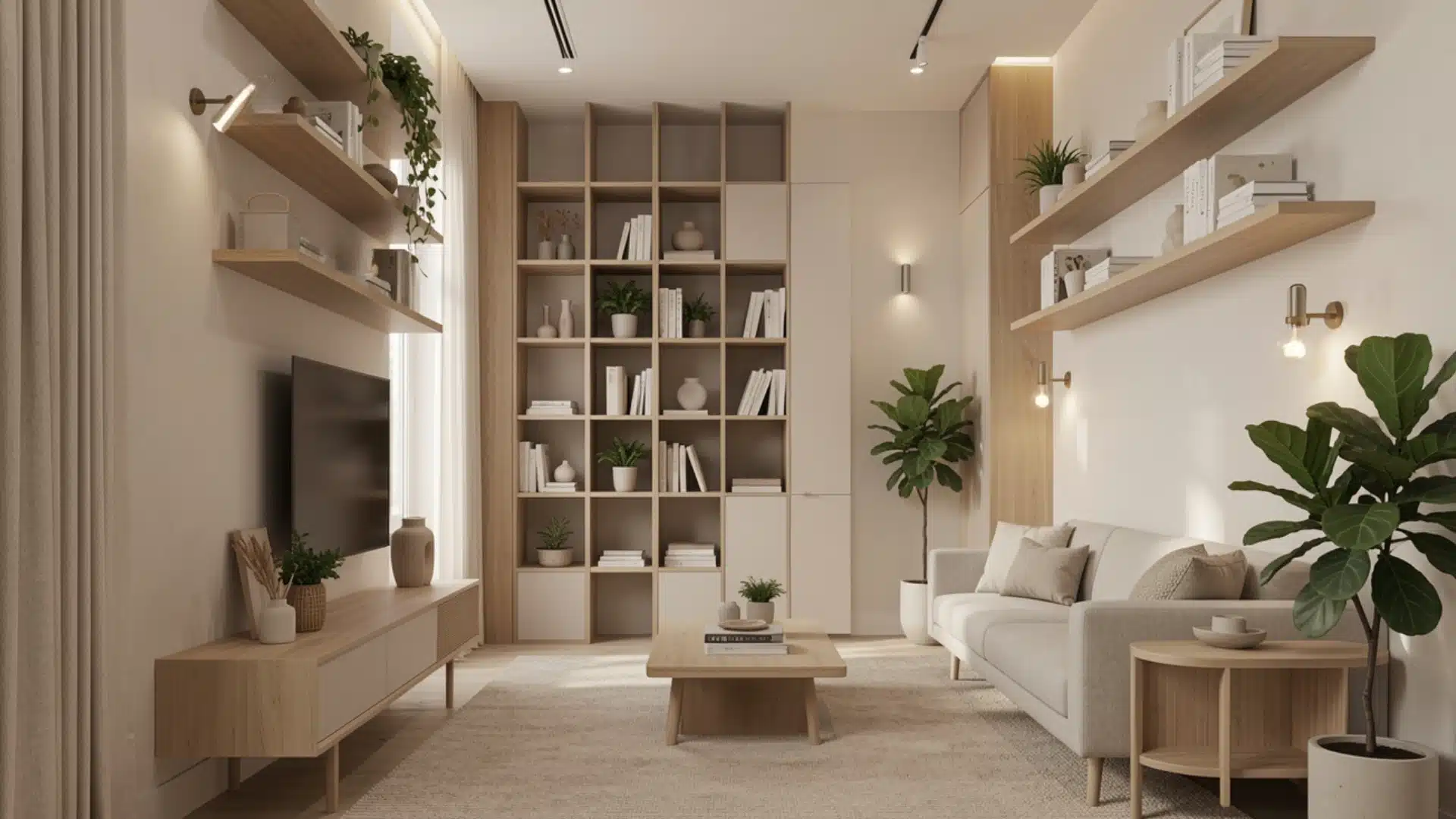
When floor space is limited, go up.
Floating shelves, tall bookcases, and wall-mounted lighting are your best friends in a narrow room.
They draw the eye upward, which makes the ceiling feel higher. They also keep the floor clutter-free.
Use wall mounted lights instead of floor lamps to increase the amount of floor space in tight rooms.
Common Living Room Furniture Arrangement Mistakes
Even with a lot of knowledge, it’s easy to make a few mistakes when arranging furniture.
Most of them are simple fixes once you know what to look for, and avoiding some of the common ones really helps bring out the best in your living room.
| Mistake | Why It’s a Problem | Quick Fix |
|---|---|---|
| Pushing all furniture against the walls | Makes the room feel empty in the center and disconnected. | Pull furniture inward to create a grouped seating area. |
| Blocking natural pathways | Makes the room hard to move through and feels cramped. | Always keep at least 2–3 feet of clear walking space between pieces. |
| Using oversized furniture | Overpowers the room, leaving little space for movement. | Choose furniture sized to fit the room, not the other way around. |
| Choosing the wrong rug size | A small rug makes furniture look unanchored and out of place. | Go bigger; at least the front legs of all seating should sit on the rug. |
| Ignoring lighting layers | A single light source leaves parts of the room dark and flat. | Use a mix of floor lamps, table lamps, and ceiling lights. |
Final Thoughts
Arranging a living room doesn’t have to be stressful.
You just need to start with a plan, work from the largest piece, and build around it. Keep pathways clear, balance your furniture, and use rugs and lighting to tie everything together.
Whether the room is narrow, long, or oddly shaped, there’s always a layout that works.
Frequently Asked Questions (FAQs)
1. What is the Biggest Mistake in the Placement of Furniture?
Pushing all furniture against the walls. It makes the room feel empty in the middle and disconnected. Pull pieces inward instead.
2. What Type of Furniture is in Style Now?
Clean-lined sofas, storage ottomans, nesting tables, and multi-functional pieces are popular right now. Neutral tones and natural materials are also a big hit.
3. What are the Four Rules in Furniture Arrangement?
Start with the largest piece. Create a clear focal point. Keep walking paths open. When you learn how to arrange living room furniture, these four rules cover most of the work